By Mwangi Maina
| March 26, 2026
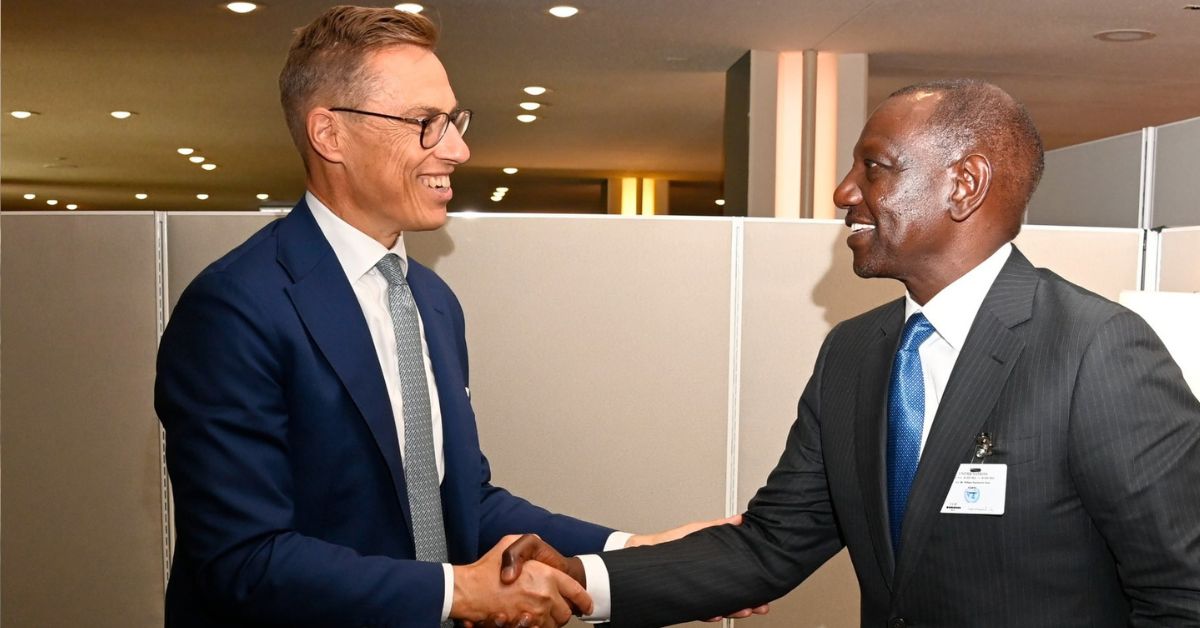
A file image of Kenyan President William Ruto and his Finnish counterpart Alexander Stubb. Photo: Handout
Kenya is quietly, but deliberately, positioning itself at a crowded geopolitical junction.
An invitation to the upcoming G7 summit in Évian, France, the visit of Chinese Han Zheng, and a well-timed call from Marco Rubio to William Ruto within the same week all point to a simple shift: Nairobi is no longer peripheral to global competition.
That attention reflects a broader thesis advanced by the Finnish President Alexander Stubb, who casts Kenya as a “swing state” of the Global South, one capable of tilting influence as the international order fragments.
In his formulation, the world is no longer neatly bipolar or unipolar but triangular: a global West, a global East, and a Global South whose alignment remains fluid.
It is in that fluidity that Kenya finds room to manoeuvre. The G7, though still an elite club, has adapted to this shifting geometry.
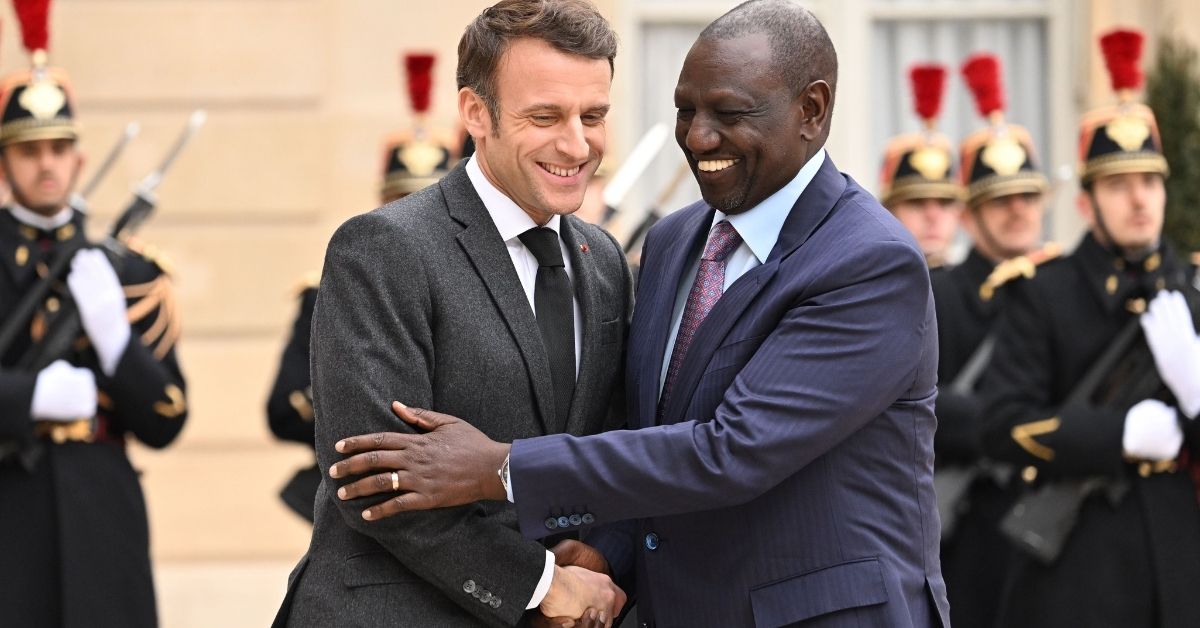
When leaders convene in France in June under the chairmanship of Emmanuel Macron, they will be joined by a select group of guests, including Kenya, India, Brazil and South Korea.
Invitations have become a ritual, but they are also instruments, extending access without necessarily conferring influence.
France’s outreach to Kenya is not accidental. Relations with parts of Francophone West Africa have frayed, prompting Paris to recalibrate.
Turning to Nairobi, a relatively stable anglophone anchor, offers both diplomatic and economic utility.
A planned France–Africa summit in Nairobi, alongside a newly signed defence pact, suggests a courtship that blends symbolism with strategy.
Kenya’s participation in the G7 is no longer novel. It entered the tent in 2017, returned in 2024, and is now again in 2026.
Presence, however, is not power. As Barack Obama once observed of such gatherings, they risk becoming carefully choreographed “talking shops”, long on communiqués and short on immediate outcomes.
The burden, then, lies in converting access into advantage.
Nairobi’s broader diplomatic posture suggests it understands this. The country has refined a strategy of hedging, engaging multiple powers without binding itself to any single axis.
Chinese and American footprints illustrate the approach.
Beijing’s presence is visible and concrete. Chinese-backed projects, including the extension of the Standard Gauge Railway to the Ugandan border under the Belt and Road Initiative, offer infrastructure that can be counted in kilometres and contracts.
Washington’s engagement is less tangible but no less significant, spanning security cooperation, intelligence sharing and health financing, including a Sh208 billion partnership signed in 2025 to support Kenya’s health systems.
The choreography can be striking. As Ruto’s officials hosted the Chinese vice-president in Nairobi, Rubio’s call highlighted continued American interest.
Whether routine or deliberate signalling, such overlaps reflect a pattern: Kenya offers reassurance to one partner while engaging another.
Earlier this year, a similar dual track saw US diplomat Christopher Landau in Nairobi even as Kenya’s foreign-policy technocrat, Korir Sing’oei, held talks in Beijing.
This is not drift; it is design. For middle powers, hedging is less an indulgence than a necessity, a way to extract value while avoiding entanglement.
The approach, however, is not without tension. Abroad, Mr Ruto has drawn applause for energetic diplomacy.
Obama described such while referring to ex-French President Nicholas Sarkozy in his memoir “A Promised Land” as “manic energy”. At home, expectations remain stubbornly unmet.
International visibility does not automatically translate into domestic dividends, and the contrast risks becoming politically costly.
The global context sharpens the stakes. A world once anchored in a US-led order is giving way to something more fragmented: rising Chinese influence, assertive middle powers, mounting debt burdens and intensifying geopolitical rivalries.
Conflicts, from Eastern Europe to Africa and the Middle East, add to the sense of systemic strain. In that unsettled landscape, Mr Stubb’s notion of “swing states” gains traction.
Countries like Kenya, alongside India, Brazil and South Africa, are neither rule-makers nor rule-takers, but potential balancers.
Their choices, incremental though they may seem, could tilt the broader system.
Kenya is, for now, oscillating across all three poles: engaging the West, accommodating the East, and asserting itself within the fragmented Global South.
The strategy is certainly rational. Whether it is sustainable will depend on a harder test, turning diplomatic choreography into measurable gain.
Your support empowers us to deliver quality global journalism. Whether big or small, every contribution is valuable to our mission and readers.