

























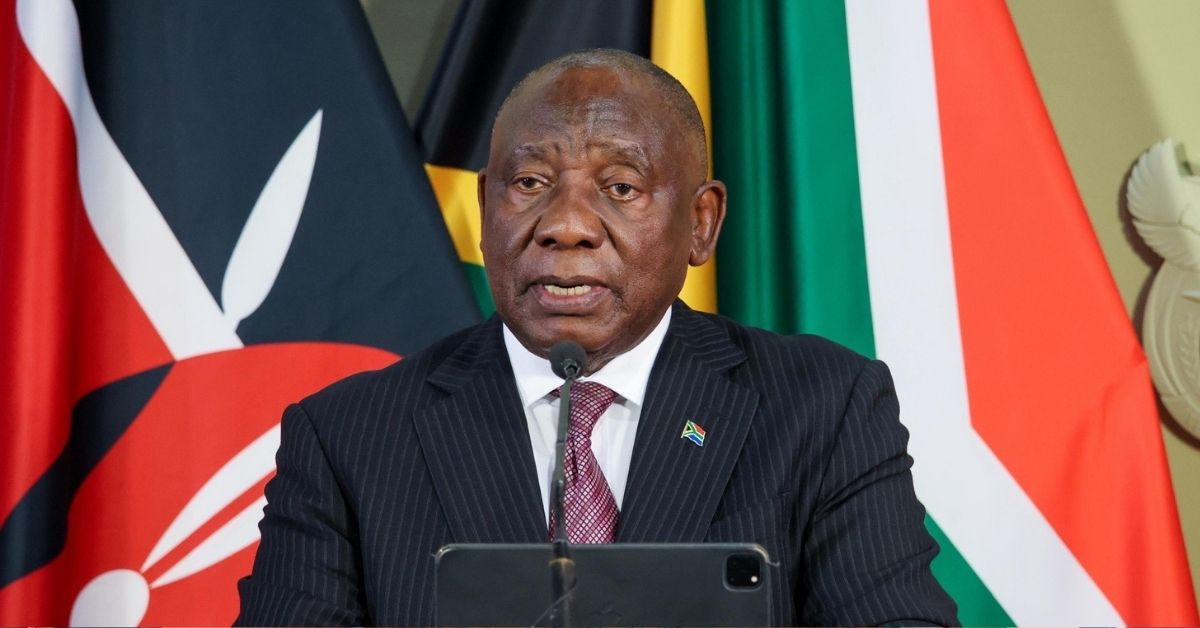
Ramaphosa: Bring the Kenyan Tea
By Mwangi Maina
| June 5, 2026
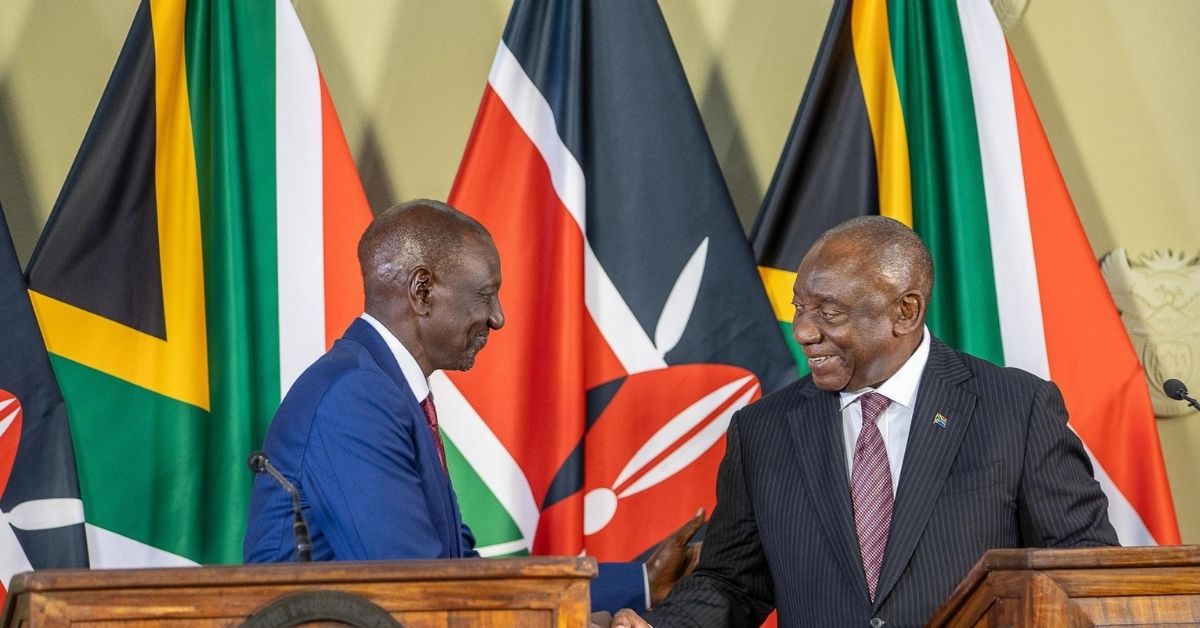
Kenyan President William Ruto shakes hands with South African President Cyril Ramaphosa at a media briefing during Ruto’s state visit, aimed at deepening economic, political, and strategic ties, at the Union Buildings in Pretoria, South Africa, June 4, 2026. Photo: Handout
Cyril Ramaphosa, a self‑confessed tea lover, has done more than make a joke. He has opened a door.
The most consequential outcome of President William Ruto’s state visit to Pretoria may not be a treaty or a joint communiqué. It may be a craving.
“I want my tea to come here,” said South African President Cyril Ramaphosa, addressing a Kenya‑South Africa business forum.
He said it not once but several times, drawing laughter each time. But behind the levity lay a genuine breakthrough.
Pretoria has agreed to reopen its market to Kenyan tea, coffee and spices. Duties suspended since November 2025 under the Southern African Customs Union framework have been lifted.
“We said, let’s stop this nonsense,” Mr Ramaphosa explained, referring to a tit‑for‑tat row that began when Nairobi imposed tariffs on South African steel.
The South African leader was unapologetic about prioritising pragmatism over retaliation.
“We cannot reciprocate on steel and tea; tea that is grown by small‑scale farmers,” he said.
In a subtle jab at the tariff wars engulfing richer nations, he added: “We should not behave like some big countries in the world that punish other countries because of disparities in tariffs.”
Kenya’s Trade Ministry confirmed the concession on Friday, noting it was “intended to strengthen trade ties and reduce the trade imbalance that currently favours South Africa.”
That imbalance is stark. South African exporters have long enjoyed easier access to Kenya than Kenyan farmers have to South Africa.
Trade Cabinet Secretary Lee Kinyanjui said he was pleased the matter had received the “highest political approval.” In diplomatic code, that means two presidents decided to stop their officials from squabbling.
The business forum where Mr Ramaphosa made his remarks was notably short on fluff.
“We are tired of speeches,” said the businessman‑turned‑president.
“We need money, rands and shillings.” Mr Ruto nodded in agreement, using the platform to pitch Nairobi as a gateway for South African firms eyeing the rest of East Africa.
Both leaders talked up the African Continental Free Trade Area (AfCFTA). They know that intra‑African commerce remains embarrassingly low compared with trade within Europe or Asia.
A single example of what is possible was cited: Stanbic Bank, a subsidiary of Johannesburg‑based Standard Bank Group, run by Kenyan CEO Joseph Oigara. It is a living metaphor for the integration that still eludes the continent.
The two governments agreed to set up a joint business council and to host the next forum in Nairobi. For Kenya, the tea deal is a small but symbolic win. For South Africa, it is a modest concession. For both, it signals something rarer than a trade agreement: a willingness to stop talking and start selling.
As Mr Ramaphosa might say, the proof will be in the brewing. And whether that brewing will happen, the joint business forum scheduled for Nairobi in two years’ time will certainly confirm.
Your support empowers us to deliver quality global journalism. Whether big or small, every contribution is valuable to our mission and readers.





