













Kenya’s Quiet Diplomatic War: Ruto, Kenyatta, and the Power Struggle over DRC Peace Efforts
By Mwangi Maina
| February 10, 2025
Outgoing Kenyan President Uhuru Kenyatta, left, looks on as his successor, William Ruto, lifts a sword at his inauguration ceremony in Nairobi, September 2022. Photo: Handout
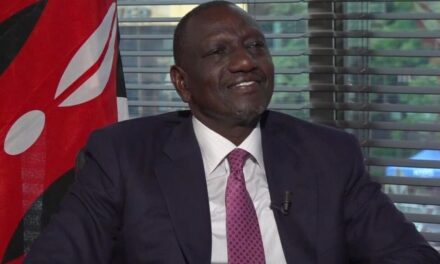
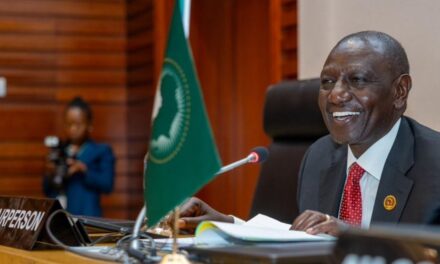
President William Ruto’s remarks during Tuesday’s Diplomatic Corps Address in Nairobi have reignited speculation over a growing rift between his administration and former President Uhuru Kenyatta.
At the heart of this tension is the delicate question of how to manage peace in the Democratic Republic of Congo (DRC) amid ongoing bitter conflict in the country’s eastern region.
With the AU-Luanda Process led by Angola focused on easing tensions between DRC and Rwanda and the Nairobi Process tasked with facilitating intra-Congolese dialogue, Ruto called for the merger of the two frameworks into a single initiative to avoid what he described as unnecessary competition, forum shopping, and fragmentation.
“We must merge these processes into one because having two concurrent frameworks creates unnecessary competition and avenues for forum shopping,” Ruto said during the diplomatic gathering.
But Uhuru Kenyatta, who leads the Nairobi Process, has offered a different vision.
His 9-page confidential report to the recent Joint EAC-SADC Summit in Dar es Salaam suggests that the Nairobi Process should be revived, funded, and supported— without explicitly endorsing the idea of merging it with the Luanda Process.
“The facilitator is of the opinion that the intra-Congolese dialogue (the Nairobi Process) must be restarted and fully supported by African Heads of state with bilateral and multilateral arrangements,” the report stated.
Kenyatta’s report made it clear that while he recognised the complementary role of the Luanda Process, the Nairobi Process should not be sidelined.
The lack of enthusiasm for a merger in his report hints at a desire to maintain control over the Nairobi Process, which made remarkable progress in bringing the armed groups together, possibly resisting attempts by the current administration to dilute his influence.
The divergence in strategy highlights the quiet diplomatic power struggle between the current and former Kenyan presidents.
Competing Visions
Kenyatta’s Nairobi Process has been widely praised in African and European diplomatic circles for its efforts to bring together Congolese armed groups and foster dialogue.
Meanwhile, the Luanda Process, driven by Angolan President João Lourenço, has focused on negotiating peace between the Congolese and Rwandan Presidents who are feuding over the mineral-rich region.
The Joint EAC-SADC Communique issued in Dar es Salaam called for merging the two processes into a single initiative—now dubbed the Luanda/Nairobi Process—to enhance complementarity.
The communique also mandated the appointment of additional facilitators from other African regions, a move seen by some as an attempt to dilute Kenyatta’s influence over the peace talks.
Despite this declaration, the communique lacked clarity on the structure, funding, and implementation of the merged framework.
Ruto’s Consolidation Strategy
Ruto’s public statements reveal a growing desire to reorient Kenya’s peace diplomacy under his administration’s control. His call for merging the two processes suggests a pragmatic approach to address the overlapping mandates that have long plagued peace initiatives in eastern DRC.
Yet critics argue that this is also a strategic maneuver to reduce Kenyatta’s footprint in regional diplomacy.
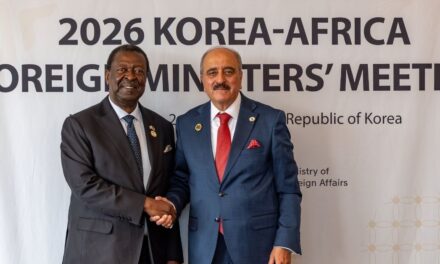
“These processes need to be harmonized and merged to eliminate overlapping elements and be managed jointly for effective results to be achieved,” Ruto’s top diplomat Musalia Mudavadi said in Dar es Salaam last week.
The subtle power play becomes apparent when considering Ruto’s insistence on resolving the DRC crisis under a unified framework—effectively erasing the identity of the Nairobi Process as a separate entity.
Some diplomatic sources see the merger push as an attempt to sabotage the Nairobi Process, which was one of the ex-president’s flagship diplomatic initiatives.
The confidential report Kenyatta tabled at the Dar es Salaam summit emphasises the need to restart intra-Congolese dialogue and secure fresh funding for the process.
Kenyatta warned that the absence of sustained dialogue risks plunging the DRC into wider conflict, calling on leaders to focus on the process’s core purpose rather than reshaping its structure.
Kenyatta’s supporters see this as an effort to maintain the distinct identity of the process while avoiding getting subsumed under the broader Luanda initiative.
President William Ruto has faced accusations of undermining his predecessor Uhuru Kenyatta’s peace efforts in eastern Congo—allegations Congolese President Felix Tshisekedi publicly echoed in past remarks.
Diplomatic Nuances and Silence
Diplomatically, the merger of the two processes raises complex questions.
The Luanda Process is an AU-authorised framework under the Peace and Security Council, while the Nairobi Process is mandated by the EAC.
Funding mechanisms differ significantly, with the Nairobi Process reliant on EAC funding (which has rarely materialised), while the Luanda Process receives support under the AU framework.
Diplomatic critics speaking to KFP on condition of anonymity argue that the core challenge lies in the structural and jurisdictional differences between the two processes.
“The problem is that the Luanda Process is authorised by the African Union’s Peace and Security Council (PSC), while the Nairobi Process is under the East African Community (EAC). The two processes have very different functions and purposes, which makes merging them potentially unviable,” a senior diplomatic source explained.
According to the same source, a supportive and complementary approach between the two initiatives would have been far more practical.
“Moreover, the funding structure is murky,” they added.
“The Nairobi process is technically funded by the EAC, although that funding has never fully materialized, while the Luanda Process falls under the AU’s PSC budget framework.”
The joint communique from Dar es Salaam summit vaguely outlined a merger between the two processes, but it provided little clarity on how this will be implemented, or how the vastly different mechanisms will be harmonized.
This ambiguity has fueled speculation that Ruto’s push for a merger is less about unity and more about consolidating control, effectively sidelining Kenyatta’s influence on DRC peace efforts.
The subtle language in the communique further complicates the picture.
For example, the call for a “phased disengagement of foreign forces” could be read as an implicit confirmation of Rwandan military presence in eastern DRC—a fact Kigali has repeatedly denied.
What’s Next?
As the dust settles on Dar es Salaam, Kenya’s diplomatic strategy hangs in the balance. Ruto must now convince both regional and international partners that his unified process will deliver results.
For Kenyatta, the challenge is to defend the legacy of the Nairobi Process while adapting to the new reality of merged peace frameworks.
The merger’s success—or failure—will ultimately depend on whether leaders can navigate the deep diplomatic undercurrents and coordinate effectively between the AU, EAC, and SADC.
In the end, the quiet power struggle between Ruto and Kenyatta could either reinforce Kenya’s leadership in regional diplomacy—or expose deep fractures that will be hard to mend.
Your support empowers us to deliver quality global journalism. Whether big or small, every contribution is valuable to our mission and readers.