











Moussa Faki’s Last Act: Will Kenya’s Raila Odinga’s Break the AUC Curse?
By Mwangi Maina
| February 14, 2025

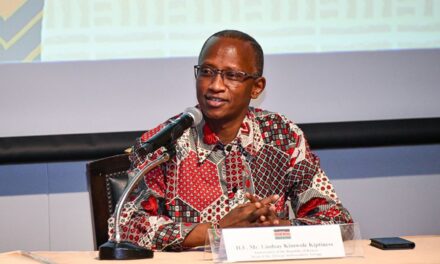
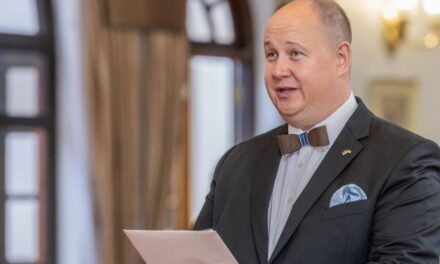
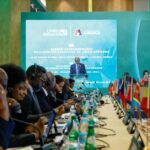
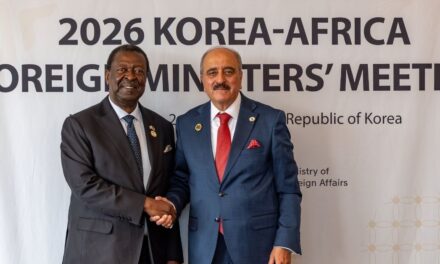
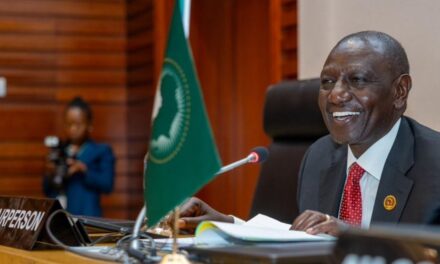
Moussa Faki had been invited to the summit in his capacity as the AU Commission Chair and guarantor of both the Luanda Process and Nairobi Process, had taken part in the opening ceremony and the traditional family photo alongside regional leaders. Photo: Handout
The African Union Commission (AUC) Chairperson Moussa Faki Mahamat will officially step down on Saturday, February 15, closing his two-term tenure.
“I end my mandate, and I won’t stay a day longer,” declared outgoing African Union Commission Chairperson moussa Faki Mahamat during his speech at the executive council meeting, the gathering of African foreign ministers ahead of the heads of state summit. His statement was a clear commitment to respecting the rules, subtly contrasting with leaders who amend constitutions to extend their time in power.
In an ironic twist, it is Moussa Faki, the very man who shattered Kenya’s dreams of leading the continental body when he defeated Amina Mohamed in 2017, who will now oversee the election in Addis Ababa.
Faki bid farewell with a signature humor, joking about his graying hair compared to younger ministers like Morocco’s Foreign Minister Nasser Bourita, seated in the front row.
His departure sets the stage for what promises to be one of the most dramatic leadership contests in AU history.
Kenya, determined to secure the coveted though technocratic chairperson seat for Raila Odinga, has already set a bold tone. Musalia Mudavadi, Kenya’s top diplomat, wasted no time in warning against any delay in the vote.
“If we fail to elect a chairperson at this critical juncture, Africa will appear weak, confused, and indecisive,” Mudavadi said during the Executive Council meeting.
“This is a moment for Africa to show leadership and unity.”
But why is Kenya sounding the alarm ahead of Saturday’s vote? Are they bracing for a diplomatic curveball?
History’s Shadow Looms Large
Kenya’s concerns are not unfounded. In 2016, a similar election in Kigali ended in a diplomatic stalemate when none of the three candidates—Botswana’s Pelonomi Venson-Moitoi, Uganda’s Specioza Wandira Kazibwe, and Equatorial Guinea’s Agapito Mba Mokuy—secured the required two-thirds majority.
The election had to be postponed to the following summit, embarrassing the continent’s leadership.
A repeat of that scenario would be disastrous for Kenya. The possibility of abstentions in the final round, creating a deadlock, could push the election to July, disrupting Nairobi’s well-laid plans for Raila Odinga’s campaign.
Confidence or Crisis?
Kenya’s messaging has been a blend of confidence and caution—projecting optimism while warning against delay. But is this diplomatic hedging or a reflection of a lack of preparedness?
Mudavadi’s firm stance suggests Nairobi is wary of a repeat of the Kigali deadlock. Yet officially, Kenya remains confident that Raila Odinga will emerge victorious.
The election will take place at the Chinese-built and donated AU headquarters in Addis Ababa.
The AUC chairperson and deputy will be chosen by secret ballot, with the winner needing at least 33 votes out of 49 to secure victory in the first round. No chairperson candidate in history has ever clinched the seat in the first round—a precedent that could prove challenging for Kenya.
High-Stakes Diplomacy
The presence of heads of state from 49 African countries adds to the high stakes. Moussa Faki will oversee the handover of leadership in a closely watched election that could reshape the AU’s future and define Kenya’s diplomatic standing on the continent.
For Kenya, this is more than just about Raila Odinga. It is a test of President William Ruto’s diplomatic prowess, a chance for Nairobi to cement its influence at the AU. But if the election descends into deadlock or Raila fails to secure the seat, it will be a sobering diplomatic setback for Kenya’s ambitions.
Will history repeat itself, or will Kenya achieve what it couldn’t in 2017 with Amina Mohamed?
The stakes couldn’t be higher. All eyes are on Addis Ababa.
Your support empowers us to deliver quality global journalism. Whether big or small, every contribution is valuable to our mission and readers.