By Mwangi Maina
| March 18, 2025

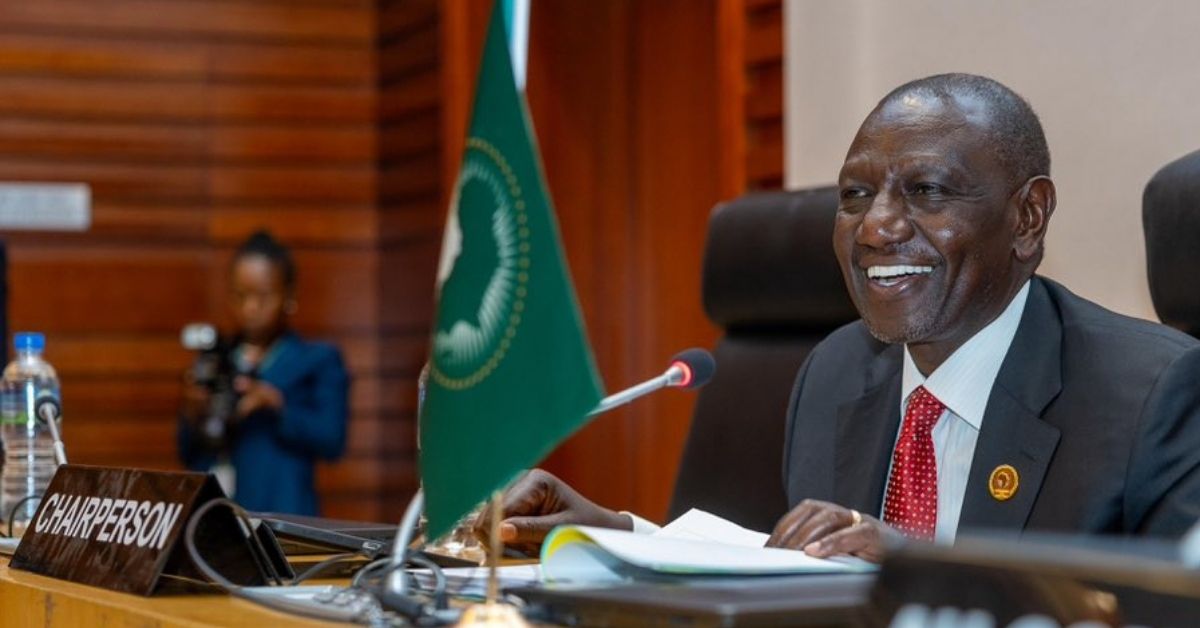
President William Ruto at the East African Community Heads of State Summit held in November 2024 in Arusha, Tanzania. Photo: Handout
Kenyan President William Ruto’s ambition to cement Nairobi’s leadership in resolving the Democratic Republic of Congo (DRC) crisis is facing turbulence, with the Southern African Development Community (SADC) quietly pushing back against Kenya’s assertive diplomacy.
At the centre of the friction is Ruto’s release of a draft list of peace facilitators—featuring former Kenyan President Uhuru Kenyatta, Nigeria’s Olusegun Obasanjo, and Ethiopia’s Hailemariam Desalegn—that bore both EAC and SADC insignias.
The problem? The document had not been formally vetted or endorsed by SADC structures, including the Double Troika, Senior Officials, or the Extraordinary Summit.
The diplomatic faux pas has raised eyebrows in Harare on Monday, where ministers from both blocs met to harmonize the Nairobi and Luanda peace processes.
SADC has now proposed an expanded panel of facilitators, emphasizing regional balance and gender inclusion.
Kinshasa has thrown its weight behind former Ethiopian President Sahle-Work Zewde—a signal that Desalegn’s perceived alignment with Kigali is contentious.
Ethiopia may now be forced to settle on one name, and SADC’s insistence on process over personalities has undercut Nairobi’s early manoeuvring.
“This move was premature, lacking clearance, and sparked suspicions of narrative control,” noted one source familiar with SADC’s internal workings.
It’s not the first time Ruto has gone public ahead of regional consensus.
His 2024 declaration of Raila Odinga’s endorsement by EAC heads of state for the African Union Commission chairmanship unraveled after Somalia distanced itself.
Similarly, his principled boycott of single-country summits evaporated when he later attended the Saudi-Africa Summit.
The broader question now is whether Kenya’s role as EAC chair is being conflated with Ruto’s personal diplomacy.
His closeness with Rwanda and Uganda, both key players in the DRC crisis, has further eroded Kinshasa’s trust in the EAC-led mediation.
The DRC’s withdrawal of the Kenya-led EAC Regional Force was a public signal of this discomfort.
Meanwhile, Uhuru Kenyatta’s silence has become deafening.
Once central to the Nairobi Process, he now appears marginalised, raising questions about Kenya’s internal coherence and whether the introduction of new facilitators is a veiled attempt to sideline him.
As the SADC-EAC summit wraps up, the joint communique confirms internal consultations on the draft MoU and the push for additional facilitators.
While Kenya still seeks to position itself as a continental powerbroker, its credibility hinges on quiet diplomacy and respect for regional processes—not premature announcements.
For now, the message from Harare is clear: leadership requires consensus, not imposition.
Your support empowers us to deliver quality global journalism. Whether big or small, every contribution is valuable to our mission and readers.