
















SOURCES: Kenya Abstained from UN Palestine Vote Over ICJ Dispute
By Mwangi Maina
| September 24, 2024
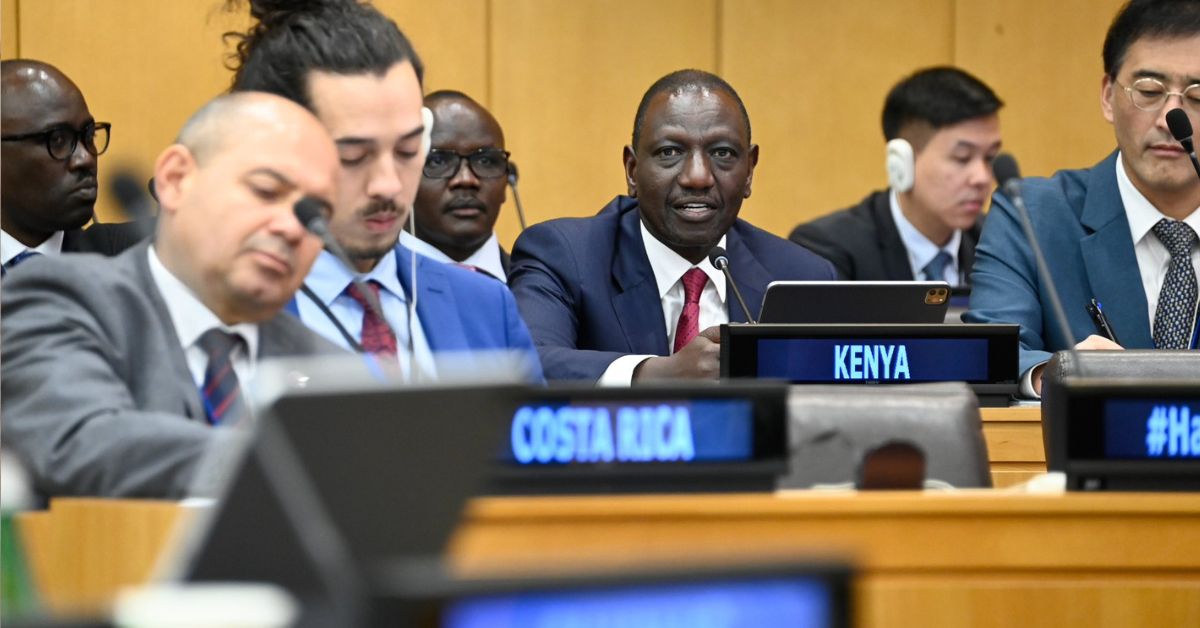
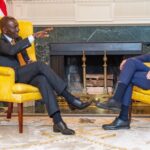
President William Ruto at the Leader-Level Meeting of the UN Economic and Social Council Ad Hoc Advisory Group on Haiti, held at the United Nations Headquarters in New York on Monday. Photo: (William Ruto on X).
Kenya’s abstention from the September UN resolution, which called for Israel to end its “unlawful presence in the occupied Palestinian territory” within 12 months, was driven by “strategic reasons” linked to Nairobi’s strained relations with the International Court of Justice (ICJ), sources tell Kenyan Foreign Policy.
While some accused Kenya of abandoning Palestine during a critical time, a senior Kenyan diplomat, speaking anonymously, explained that “Kenya decided to vote without explanation of vote all for strategic reasons.”
The diplomat referenced unresolved issues with the ICJ, stating, “You know we have had issues in that other place which still remain unresolved,” referring to the maritime dispute adjudicated by the ICJ, which ruled largely in favor of Somalia in October 2021.
The ICJ’s decision concerned a 38,000 square mile area in the Indian Ocean, believed to be rich in oil and gas.
Following the ruling, Kenya rejected it “in totality” and accused the ICJ of bias.
The maritime dispute has fueled diplomatic tensions between Kenya and Somalia, though relations have improved since President Hassan Sheikh took office.
The diplomat also noted, “We decided to restate our principled FP position on Palestine in our statement for the removal of any doubt.”
Following the vote, the Kenyan permanent mission in New York issued a statement reaffirming Kenya’s support for the Palestinian cause while urging for peace.
A second diplomatic source, experienced in multilateral settings at the UN, confirmed that Kenya abstained due to its rocky relationship with the ICJ, adding that “Kenya typically abstains from country-specific resolutions.”
However, this approach hasn’t always been consistent, as evidenced by Kenya’s strong condemnation of Russia’s invasion of Ukraine.
For decades, Kenya has maintained that its maritime border extends eastward from the point where it meets Somalia at the coast.
In contrast, Somalia argued in court that the maritime boundary should align with its land border, claiming that Kenya had violated its sovereignty by operating in its waters and seeking reparations.
The judges, however, dismissed Somalia’s claims, ruling that Kenya had not demonstrated prior agreement to its claimed border.
Ultimately, the ICJ drew a new boundary that divided the disputed area.
Kenya has refused to acknowledge the ICJ’s jurisdiction, indicating a readiness to defend its territorial integrity, even suggesting it might consider military action if necessary, given that the court lacks enforcement mechanisms for its rulings.
Your support empowers us to deliver quality global journalism. Whether big or small, every contribution is valuable to our mission and readers.