














On-and-Off Relations Between Nairobi and Tehran
By Mwangi Maina
| November 25, 2024
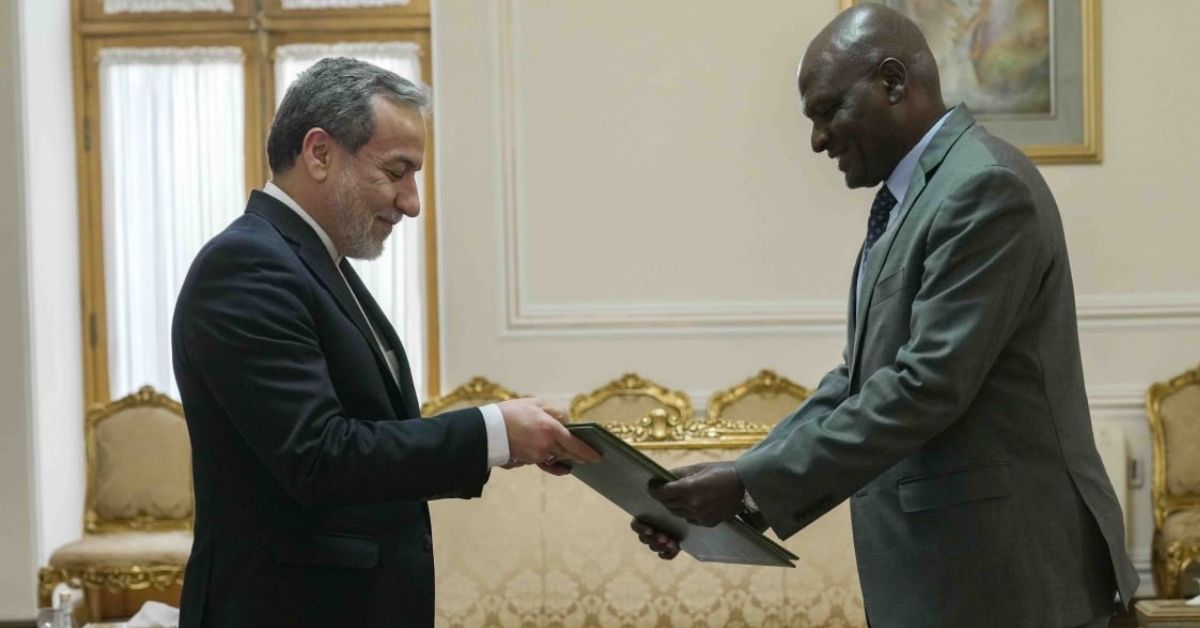
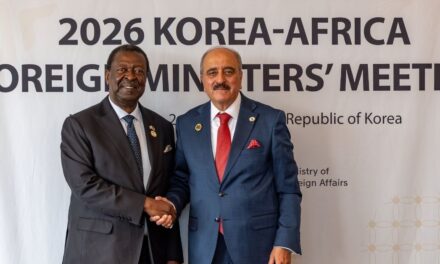
Kenyan Ambassador-designate to Iran, Lt. Gen. (Rtd) Jonah Maina Mwangi, presents his credentials to Iran’s top diplomat in Tehran on Monday, November 18, 2024. Photo: Handout
Kenya’s diplomatic ties with Iran have seen fluctuations over the years, oscillating between moments of strategic cooperation and strained silence.
The recent arrival of retired Lieutenant General Jonah Maina Mwangi as Kenya’s ambassador to Tehran signals Nairobi’s attempt to recalibrate its engagement with the Islamic Republic.
Mwangi, previously the Vice Chief of Kenya Defence Forces, officially presented his credentials copy to Iranian Foreign Minister Seyyed Abbas Araghchi in November, marking the beginning of his tenure during a highly charged geopolitical climate.
Iran, currently locked in a volatile conflict with Israel, represents a complex partner for Kenya.
While Nairobi’s relations with Tehran have historically centered on trade and technical cooperation, the two nations have not maintained a consistently robust partnership.
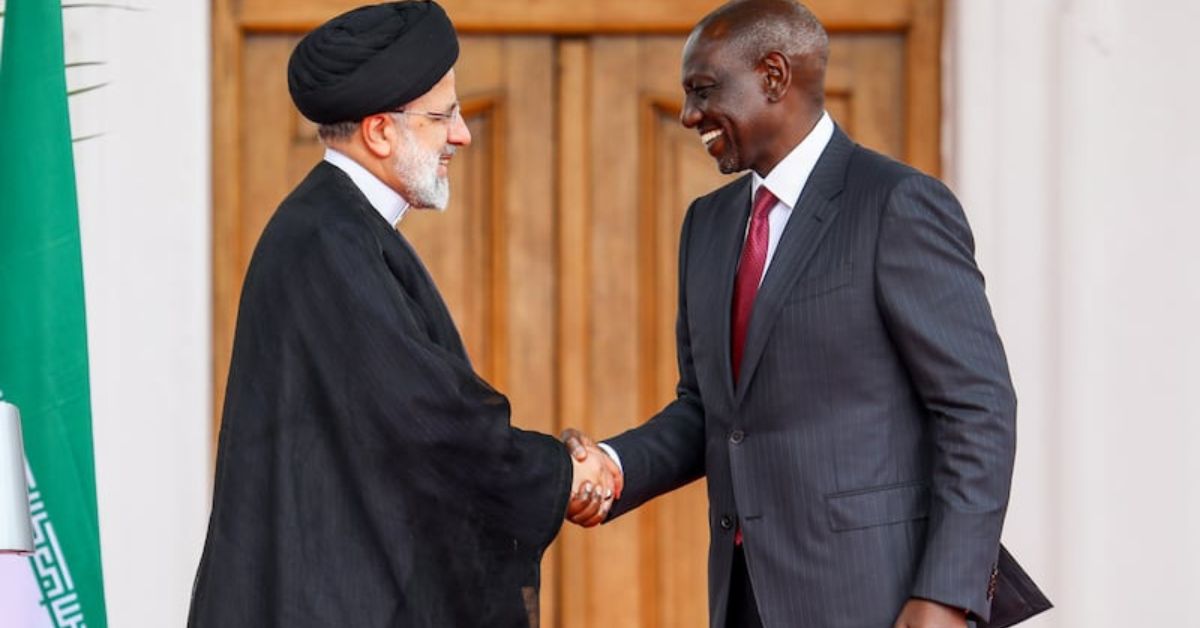
For instance, Iran’s high-profile diplomatic overtures, such as President Ebrahim Raisi’s state visit to Kenya last July, highlighted mutual interests but also drew scrutiny due to Raisi’s hardline politics and Iran’s contentious international reputation.
Raisi’s visit to Nairobi, the first by an Iranian leader in over a decade, sought to deepen trade relations between the two countries.
Kenyan officials framed the visit as a strategic move to enhance economic ties, with Iran expressing interest in Kenyan agricultural exports and energy projects.
However, the optics of the visit, juxtaposed with Iran’s broader geopolitical stance, raised concerns in diplomatic circles.
Kenya’s cautious stance reflects its balancing act in fostering trade ties with Tehran while navigating its relationships with Western allies who view Iran with skepticism.
Last-minute changes to his itinerary delayed his arrival, sparking speculation that Washington was displeased with Nairobi hosting Raisi for a state visit-the highest level of diplomatic engagement.
For Tehran, the visit to Nairobi represented a strategic move to expand its diplomatic outreach and engage with African nations highlighting Iran’s interest in diversifying its alliances and exploring new avenues for economic cooperation beyond its traditional partners.
However, this occurred during a period when Nairobi’s foreign policy had shifted significantly towards a Western orientation.
The tragic helicopter crash that claimed President Raisi’s life in May 2024 added an unusual layer of connection between the two nations.
Kenyan social media buzzed with reflections on the eerie parallel between Raisi’s crash and the earlier demise of Kenya’s four-star general in a similar helicopter model.
General Ogolla, who had met Raisi during his African tour, was among the Kenyan officials who symbolized Nairobi’s goodwill toward Tehran despite the inherent challenges in their relationship.
Before the Covid-19 pandemic hit the country in March 2020, Iran was enjoying sh15 billions of exports to Kenya, mainly in construction materials and textile products, while in the opposite direction, Kenya only managed sh3 billion from the sale of tea and coffee to Tehran.
Kenya is targeting Iran as one of the major buyers of its tea and it has since the lifting of the sanctions tried to promote the produce.
Kenya supplies about 20 million kilogrammes of the 120 million kilos that Tehran imports annually.
During the Ahmadinejad administration’s outreach to Africa, Kenya played a prominent role.
In 2009, President Ahmadinejad visited Kenya to explore trade and investment opportunities in the East African nation.
This visit marked the first Iranian presidential delegation to Kenya since President Rafsanjani’s trip in 1996.
Ahmadinejad, who met President Mwai Kibaki had persuaded him and Kenyan officials to deepen bilateral relations, and the two nations agreed to establish a shipping route between Bandar Abbas and the Port of Mombasa.
Nairobi allowed Iran to set up a commercial center.
During this visit, Nairobi and Tehran concluded agreements to export oil to Kenya, establish direct Nairobi-Tehran flights, and offer scholarships to Kenyan students to study in higher educational institutions in Iran.
Kenya wishes to preserve its relations with Iran, but the threat of economic costs has disrupted this relationship.
Most notably, the oil agreement to export 80,000 barrels of oil daily to Kenya was finalised by 2012, and was cancelled due to sanctions against Iran.
Iran’s embassy in Nairobi houses a cultural center, and the Iranian Red Crescent Society, which set up health clinics in Kenya to encourage Iranian soft power influence in the country.
KFP has learned that the Iranian medical clinic conducted several humanitarian initiatives in early May to mark the International Red Crescent/Red Cross Week.
They offered free check-ups at the Ngong Road and Park Road centers on May 8, as well as another free medical camp at the Makina Mosque in Kibra.
After the revolution, King Faisal Center for Research and Islamic Studies, a research institute based in Riyadh, Saudi Arabia, indicated that Tehran urged the Ahl al-Bayt World Assembly to set up shop in Kenya.
The organisation expanded its membership base to advance an Islamic awakening in Kenya.
It funds religious groups, contributing to the construction of housing projects and dams, and expanding healthcare and humanitarian services focused mainly on Kenya’s Shia population, a small group among the country’s minority Muslim population.
A visit to Africa last year saw Ayatollah Ramazani, the Secretary General of the World Assembly tour Kenya and the medical clinic of Iran in Nairobi.
Kenya’s coastline on the Indian Ocean, its proximity to terrorist hotspots in Somalia, Ethiopia, and Sudan, ongoing Israeli investments, and Libya’s inability to sustain its investments in Kenya after the 2011 Libyan Arab uprising made Kenya increasingly important to Iran.
Iran had made significant strides in advancing its ideological objectives in Kenya, enabling it to orchestrate numerous anti-Western schemes.
The volume of thwarted Iran-linked plots and arrests indicates that Iranian clandestine activity- targeting Western countries interests in Nairobi is significant.
In 2012, Kenyan officials arrested two Iranians believed to be members of the IRGC Quds Force.
The two were suspected of planning operations against targets in Nairobi, including the embassies of Israel, the United Kingdom, the United States, and Saudi Arabia.
In 2014, Kenyan authorities detained two other Iranians who entered the country with forged Israeli passports and were suspected to be plotting attacks.
In 2016, two Iranians were arrested in an Iranian diplomatic car in Kenya and charged with collecting information to facilitate an attack against the Israeli embassy in Nairobi.
The arrest and the refusal by Nairobi to commute the sentences of those arrested led to diplomatic rows between Nairobi and Tehran.
Kenya is one of Iran’s main trading partners in the continent, and Nairobi and Tehran agreed to establish formal ties in 1982 and set up embassies in the two capitals three years later.
But Kenya, according to sources, restricted visits by Iranians to its shores.
President Mwai Kibaki’s “Look East” policy helped facilitate ties with Iran when he assumed office in 2002.
Your support empowers us to deliver quality global journalism. Whether big or small, every contribution is valuable to our mission and readers.