Nairobi’s Laxity Endangers Thousands of Kenyans in Lebanon
| October 4, 2024

Kenyan President William Ruto at the Holy Western Wall in Israel. Photo: Handout
The volatile situation in Lebanon has exposed the Kenyan government’s laxity in rescuing thousands of Kenyans living and working there, despite earlier warnings urging immediate action.
The revelation comes as Kenya urges its citizens in Lebanon to register for evacuation amid heightened tensions that raise fears of a widening Middle East conflict.
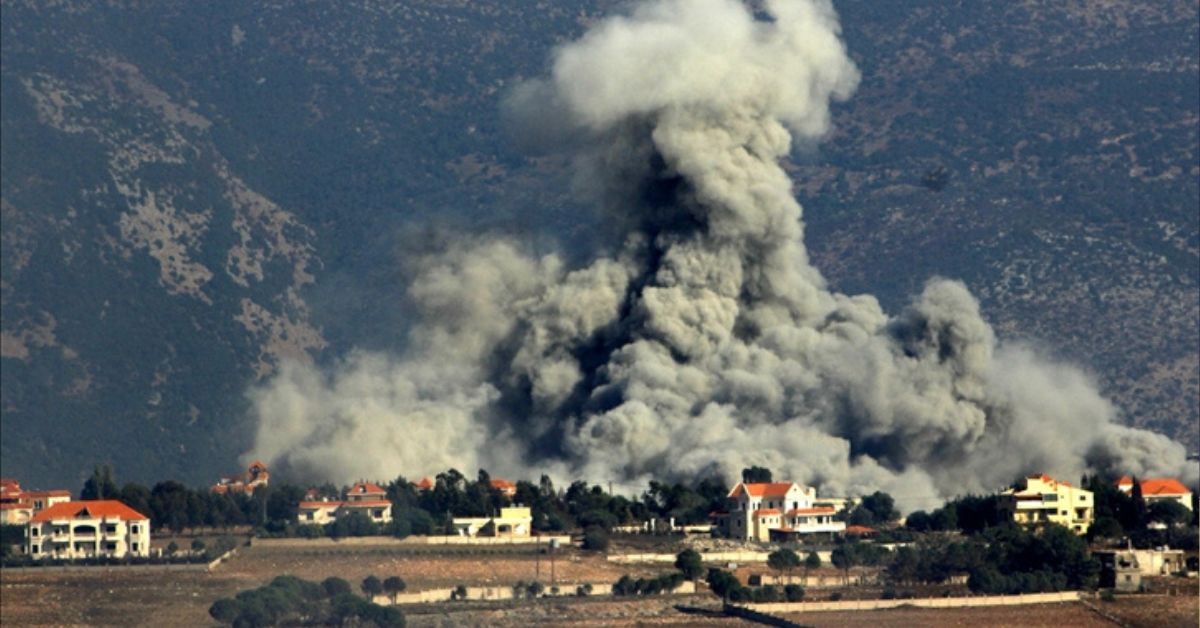
The region is on high alert after Iran fired approximately 180 ballistic missiles at Israel in response to Israeli assassinations of top Hamas, Hezbollah and Islamic Revolutionary Guard Corps (IRGC) leaders.
KFP has learned that the Kenyan parliament, through the Defence, Intelligence, and Foreign Relations committee, wrote a report in August 2023 recommending a total ban on the recruitment and export of Kenyan workers to Lebanon until the volatile political situation stabilized.
However, the government which claims there has been a ban on migration has continued to allow the export of labor to the country despite these previous warnings.
“From the report that was laid on the floor of the house, it seems that the government has not effected the recommendations,” Committee vice chair Bashir Abdullahi, who led a team of parliamentarians to the Middle East regionin May last year, said.
Bashir had led a delegation to various Kenyan embassies and consulates in the region to assess their workforce and status.
He noted that the alert on the total ban of domestic worker exports is still in order since Kenyans are still present in Lebanon.
Diaspora Affairs top official Roseline Njogu insists a ban has been in place for over a year, yet she cannot provide a public ban notice to support this claim.
She also remains unable to share details on the contingency plan for evacuations or the number of Kenyans who have already been brought back home.
There are about 26,000 Kenyans in Lebanon, the majority being domestic workers.
A few professionals work with the UN agencies, International Non-Governmental organisations, and some students.
According to the Bashir-led report, the situation of Kenyan migrant workers in Lebanon is dire, both in scale and the magnitude of incidents occurring there, including frequent deaths.
“Among the prevalent issues are runaways, violation of residency laws, misdemeanors, non-payment of salaries, mistreatment and abuse, adherence to contractual obligations, and incidents of human trafficking,” the report tabled in parliament last August and verified by this outlet noted.
“The Mission makes occasional visits to Lebanon to provide consular services and enhance diaspora engagement. Recommendations for managing Kenyan labor migration to Lebanon include continuing to tighten and enforce the ban on recruitment and export of Kenyan workers to Lebanon until the situation returns to normalcy.”
However, the Kenyans urged to relocate to safer areas by Nairobi and register for evacuations are more than 26,000 domestic workers who rarely get to know the landscape of the country due to regulations and worker-employer-related issues.
This massive oversight by the government, failing to act on clear and urgent parliamentary recommendations, has left thousands of Kenyans vulnerable in a dangerous and unstable region.
This is not the first time Nairobi, which maintains an Honorary Consulate in Beirut led by Sayed Chalouhi, has been accused of laxity in Lebanon.
In July 2020, a CNN exposé titled “How the Kenyan consulate in Lebanon became feared by the women it was meant to help” detailed numerous allegations of abuse by the Kenyan Consulate in Beirut.
Kenyan women accused the consulate of stealing money, physically assaulting them, and attempting to coerce them into sex work.
The consulate is supposed to protect over 10,000 Kenyan domestic workers, yet, as the CNN report highlighted, migrant workers who seek help from the consulate rarely receive any assistance.
Lebanon’s ongoing economic collapse has severely impacted its migrant domestic worker population, many of whom now wish to be repatriated.
Under the Kafala (sponsorship) system, domestic workers typically do not have the right to end their contracts and depend on their employers—who often retain their passports and sometimes lock them inside their houses—to allow them to return to their home countries.
The CNN investigation was based on the work of Lebanon’s migrant worker advocacy group, Anti-Racism Movement (ARM Lebanon), which has documented reports of abuse at consulates and shelters.
In May and June 2020, ARM Lebanon received more than 1,000 calls from migrant workers of various nationalities asking for food, which they could no longer afford.
Many calls were on behalf of families or groups of 10 to 20 people living in the same apartment.
These numbers reveal an alarming deterioration in the living conditions of migrant workers stranded and at risk in Lebanon, receiving no response from the authorities in Lebanon or their home countries.
KFP has learned that the same Honorary Consul accused of grave human rights abuses against Kenyan women has been tasked with leading the current evacuation process.
During that time, the Kenyan embassy in Kuwait, which oversees Lebanon and was headed by Halima Mohamud (now recalled), was tasked with investigating the claims.
According to a diplomatic source privy to the matter, the embassy reported to Nairobi that these were just allegations.
No public report has ever been issued by the foreign office to clarify these claims.
This outlet contacted the Anti-Racism Movement (ARM Lebanon) in April 2024 to inquire about any changes or improvements since the 2020 CNN coverage, whether the Honorary Consul remained the same individual, and if there have been any reported cases of mistreatment or abuse of Kenyan workers in Lebanon since then.
In their response, ARM Lebanon stated, “Unfortunately, there was another wave of protests against the consulate in 2022 by Kenyan women in Lebanon due to continuous mistreatment by the honorary consulate.”
They added, “We were extensively involved during this period; you can find an initial statement about this here and here. We also coordinated with multiple news outlets about the situation (see here and here) and tried to reach out to journalists and activists in Kenya to coordinate advocacy actions, but to no avail. The consul is indeed still the same person, and we continue to hear accounts of abuse and exploitation,” the group said in an email in April this year.
Your support empowers us to deliver quality global journalism. Whether big or small, every contribution is valuable to our mission and readers.