KENYA: The Tragedy of Tacticianism in National Security
By Kiyo Nganga
| August 6, 2025
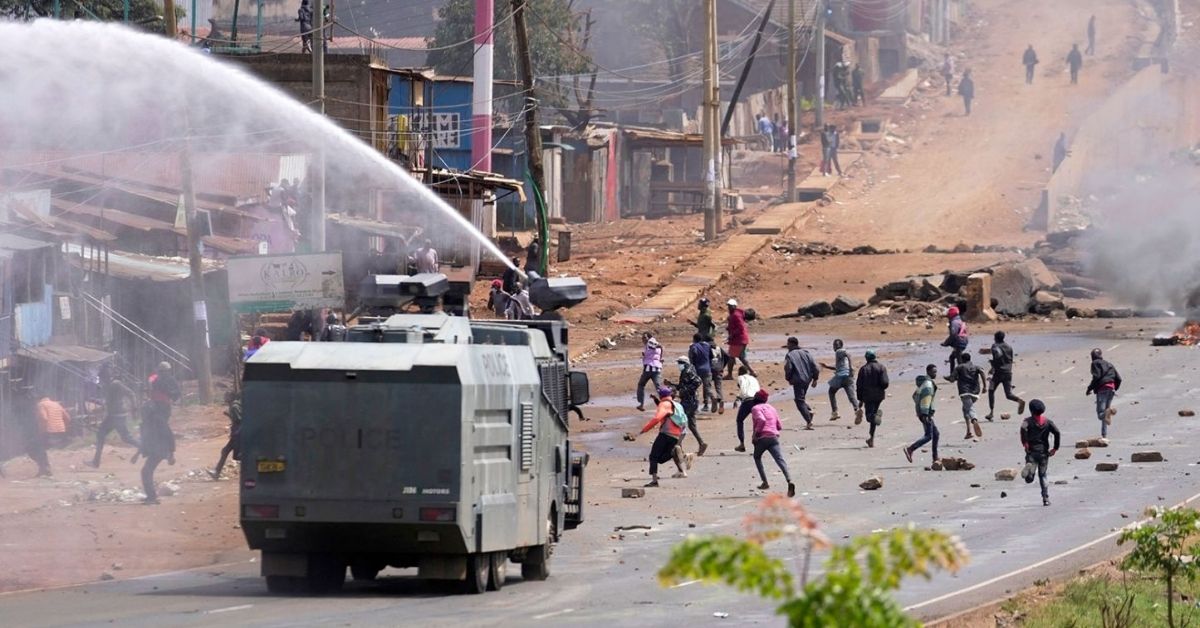
Riot police scatter protesters with water cannons during demonstrations to mark the historic 1990 Saba Saba protests for democratic reforms in the Kangemi slum of Nairobi, Kenya, Monday, July 7, 2025. Photo: Brian Inganga/AP
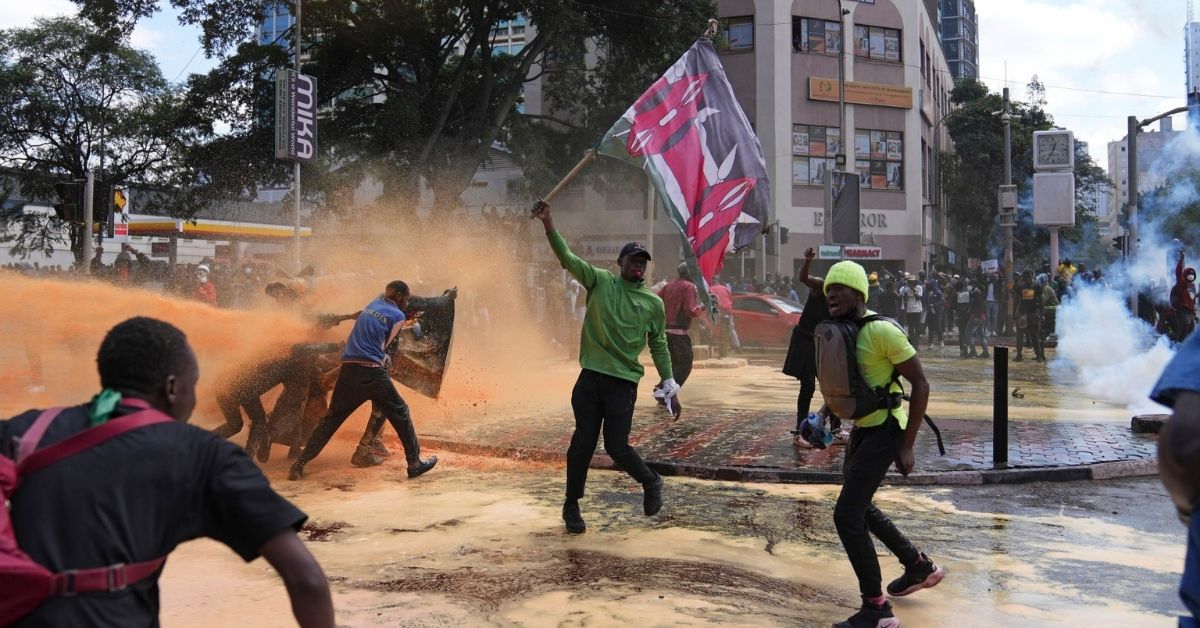
The recent scenes on our streets—peaceful protesters bundled into police trucks, young men carried away with gunshot wounds, hired goons attacking demonstrators as armed officers look on, blood pooling on tarmac, posters of missing youths, and protesters charged with terrorism—are more than disturbing.
They are a warning. A warning that the state is slipping back into the old, dangerous habit of crushing dissent with brute force and calling it security.
A troubling pattern is becoming entrenched. Each wave of protests is met with a response that is harsher, more erratic, and increasingly reckless.
What should be a matter of public order management is being treated like urban warfare.
We now see police officers in combat fatigues, carrying live rounds and high-calibre rifles to confront young citizens whose only “weapons” are placards and purpose. Others, unarmed, are dragged from the streets, shoved into unmarked vehicles—or simply vanish.
We have come to expect this. That is the real tragedy.
Even worse, protesters are charged under the Prevention of Terrorism Act (POTA)—a law designed for real threats like al-Shabaab.
This is not just legal overreach; it is a strategic disaster. It undermines years of progress in Kenya’s counterterrorism and Preventing and Countering Violent Extremism (PCVE) programs, which have relied on community trust and cooperation.
Trust does not fall from the sky. It is built—slowly—through dialogue, respect, and a social contract in which citizens surrender certain freedoms in exchange for the belief that the state will protect them, not target them.
When accountability is met with bullets or disappearances, that contract expires. And in that vacuum, dangerous ideologies find fertile ground.
History has already given us this lesson. Boko Haram in Nigeria began not as a terrorist organisation but as a religious movement radicalised by state brutality and extrajudicial killings.
Kenya is not immune. In Mombasa, Lamu, Garissa, and Wajir, profiling and harassment by security forces have fuelled extremist recruitment before. We paid for that overreach with blood. Now, we are watching Nairobi, Kisii, and Nyeri inch dangerously in the same direction.
Equally alarming is the use of state-backed “goons” to disrupt protests. This is not just unconstitutional—it is suicidal.
A state must never outsource its monopoly on violence. Once it does, it breeds criminal gangs whose loyalty is for sale. When the money dries up, their violence does not vanish; it mutates.
Nigeria’s Bakassi Boys and Area Boys began this way, as did Haiti’s G9 gangs, which now hold Port-au-Prince hostage. Kenya risks sliding down that same path.
The solution begins with rethinking how we train, arm, and deploy police officers for public order. Crowd control in a democracy is not war.
It demands restraint, negotiation, and discernment—not sniper rifles and battalion formations. Security agencies must distinguish between legitimate protest and genuine security threats. Every failure to do so only multiplies the risks we claim to be preventing.
This is not merely about policing tactics; it is about governance and national cohesion. When we brutalise unemployed, disillusioned youth, we push them not only toward despair but also toward those who offer them dangerous alternatives.
With the 2027 elections approaching, Kenya is flirting with a future defined by fear. Normalising the use of goons, militarising the police against citizens, and abusing anti-terror laws to suppress civic expression could spark an influx of small arms and a culture of self-defence that leads to violent chaos.
We are mistaking tactical wins for strategic security. What we lose today—trust, legitimacy, and civic order—will haunt us tomorrow.
Policing is not about domination; it is about legitimacy. And legitimacy is not earned by breaking the very laws you are meant to enforce.
A truly secure nation is not one where protests are silenced. It is one where protests are heard and managed professionally.
Kenya is at a crossroads. We must choose: a democratic order rooted in justice or a fragile silence enforced by fear.
A government that fears its own people edges dangerously close to authoritarianism. A state that criminalises dissent risks forfeiting its moral authority to govern.
We must act now. The path forward is dialogue, justice, and restraint. Anything less is a slow march toward disorder disguised as order.
Kiyo Nganga is a Criminologist and Security Risk Practitioner, and Head of Security Information Services at Armistice Security Consult International.
Your support empowers us to deliver quality global journalism. Whether big or small, every contribution is valuable to our mission and readers.