























Horn of Africa Advances AfCFTA Integration Unevenly
| March 11, 2026
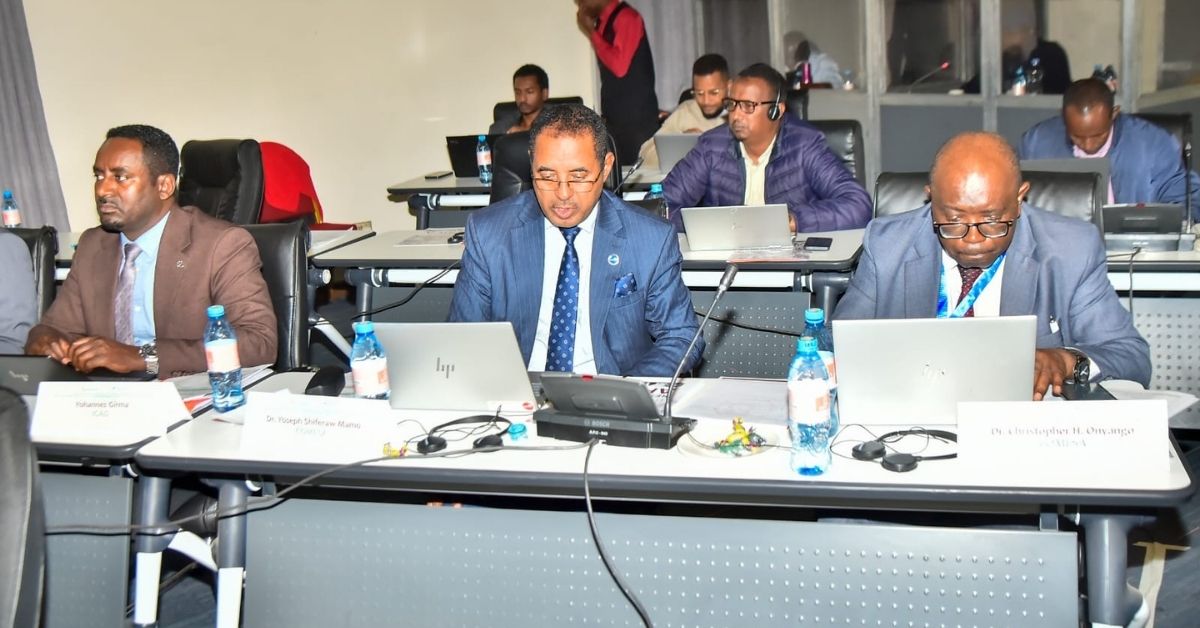
Participants during a regional technical consultation on cross-border livestock trade integration under the AfCFTA held in Naivasha, Nakuru. Photo: KFP
With a combined population of more than 200 million people and some of Africa’s largest livestock resources, the Horn of Africa could become a major beneficiary of the African Continental Free Trade Area (AfCFTA).
Yet the region’s three key economies, Kenya, Ethiopia and Somalia, remain at different stages of implementation, ranging from active participation in AfCFTA trade initiatives to ongoing legislative and institutional reforms.
While Kenya has already begun trading under the continental pact, Somalia is completing the final steps toward ratification, and Ethiopia is restructuring key livestock trade regulations to align with AfCFTA rules aimed at boosting intra-African trade.
The AfCFTA, which officially launched trading in January 2021, seeks to create a single African market for goods and services by reducing tariffs, harmonizing standards and addressing non-tariff barriers across the continent.
The concerns about the pace of implementation took centre stage during regional technical consultations on cross-border livestock trade integration under the AfCFTA held in Naivasha, Nakuru.
Kenya has emerged as one of the early implementers of the agreement, supported by a national implementation strategy and active participation in the AfCFTA Guided Trade Initiative.
Officials say the country is positioning key sectors to take advantage of expanded continental markets under AfCFTA, targeting increased exports, stronger regional value chains and improved trade competitiveness.
“The Kenya National AfCFTA Implementation Strategy (2022–2027) provides the national roadmap for implementing AfCFTA commitments and identifies agriculture, livestock and fisheries as priority sectors for export expansion and regional value chains,” said Lynda Ouma of Kenya’s State Department for Trade.
Kenya has already begun exporting goods under AfCFTA through the Guided Trade Initiative, with dozens of firms participating and certificates of origin issued for shipments to participating countries.
She revealed that Kenya was among the first countries to ratify AfCFTA and participate in the Guided Trade Initiative, with 33 firms participating and more than 100 certificates of origin issued.
Beyond the continental framework, she adds, Kenya also relies on existing regional agreements such as the East African Community (EAC) and COMESA free trade areas to facilitate cross-border commerce.
However, officials acknowledge that challenges remain, particularly in areas such as animal disease surveillance, veterinary services, and infrastructure and cross-border coordination systems.
Somalia, which joined the East African Community in 2024, is now in the final stages of formalising its participation in AfCFTA, positioning its large livestock sector to expand regional trade and access broader African markets.
The country’s parliament approved the AfCFTA ratification bill in late 2025 with strong support, leaving only presidential assent and deposit of ratification instruments with the African Union Commission before the agreement becomes legally binding.
According to the country’s AfCFTA implementation briefing, parliament passed the AfCFTA bill with 145 votes in favor, and the next step is presidential assent followed by depositing the instrument of ratification with the African Union Commission.
The country’s Director of Foreign Trade and Market Access, Osman Ibrahim said the government is also working to establish institutions and technical units that will coordinate implementation once the agreement enters into force.
“Establishing a National AfCFTA Coordination Committee and building technical capacity to support exporters will be critical for Somalia to operationalize the agreement,” Ibrahim stated.
Somalia’s economy, where livestock accounts for about 45 percent of GDP and more than 70 percent of export earnings, is expected to benefit significantly from access to continental markets.
In Ethiopia, policymakers are pursuing regulatory reforms to strengthen the livestock trade system, improve veterinary and certification frameworks, and align national regulations with AfCFTA requirements to enhance regional market access.
Ethiopia holds Africa’s largest livestock population, including more than 70 million cattle and tens of millions of sheep and goats, positioning the country as a potential major supplier of animal products across African markets.
“The establishment of the AfCTA creates new opportunities for expanding intra-African livestock trade by removing tariff and non-tariff barriers and harmonizing trade regulations,” stated Samuel Gizaw, the AfCTA coordinator.
A policy presentation on Ethiopia’s livestock sector highlights that reforms targeting veterinary standards, export regulations and livestock marketing systems are intended to support the country’s integration into continental trade networks.
Despite the sector’s size, Ethiopia exports only a fraction of its livestock production due to weak processing capacity, limited market infrastructure and widespread informal cross-border trade.
Across the Horn of Africa, experts say AfCFTA could unlock new opportunities for livestock trade corridors linking pastoral communities in Ethiopia and Somalia with markets in Kenya and beyond.
However, analysts and experts caution that deeper coordination between veterinary authorities, trade ministries and regional organizations will be necessary for the region to fully capitalize on the agreement.
The African Union’s Inter-African Bureau for Animal Resources (AU-IBAR) is working with governments and regional blocs through the Africa Pastoral Market Development Platform to strengthen cross-border livestock trade and improve infrastructure along key pastoral corridors.
Dr John Oppong-Otoo, coordinator for economics, marketing and trade at AU-IBAR, said the trade deficit persists despite the continent’s vast livestock population and growing demand for meat and animal products.
He said Africa imported more than $5 billion (Sh650 billion) worth of meat in 2024, highlighting a significant opportunity for African producers to expand regional supply and reduce reliance on imports.
“Africa has the animals, the institutions and the policies,” he said. “What has been missing is the connection between our markets. Trade is about linking surplus to demand, and that is the gap we are working to close.”
Your support empowers us to deliver quality global journalism. Whether big or small, every contribution is valuable to our mission and readers.