Algeria Steps Up Lobbying for AUC Deputy Chair in Nairobi
By Mwangi Maina
| January 28, 2025
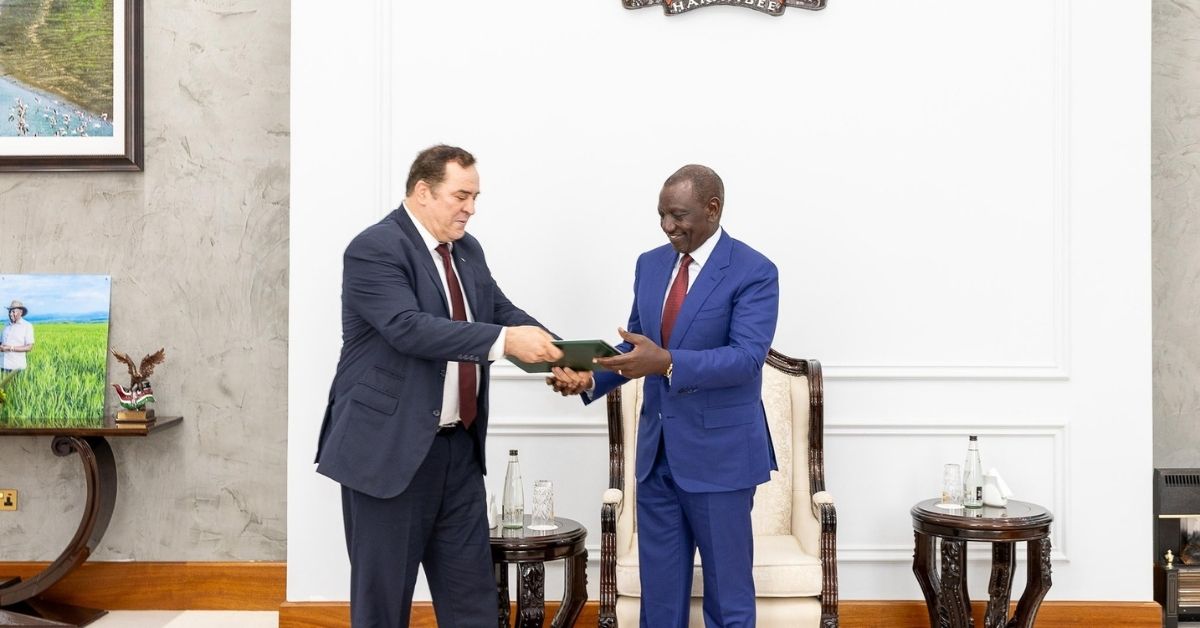
President William Ruto meeting with Algerian Minister of Communication, Mohamed Meziane, at State House, Nairobi, on Saturday.
Algeria is intensifying its diplomatic push to secure the African Union Commission (AUC) Deputy Chair position for Selma Malika Haddadi, the country’s ambassador to Ethiopia and permanent representative to the AU.
In a high-level mission to Nairobi on Saturday, Algerian Minister of Communication Mohamed Meziane, acting as a special envoy of President Abdelmadjid Tebboune, arrived in Kenya alongside Haddadi to lobby President William Ruto’s administration for support.
This visit is part of Algeria’s broader strategy to consolidate backing for Haddadi’s candidacy ahead of the February elections.
Haddadi, a seasoned diplomat who has previously served as Algeria’s ambassador to Kenya, is competing against candidates from Morocco, Egypt, and Libya.
While the contest for AUC chairperson has dominated headlines, the deputy chair race is proving to be just as politically charged—particularly in North Africa, where Algeria and Morocco’s longstanding rivalry is shaping the battle.
Algeria-Morocco Showdown Moves to the AU Stage
The most intense contest in the deputy chair race is between Morocco’s Latifa Akharbach and Algeria’s Selma Haddadi.
The stakes are high for the two neighbors, whose diplomatic relations have been severed since August 2021.
This election could further entrench divisions within the AU as both countries seek to expand their influence within the continental body.
At the heart of the Algeria-Morocco rivalry is the decades-old Western Sahara dispute.
Rabat claims the resource-rich former Spanish colony as part of its territory and has aggressively pursued international recognition for its sovereignty over the region.
Algeria, by contrast, remains a staunch supporter of the Polisario Front, which has been fighting for the independence of what it calls the Sahrawi Arab Democratic Republic since the 1970s.
Algeria’s diplomatic offensive in Nairobi comes with expectations of reciprocity. Algiers has already declared support for Raila Odinga’s bid for the AUC chairperson seat, a move that puts pressure on Kenya’s leadership to back Haddadi in return.
Kenya’s Position: Navigating a Delicate Diplomatic Balance
For Kenya, the Algerian outreach is a strategic play. Algiers sees Nairobi as a potential ally in this contest, particularly given Kenya’s historical support for Western Sahara’s self-determination.
However, Morocco has also been strengthening ties with Kenya, making the decision on whom to back far from straightforward.
President Ruto’s foreign policy approach to the Western Sahara issue has been inconsistent.
On his first day in office, he attempted to sever Kenya’s ties with the Sahrawi Arab Democratic Republic via a tweet (now X), only to walk back the decision amid diplomatic pushback.
The episode cost Kenya credibility but demonstrated Rabat’s strong influence in Nairobi.
Raila Odinga’s candidacy adds another layer of complexity. While Algeria supports Odinga, his personal history with Morocco tells a different story. He has previously expressed admiration for Morocco’s sovereignty over Western Sahara, visited the contested city of Dakhla, and received a warm welcome in Rabat.
These past engagements could complicate Algeria’s expectations of reciprocal support from Odinga’s allies in Kenya.
AU Power Dynamics and the North African Rift
Since its return to the AU in 2017, Morocco has pursued an aggressive diplomatic strategy to bolster its standing within the continental bloc, leveraging royal diplomacy and strategic partnerships.
It has gained influential allies, including Djibouti and Madagascar, whose governments are backing Morocco’s sovereignty over Western Sahara.
Algeria, meanwhile, still wields considerable influence within the AU, counting on key supporters such as Nigeria, Angola, and South Africa.
The outcome of this contest will not only shape the AU Commission’s leadership but could also shift the balance of power within the organization, particularly on contentious issues like Western Sahara.
As lobbying intensifies in the final stretch before the February elections, Kenya finds itself at the intersection of a North African power struggle that will test its diplomatic agility.
The coming weeks will reveal whether Nairobi leans toward Algiers in exchange for its backing of Raila Odinga or whether Morocco’s deepening ties with Kenya tilt the scales in Rabat’s favor.
Your support empowers us to deliver quality global journalism. Whether big or small, every contribution is valuable to our mission and readers.