
















After Oyo: Will Ambassadors Return?
By Mwangi Maina
| November 25, 2026
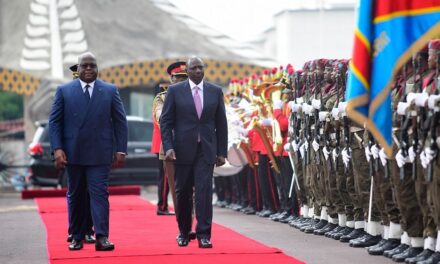
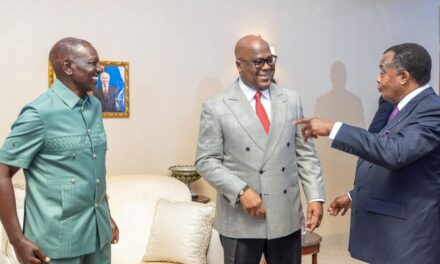
The headline promise from Sunday’s four-party summit in Oyo, Republic of Congo, was the “return of ambassadors”. In Nairobi’s haste to claim a diplomatic victory, protocol is already running ahead of reality.
In Kinshasa, Kenyan political appointee Peter Tum, who had previously reported for duty despite being left in limbo without Congolese agrément, the host state’s formal diplomatic consent, has his X bio reading “Kenya’s Ambassador to the DRC”.
Under diplomatic protocol, however, an envoy remains a mere nominee until formal accreditation is granted and credentials are presented to the host president, making the title strictly aspirational.
President Tshisekedi’s administration is in no rush to play along. Asked whether the Congolese government will grant accreditation for the envoy, a senior official poured cold water on expectations of an instant reset.
“C’est un rapprochement graduel, les échanges vont se faire diplomatiquement. À ce stade on n’a pas de calendrier fixe pour cela,” the official said (“It is a gradual rapprochement, the exchanges will be done diplomatically. At this point we don’t have a fixed schedule for this”.
Translated out of careful diplomatic French, the message is blunt: accreditation remains conditional, and Kinshasa refuses to be hurried by Nairobi’s domestic political calendar.
Having already stalled two consecutive Kenyan ambassadorial nominees, Congolese policymakers know withholding agrément is their sharpest lever.
With Kenya’s general election looming in August 2027, Mr Ruto urgently needs export growth, protection for over sh100 billion in Kenyan corporate investments, and momentum for the Mombasa-DRC trade corridor amid a global scramble for critical minerals.
Mr Tshisekedi faces no such immediate election clock, and Kinshasa will likely keep its agrément firmly on ice until Nairobi backs its words with action.
Reading the Diplomatic Tea Leaves
That caution explains why decoding the Oyo communiqué matters far more than celebrating the handshake. The summit produced predictable boilerplate like “mutual understanding,” “good-neighbourliness,” and “African solidarity.”
“I’d read it as a thaw, not a full reset yet,” says Bravin Onditi, a regional affairs analyst. “What they’ve agreed is just the basics: bring ambassadors back, revive the joint commission, and talk regularly.”
At its root, the breach between Nairobi and Kinshasa stems from a failure by Kenyan politicians under Mr Ruto to grasp the DRC’s strategic perspective, compounded by domestic political rivalries spilling into foreign policy.
Statecraft does not require agreeing with a neighbour’s worldview, only acknowledging its red lines. Worse, distrust has spilled beyond Kinshasa’s political elite into the Congolese public, where online commentators have urged caution toward Mr Ruto’s Oyo pledges.
This is a scepticism reinforced by Sudan’s military leadership accusing him last year of breaking a high-level promise not to back the paramilitary Rapid Support Forces (RSF), only for RSF figures to resurface in Nairobi shortly afterward to organise a parallel administration.
Two Readouts, Two Domestic Audiences
Placed side by side, the separate statements released by the Kenyan and Congolese presidencies hours after leaving Oyo read like accounts of two different meetings.
Mr Ruto’s statement stressed restoring ambassadorial ties, reviving the Joint Grand Commission for Cooperation, and deepening trade and regional integration. Crucially, it made zero mention of Rwanda, keeping Nairobi’s public posture strictly bilateral and neutral.
Tshisekedi’s readout told a sharper, more triumphant story for his domestic base. It led with solemn pledges on “state sovereignty, territorial integrity, [and] non-interference in internal affairs”, a diplomatic code for forcing Nairobi to rein in Congolese opposition figures, including Corneille Nangaa’s M23-allied Alliance Fleuve Congo (AFC) and allies of former president Joseph Kabila, who have used Nairobi to organise and address the press.
More tellingly, Kinshasa explicitly framed the summit as part of regional momentum against “Rwandan aggression”.
Each leader left Oyo with a tailored pitch. Mr Ruto sought to reassure anxious Kenyan boardrooms, from lenders like KCB and Equity to major retailers that their Congolese operations are safer. Mr Tshisekedi told Congolese voters he had compelled Nairobi to respect Congolese sovereignty.
Hours after the summit, a sharp public exchange on X laid bare just how raw those unresolved grievances remain. Responding to Mr Ruto’s post, former US Special Envoy for the Great Lakes J. Peter Pham warned that appeals to “solidarity and brotherhood” will ring hollow if Nairobi continues allowing M23 and eastern Congo armed groups to use Kenya as a de facto rear base, noting pointedly that no Kenyan rebels have ever held court at Kinshasa’s Fleuve Congo, Pullman, or Hilton hotels.
Kenya’s top foreign policy official, Korir Sing’oei, hit back furiously, dismissing critics as “manufacturers of innuendo” in faraway capitals who ignore the daily trade linking Goma and Nairobi, ending his rebuttal with a defiant “Washindwe!”
Yet by attacking the messenger rather than addressing the Nairobi hotel meetings directly, Nairobi inadvertently underscored why Kinshasa remains skeptical.
The Elephant in the Room: Dodging Kigali
That divergence highlights the central contradiction of Oyo. Even though Rwanda’s role in eastern Congo sat at the very heart of the behind-the-scenes discussions and Kinshasa’s own readout blasted Rwandan aggression, Mr Ruto refused to sign onto any joint communiqué naming Kigali.
Nairobi’s calculation is obvious. Naming Rwanda in a joint text would blow up Ruto’s remaining channel with President Paul Kagame and destroy Kenya’s ties with Kigali. Yet by dodging the Rwanda question in public while Kinshasa spotlights it, Nairobi leaves the deepest root of mutual suspicion untouched.
It was, after all, Mr Ruto’s May 2024 remark in Kigali dismissing claims of Rwandan backing for M23 coming after Nairobi’s 2022 pivot from a promised offensive force to a passive buffer mandate that convinced Mr Tshisekedi to publicly accuse Ruto of siding with Rwanda at a Washington forum months later.
The Ebola Clause and a Missed Opportunity
Buried inside the Oyo communiqué is another revealing clue: a specific bullet point calling for bilateral cooperation “to eradicate the Ebola pandemic.”
In diplomacy, when a high-stakes political reconciliation text includes a routine public-health pledge, it means both sides needed a safe, non-controversial deliverable to show immediate goodwill while harder security compromises remain unfinished.
Yet that health clause also points to a smarter opportunity Nairobi missed months ago. Rather than waiting for third-party leaders in Congo-Brazzaville and Togo to broker a phone line, Kenya could have deployed health diplomacy on its own terms. Shipping a targeted package of medical supplies, diagnostic kits, and protective gear directly to Congolese doctors fighting Ebola (through Kinshasa) on the ground would have offered a credible, human-first reason to reopen direct contact without looking politically desperate.
Never Cut the Phone Line
Kenya’s scramble to reach Kinshasa via Brazzaville underscores a broader lesson in modern statecraft: allowing direct communication to collapse when relations turn rocky is almost always a strategic mistake.
History offers plenty of warnings. During the 1962 Cuban Missile Crisis, Washington and Moscow nearly stumbled into nuclear war partly because messages took hours to decode and deliver, prompting both superpowers to install the direct Moscow–Washington hotline so leaders could communicate via a direct teleprinter link precisely when distrust was highest.
More recently, after Beijing froze military talks with Washington over Taiwan in 2022, the resulting silence made the South China Sea far more dangerous. By late 2023, even as their rivalry deepened, the two superpowers had quietly reconnected their top brass and their presidents.
Closer to home, Nairobi’s own recent thaw with Sudan proved that diplomatic freezes quickly sour into mutual economic pain until self-interest forces both sides back to the table.
Talking to a rival, or an angry neighbour, is not a reward for good behaviour; it is basic risk management. When embassies sit empty and envoys go unaccredited, rumours replace intelligence, domestic politics harden, and a minor slight can spark a costly trade row.
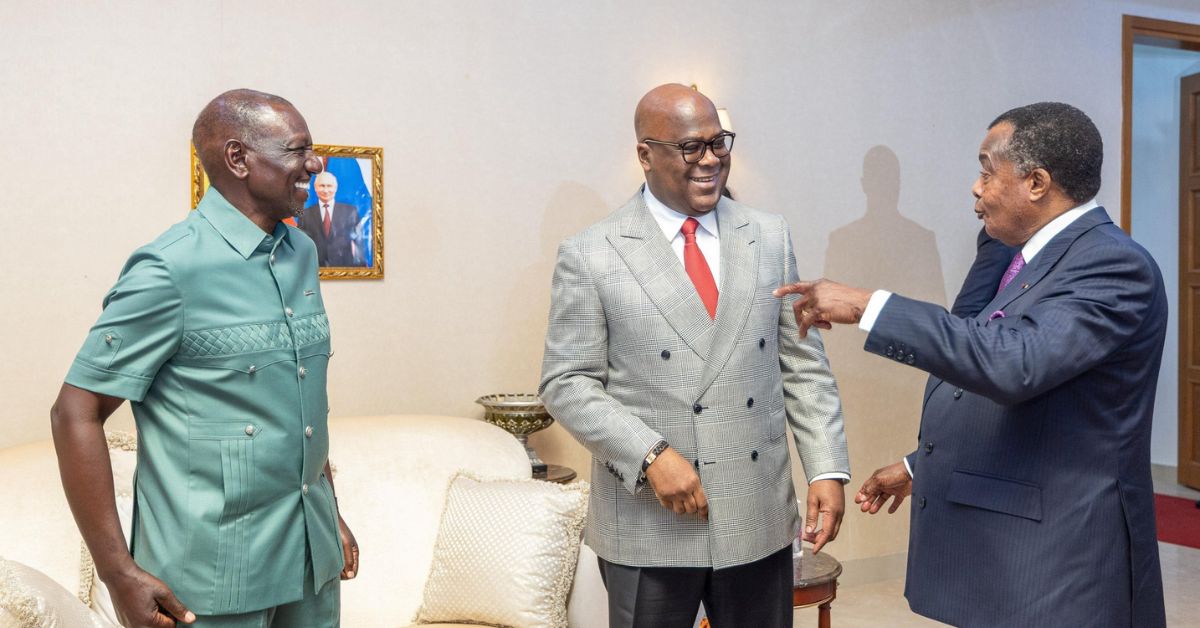
Oyo got Mr Ruto and Mr Tshisekedi back in the same room. Turning a photo-op into a durable détente will mean keeping the line between Nairobi and Kinshasa open in foul weather and proving that Kenya’s word holds once the summit cameras leave.
Your support empowers us to deliver quality global journalism. Whether big or small, every contribution is valuable to our mission and readers.