














Why European Warships Are Docking in Mombasa
By Mwangi Maina
| November 23, 2026
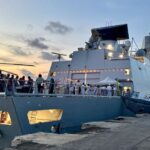
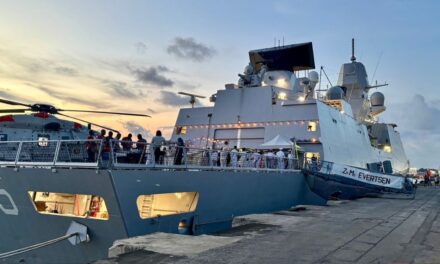
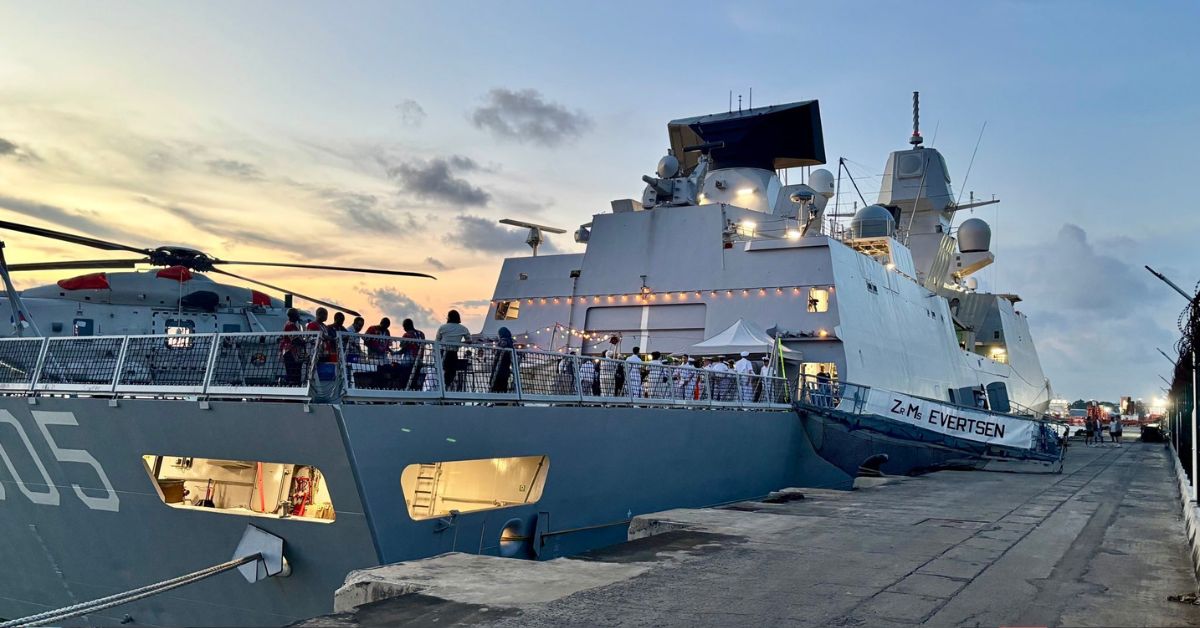
Dutch frigate HNLMS Evertsen at the port of Mombasa. (Photo: EU Ambassador to Kenya Andreas Peschke/X)
As Red Sea disruptions push European navies southward, Kenya is turning its coastline into an indispensable geopolitical asset.
When HNLMS Evertsen, a 144-metre Dutch air-defence and command frigate, berthed in Mombasa last week, it did not come for a routine courtesy call.
Deployed to the Middle East in September as a floating command centre for the Franco-British mission in the Strait of Hormuz, while also supporting European Union naval operations Aspides and Atalanta—the warship is a heavy piece of European military hardware.
As Houthi attacks in the Red Sea continue to rattle global supply chains, the Evertsen’s arrival underscores a blunt reality: the Western Indian Ocean is no longer a quiet strategic backwater.
“Dutch frigate Evertsen in Mombasa port. Joining combined efforts to strengthen maritime security in the region. Ulaya-Kenya kwa usalama baharini,” posted the EU’s ambassador to Kenya, Andreas Peschke, on X.
Beneath the polite Swahili tagline ‘Europe and Kenya for maritime security’ lies a deeper strategic shift. With chokepoints from Bab el-Mandeb to the Strait of Hormuz under strain, Europe is anchoring its naval logistics further south, and Mombasa has become its most reliable hub on the East African coast.
The Evertsen is merely the latest in a steady parade of European steel through Kenyan waters this year. In January, the EU frigate Victoria arrived for joint drills with the Kenya Defence Forces under Operation Atalanta. Two months later, three French warships docked for four days of sea patrols and training with over 800 personnel, followed in August by Britain’s RFA Lyme Bay.
Behind the hardware sits intense diplomatic choreography. Earlier this month, EU officials visited Nairobi to align strategic priorities ahead of the third Schuman Security and Defence Forum in Brussels, where Kenya’s defence minister, Soipan Tuya, spent the week discussing Red Sea and Western Indian Ocean security with European counterparts.
According to the EU Institute for Security Studies, Europe’s economic prosperity relies directly on sea lanes stretching from Hormuz and Bab el-Mandeb down through the Mozambique Channel.
For Brussels, securing Mombasa’s port access is an economic lifeline. For Nairobi, the arrangement is equally transactional. Kenya’s Exclusive Economic Zone remains vulnerable to illegal fishing, smuggling, and resurgent piracy, alongside an unresolved maritime boundary dispute with Somalia.
Hosting European navies gives the Kenyan Navy access to advanced surveillance, intelligence, and joint training – helping Nairobi police its blue economy and keep commercial shipping flowing into Mombasa without footing the entire bill itself.
More tellingly, the port calls reveal the hard-nosed pragmatism driving Kenyan foreign policy. Even as Nairobi charts an increasingly non-aligned course at the United Nations, recently voting against America and Israel on Palestinian refugee rights, its security establishment remains firmly moored to Western naval power at sea. In an era of contested waters, Kenya is proving that a coastal state can talk non-alignment in New York while still collecting the strategic dividends of geography in Mombasa.
Your support empowers us to deliver quality global journalism. Whether big or small, every contribution is valuable to our mission and readers.