

























The Paris Argument That Built a Summit
By Mwangi Maina
| May 14, 2026
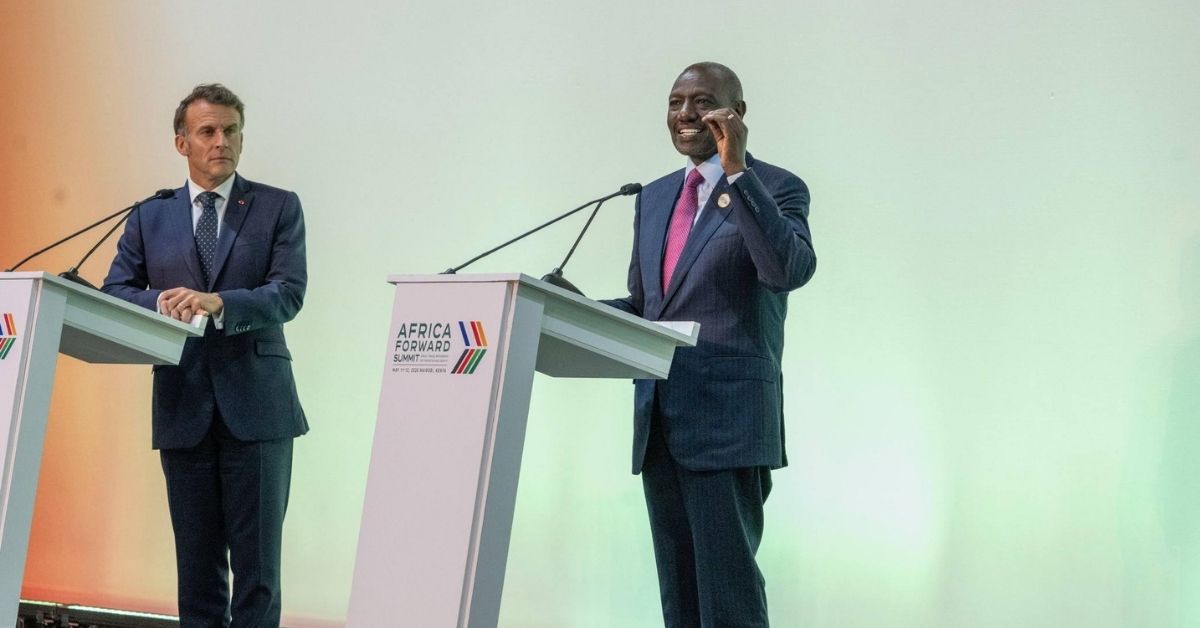
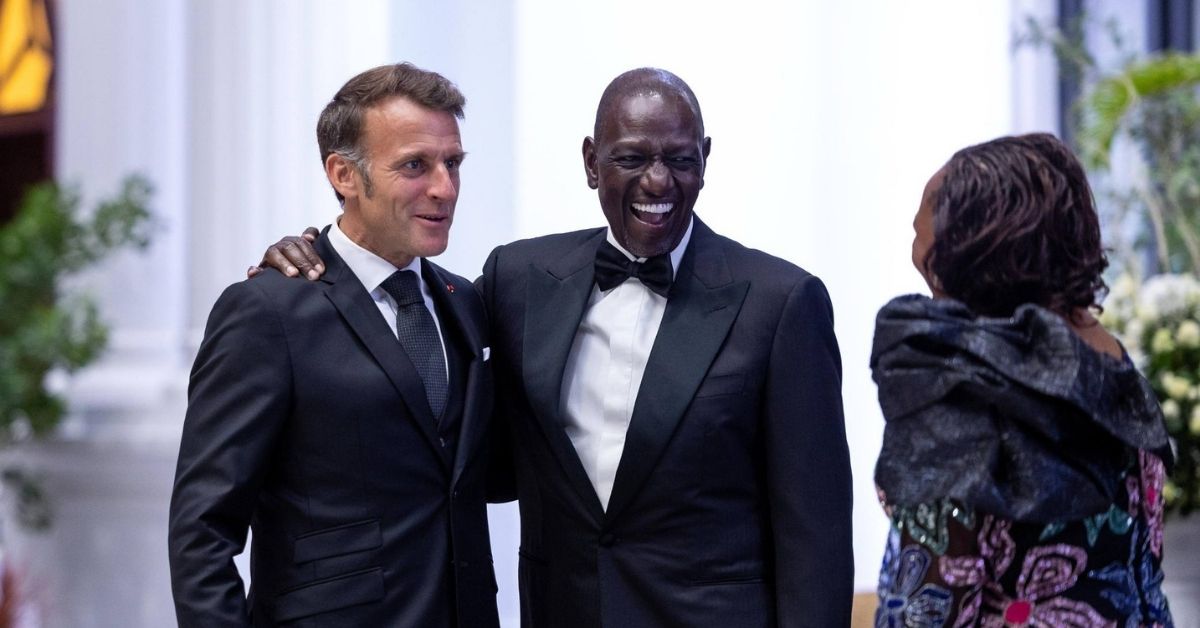
President William Ruto and French President Emmanuel Macron during the closing of Africa Forward Summit on May 12, 2026. Photo: The Standard
In June 2023, William Ruto sat beside Emmanuel Macron at a Paris summit on global financing and said, plainly, that Africa was not being heard.
Credit rating agencies were extracting punitive premiums from African borrowers. Climate finance commitments were being made without African input. The architecture of global capital was serving its architects, not its supposed beneficiaries.
He said this on French soil, at a French-convened event, with Macron close enough to hear every word. The exchange lasted seven minutes. Ruto called for an organisation of equals and declared that Africans did not want anything for free; they wanted the terms to be fair.
Macron, who has been described as a political animal who respects intellectual confrontation over deference, later acknowledged that he loves bold people.
That exchange was the foundation of everything that followed.
The camaraderie culminated this week in Nairobi, where the two leaders co-hosted the Africa Forward Summit, the first such gathering held in an Anglophone capital, symbolically shifting the conversation from Paris to African soil.
It came with a G7 invitation for Ruto, replacing South Africa’s Cyril Ramaphosa, whose country’s relations with Washington have become a diplomatic liability for the Paris G20 presidency.
The symmetry of interests is transparent. France is losing ground across Francophone Africa. Mali, Burkina Faso, and Niger have expelled French forces. Senegal has cooled. The traditional orbit of Francafrique is contracting faster than Paris anticipated. Kenya, Anglophone and pragmatic, unburdened by CFA franc grievances or colonial resentments toward France, offers a clean entry point into a region Paris has historically underinvested in.
Kenya, for its part, gets French capital, diplomatic elevation, a G7 invite, and a bilateral partnership that reinforces its regional anchor positioning. Both leaders are pragmatists.
Total bilateral trade between Kenya and France surpassed roughly $348 million in 2024, although Kenya continues to run a trade deficit. France remains Kenya’s fifth-largest foreign investor, with more than 140 French firms operating in the country, including TotalEnergies, Carrefour and Bolloré Africa Logistics.
In Nairobi, Macron announced €23 billion in planned investments targeting sectors such as energy, artificial intelligence and agriculture. Of that amount, €14 billion is expected from French companies, while €9 billion would come from African partners.
Kenya and France signed 11 bilateral agreements. The rehabilitation of Nairobi’s commuter rail system at Ksh12.5 billion was hailed by local media as the summit’s signature deliverable.
But signed agreements are not economic outcomes. They are political intentions contingent on financing, implementation, institutional capacity, time and political continuity. Summits are designed to produce announcements, communiqués and symbolic imagery. Their long-term economic impact is often harder to quantify.
The political context makes this more, not less, important. Macron has entered his lame-duck era with the 2027 Elysee race already beginning to reshape French domestic priorities. Ruto is navigating a charged political landscape at home, with his re-election calculus increasingly shaped by public pressure on economic performance.
The political will that produced the signatures this week is not the same political will that will be required to implement them in eighteen months.
The most immediate and measurable gains from hosting such gatherings are usually concentrated in the hospitality and logistics sectors: hotel occupancy, conference services, airport handling, transport and security contracts. Also modest relative to the diplomatic ambitions being claimed, and a one-time effect that does not compound.
The summit was also accompanied by controversy. Macron interrupted a panel of young African artists to lecture the audience on noise, a moment that travelled badly on social media and reinforced every existing suspicion about French paternalism. His claim to be a genuine Pan-Africanist drew mockery from commentators across the continent.
Civil society groups framed the summit as a reengineering of imperialism.
The criticism has some legitimate foundation. Asking what each partner wants and whether the terms serve both interests adequately is a necessary exercise, not anti-colonial posturing.
But the reflexive framing that French engagement with Africa is inherently extractive and that any African leader who participates is complicit has become analytically and intellectually limiting. While colonial legacies remain relevant, attributing every contemporary African governance or economic failure to external actors risks understating African political agency.
It is also politically convenient, particularly for African governments that deploy colonial grievances to deflect accountability for their own institutional failures.
When Mali invited mercenaries, that was a sovereign political decision. When African governments, including Kenya, accumulate unsustainable debt, fail to build resilient institutions or underfund continental organisations such as the African Union, those are domestic political choices made by independent governments exercising sovereign authority.
This does not invalidate concerns about unequal partnerships. Those concerns remain legitimate. France is clearly searching for renewed relevance in Africa after setbacks in the Sahel, while Kenya is seeking investment, infrastructure and diplomatic stature. Both sides are pursuing interests.
The more important question is whether Kenya is negotiating from a position of institutional strength and strategic clarity.
During the final summit day, Ruto repeatedly invoked the word “sovereignty” eight times. But sovereignty is not brought into existence through speeches. It is built through competent institutions, economic resilience, bargaining leverage and the ability to negotiate partnerships from a position of credible alternatives.
The Africa Forward Summit should therefore be judged not by ceremony or communiqués, but by whether the agreements signed in Nairobi translate into measurable economic and strategic gains. Partnerships are neither inherently exploitative nor inherently beneficial. Their value depends on the terms negotiated and the capacity of states to defend their interests.
If the basket is not full in eighteen months, the explanation will not be French neo-colonialism. It will be that Kenya negotiated at the level of the ceremony rather than the level of outcome.
Your support empowers us to deliver quality global journalism. Whether big or small, every contribution is valuable to our mission and readers.





