

























AU Rebuff of Macky Sall Bid Tests Africa’s Future Global Candidatures
By Mwangi Maina
| March 31, 2026
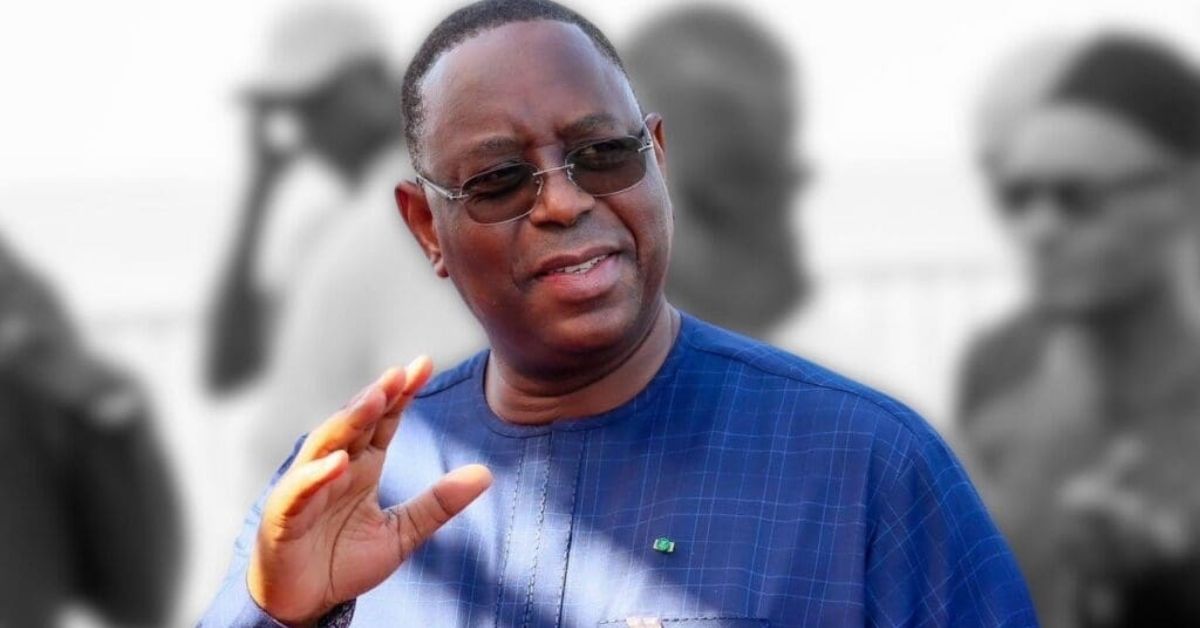
Macky Sall, who led Senegal from 2012 to 2024, joins a growing field of high-profile candidates in a selection process that is increasingly focused on transparency and regional rotation. Photo: Handout
A failed attempt to position former Senegalese president Macky Sall as Africa’s candidate for the next United Nations Secretary-General has exposed procedural fault lines and political rivalries within the African Union.
Sall’s candidacy, initially submitted by Burundi in early March through its UN mission in New York, collapsed after more than 20 AU member states formally objected under a “silence procedure” deployed by the Bureau of the AU Assembly.
The mechanism allows decisions to pass without a formal meeting unless a member state raises objections within a set deadline. In this case, many did.
“Twenty member states have broken their silence… therefore, the draft decision… has not been adopted,” the AU said in a statement dated March 27.
The implication was blunt: nearly half the continent rejected not just the candidate, but the process itself.
A shortcut that backfired
Ordinarily, AU-backed candidatures follow a structured path—submission via a note verbale to the Commission, vetting through regional blocs and the Permanent Representatives Committee, then endorsement by the Ministerial Committee on Candidatures before reaching the Executive Council.
Sall’s bid bypassed much of this choreography.
“That flawed process… collapsed,” noted Amani Africa, an Addis Ababa–based think tank, which nonetheless praised dissenting states for upholding AU rules.
The choice of Burundi as sponsor was not accidental.
“It is… clear that Sall made a ‘smart’ move in approaching Burundi,” Amani Africa wrote, pointing to the country’s current role within AU structures as leverage.
But the manoeuvre appears to have misjudged the mood of the continent.
Diplomats saw it less as a strategy than as procedural overreach, an attempt to manufacture consensus where none existed.
Domestic politics, continental consequences
Sall’s decision to seek nomination through Bujumbura rather than Dakar also raised eyebrows.
Analysts suggest his home government was unlikely to back him, forcing an external route that ultimately weakened his legitimacy.
That weakness was compounded by broader geopolitical realities.
By long-standing convention, the Secretary-Generalship rotates among regions.
This cycle is widely seen as belonging to Latin America and the Caribbean—a region Africa treats as its “sixth region” but does not formally claim.
In other words, even a unified African candidacy would have faced an uphill climb.
Rivalries surface
The episode also peeled back intra-African tensions.
Rwanda’s foreign minister, Olivier Nduhungirehe, issued a sharply worded rebuke, calling the process a “diktat and disrespect from the chairperson” and warning that AU leadership risked dragging the organisation into crisis.
His criticism was widely interpreted as aimed at Burundi, with which Rwanda has strained relations over the eastern Congo conflict.
Burundi’s envoy to the AU, Willy Nyamitwe, pushed back, calling the remarks “regrettable in both tone and substance” and insisting the process had been mischaracterised.
The exchange highlights a deeper truth: continental diplomacy is rarely insulated from regional rivalries.
A question of strategy
Some African diplomats welcomed the outcome as a necessary correction.
“A good, important outcome… we Africans really have to be strategic,” said Tom Amolo, a former Kenyan ambassador, cautioning against entering global contests “willy nilly… for the sake of it.”
His point reflects a broader concern: that Africa, in seeking global representation, risks fragmenting its voice through premature or poorly coordinated bids.
The bigger stage
Even if Sall had secured AU backing, the road to the UN’s top job would remain steep.
The process involves public hearings and informal “straw polls” in the Security Council, where the five permanent members—the United States, Russia, China, the United Kingdom and France—hold veto power.
In that arena, continental endorsement is necessary, but never sufficient.
A continent at a crossroads
The failed bid leaves behind more than a vacant candidacy. It raises questions about process, unity and timing within the AU.
For a bloc that champions a rules-based international order, the resistance to Sall’s nomination signals an internal insistence on the same standards.
In diplomacy, procedure is power, and it appears Africa has chosen to defend it, even at the cost of its own son.
Your support empowers us to deliver quality global journalism. Whether big or small, every contribution is valuable to our mission and readers.





