Kenya’s Gen Z’s Democratic Awakening Meets an Old Guard’s Fear
By Judy Mbugua
| July 4, 2025
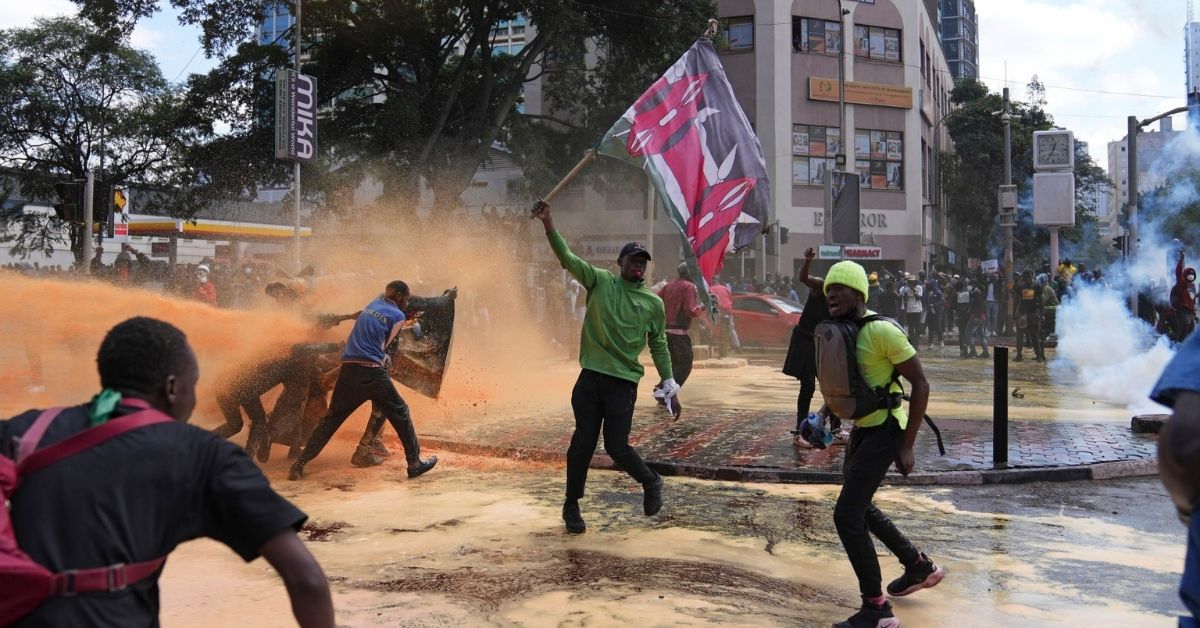
This moment in Kenya echoes a warning from political scientists Steven Levitsky and Daniel Ziblatt in How Democracies Die. They argue that democracies rarely fall through coups anymore; instead, they often decay slowly, when leaders erode democratic norms—the unwritten rules that keep power in check. Photo: Handout
In the wake of the June 25th, 2025 protests, a number of Kenyan political leaders issued statements not to address the legitimate grievances raised by young demonstrators, but seemingly to stoke fear—perhaps in a calculated effort to delegitimize the Gen Z-led movement.
Rather than opening space for dialogue and reconciliation, several officials branded protestors as criminals, anarchists, and coup plotters bent on “burning down the nation.”
The urgent calls for police reform were sidestepped; attention shifted instead to the damage caused during the protests, and later, to police safety—conveniently ignoring the long record of police brutality inflicted on Kenyans.
All forms of violence and looting must be condemned.
But honesty demands context: this unrest is not spontaneous. It is the culmination of decades of impunity and the unchecked, weaponized use of force by law enforcement.
In the midst of this, President William Ruto said something noteworthy: “As a nation, we must not allow ourselves to be consumed by the politics of hate.”
His remark, though welcome, stands in stark contrast to the fear-driven messaging emanating from his administration.
Branding young Kenyans as a national security threat for exercising democratic rights fits no better description than the very “politics of hate” he warned against.
This moment in Kenya echoes a warning from political scientists Steven Levitsky and Daniel Ziblatt in How Democracies Die.
They argue that democracies rarely fall through coups anymore; instead, they often decay slowly, when leaders erode democratic norms—the unwritten rules that keep power in check.
Constitutions and institutions, they remind us, are not self-enforcing. Their survival depends on norms and restraint.
One critical norm is mutual tolerance: the recognition that political opponents and dissenting voices are not enemies of the state, but legitimate participants in a democracy.
To paint Gen Z protestors as anarchists or unruly children is a deliberate strategy to undermine their concerns and justify repression.
Kenyan politics has long been characterized by tension and violence, fuelled by a zero-sum view that casts opposition as a threat, not a necessary counterpart in the democratic process.
Let us be clear: nations do not burn when citizens exercise their rights. Nations burn when governments choose not to listen.
History offers sobering parallels. In Bangladesh, what began in June 2024 as student-led protests against public job quotas quickly grew into a powerful Gen Z movement.
Rather than engage, the ruling Awami League branded the youth as enemies of the state. The result was brutal: nearly 1,400 people were reportedly killed, many at the hands of security forces or affiliated militias.
The prime minister was eventually forced into exile.
No one wishes such a fate for Kenya. But this is precisely what occurs when regimes prioritise their own survival over citizens’ rights.
Despite the prevailing doom-laden narrative, Kenya is not on the verge of collapse. It is poised at the edge of possibility.
The nation stands before a generational opportunity.
Kenya’s youth, over 75% of the population is under 35—are ready to engage in meaningful civic discourse.
If embraced, this demographic dividend could transform the country’s trajectory. The government would do well to stop viewing Gen Z as adversaries, and instead engage them as allies in building a more inclusive, just, and democratic republic.
Your support empowers us to deliver quality global journalism. Whether big or small, every contribution is valuable to our mission and readers.