


























Kenya’s BRICS Gamble: Strategic Realignment or Diplomatic Posturing?
By Mwangi Maina
| March 16, 2025
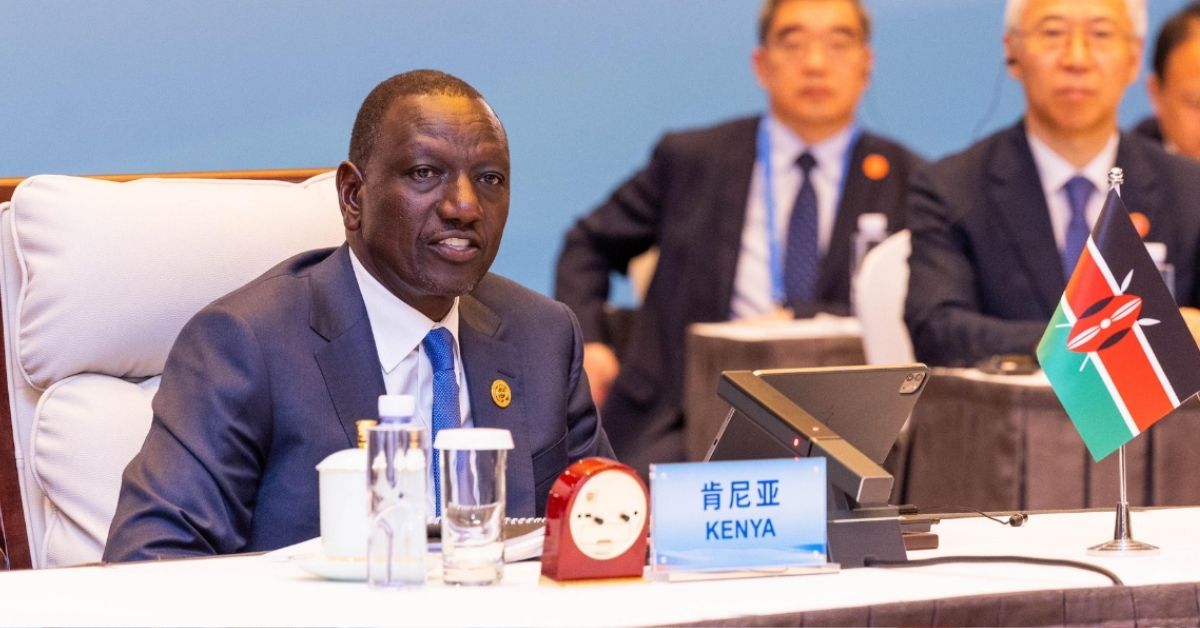
Kenya’s President William Ruto at the Belt and Road Initiative Summit in China, September 2024. Photo: Handout
Kenya’s flirtation with BRICS membership—a move that was first floated in a meeting between President William Ruto and Li Xi, a high-ranking official in China’s Communist Party—has exposed Nairobi’s delicate diplomatic balancing act between Western alliances and emerging multipolar realities.
The initial statement by the Kenyan government, suggesting it was actively lobbying to join the BRICS bloc—comprising Brazil, Russia, India, China, and South Africa—was quietly deleted, raising speculation.
Was it a misstep, a calculated trial balloon, or the result of external pressure from allies uncomfortable with Kenya’s pivot towards a group seen as a counterweight to Western influence?
Yet the idea resurfaced months later.
During the vetting of Andrew Karanja, Kenya’s ambassador-designate to Brazil in January 2025, the nominee declared that he would advocate for Kenya’s inclusion in BRICS, positioning the country as East Africa’s leading voice within the bloc.
This signalled that despite public backpedaling, there is institutional momentum in Nairobi towards BRICS engagement—and potentially, a more ambitious foreign policy agenda than initially assumed.
Diversifying Economic and Geopolitical Bets
At the core of Kenya’s BRICS ambition lies a desire to diversify economic partnerships and reduce dependency on traditional Western institutions.
The BRICS bloc has championed de-dollarisation, with member states exploring alternative trade currencies and new financial mechanisms. This aligned with President Ruto’s earlier rhetoric, as he emerged as one of Africa’s most vocal critics of the global financial status quo.
However, his firm stance was quickly tempered following a State Visit to the White House, where American statecraft rolled out the red carpet, embracing a leader once hailed across Africa for his bold, uncompressing tone.
In the end, the applause was short-lived, and Ruto’s early defiance gave way to pragmatic diplomacy, shaped by the realities of power and influence.
For Kenya, which grapples with recurring dollar shortages and stringent IMF loan conditions, BRICS could offer an alternative financing model—one less tethered to Washington and Brussels.
Moreover, membership could bolster Kenya’s geopolitical leverage, providing access to emerging trade networks and developmental partnerships outside the Western orbit.
For Ruto, who has consistently called for a restructured global financial system, BRICS offers a platform aligned with his reformist rhetoric.
It could also elevate Kenya’s regional standing, enabling Nairobi to counterbalance the rising influence of Ethiopia—now a BRICS member—and challenge South Africa’s dominance as the continent’s sole founding member of the bloc.
A Delicate Balancing Act
Yet, Kenya’s foreign policy is not shaped in a vacuum. The country’s designation in 2023 as a Major Non-NATO Ally (MNNA) by Washington complicates its BRICS overtures.
The MNNA status unlocks military cooperation, preferential arms deals, and strategic security ties with the U.S., particularly critical in Kenya’s counterterrorism efforts in Somalia and regional security engagements.
A decisive tilt towards BRICS could provoke diplomatic pushback from Washington, which views the bloc as a geostrategic rival.
Furthermore, Kenya’s heavy borrowing from both Western and Chinese creditors makes the country vulnerable to debt diplomacy pressures. Any perception of shifting allegiances could affect future financing terms and strategic partnerships.
For Nairobi, the challenge is to extract economic and diplomatic gains from both spheres without appearing compromised or unreliable.
Thus far, Ruto’s administration has shown pragmatism over ideology, carefully testing international waters while avoiding definitive alignments.
A Ruto Doctrine in Formation?
President Ruto has styled himself as a global reformist, frequently critiquing the West’s dominance in global governance and advocating for Africa’s voice in shaping international financial systems.
Aligning with BRICS could reinforce this pan-African, multipolar vision, positioning Kenya as a champion of emerging economies.
Yet the deletion of the initial BRICS lobbying statement suggests caution.
It indicates that internal debate or external pressure forced Nairobi to reassess the timing and optics of its engagement with the bloc. Kenya’s diplomatic establishment appears to be weighing the benefits of BRICS inclusion against the risks of alienating key partners.
Will Nairobi Make the Leap?
With BRICS expanding its membership, including recent entrants like Egypt, Ethiopia, and the UAE, Kenya’s window of opportunity remains open. Whether Nairobi takes the leap will depend on geopolitical calculations, tangible economic incentives, and regional diplomatic dynamics.
Key considerations include:
Can Kenya balance BRICS membership with its Western commitments?
Will BRICS offer meaningful trade and financial benefits, or would non-alignment serve Kenya’s interests better?
How will South Africa react to another African heavyweight seeking entry into the bloc?
For now, Kenya is signalling interest without firm commitment. But if the economic pressures mount and the geopolitical winds shift, Nairobi may find BRICS membership increasingly attractive—offering a stage for greater continental influence and a counterweight to Western dominance.
Whether this is strategic posturing or a genuine pivot, the coming months will reveal whether President Ruto’s administration is ready to make a bold foreign policy shift—or remain cautiously in the middle lane.
Your support empowers us to deliver quality global journalism. Whether big or small, every contribution is valuable to our mission and readers.





