






Ruto vs. Uhuru Power Struggle Plays Out at AU Summit
By Mwangi Maina
| February 17, 2025

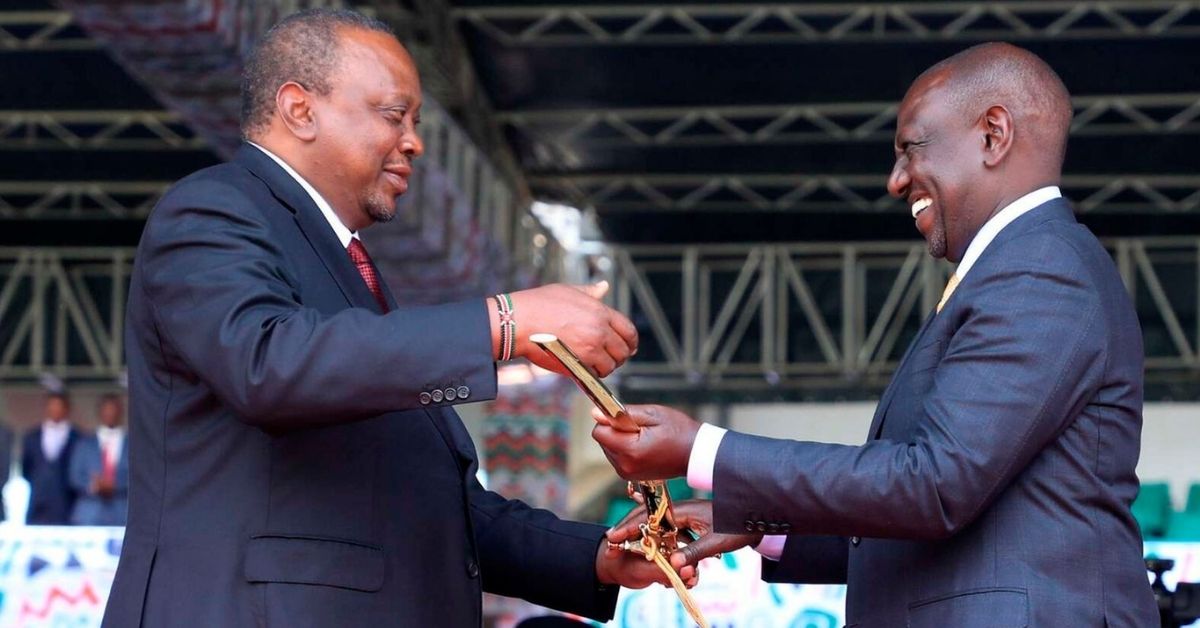
Then Kenyan President Uhuru Kenyatta, left, looks on as his successor, William Ruto, lifts a sword at his inauguration ceremony in Nairobi, September 2022. Photo: Handout
What should have been a routine diplomatic engagement at the African Union (AU) Summit in Addis Ababa instead exposed a high-stakes power struggle between Kenyan President William Ruto and his predecessor Uhuru Kenyatta.
The battle lines, previously drawn over regional peace efforts, resurfaced at the corridors of the AU Peace and Security Council (PSC), where Kenyatta—invited as the EAC peace facilitator for the DRC—was quietly sidelined.
Sources suggest that President Ruto actively worked to block Kenyatta’s briefing, effectively silencing him at one of Africa’s most consequential diplomatic gatherings.
Meanwhile, Kenya’s failed bid for the African Union Commission chairmanship only deepened the fractures. In the aftermath, propaganda swirled—Ruto’s and Raila Odinga’s allies accused Kenyatta of de-lobbying Raila at night in Addis, ensuring his defeat.
But the documents seen by KFP tell a different story.
Kenyatta’s presence in Addis was legitimate, and the diplomatic maneuvering to keep him off the PSC stage signals something far more significant: a quiet diplomatic war over Kenya’s regional leadership.
The Invite That Didn’t Materialize
A letter dated February 7th, 2025, and addressed to Kenya’s embassy in Addis Ababa confirmed Kenyatta’s formal invitation to the PSC meeting on the Eastern DRC crisis.
The AU Commission explicitly requested his presence as the EAC-led Nairobi Process facilitator, indicating that he was scheduled to brief the council on the status of peace efforts in the volatile region.
“The Commission wishes to invite H.E. Uhuru Kenyatta, Former President of the Republic of Kenya, and Facilitator of the East Africa Community (EAC)-led Nairobi Process, to attend the meeting and to brief the PSC.”
The continental body further requested confirmation of his participation, highlighting the expectation that he would formally contribute to the discussions.
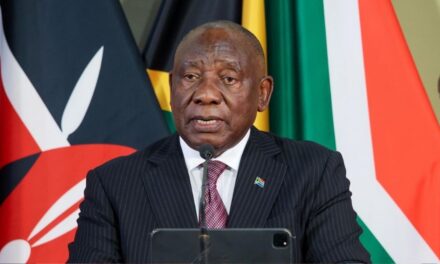
An attached program placed Kenyatta’s address between South African President Cyril Ramaphosa and UN Secretary-General António Guterres, suggesting his role was more than ceremonial.
But when the PSC meeting convened on Friday, Kenyatta was nowhere to be seen.
AU sources confirm that Kenyatta, who was already in Addis Ababa, left town abruptly upon realizing his briefing had been pulled from the agenda.
“He did not attend. He left town immediately,” a senior diplomatic source told KFP.
Uhuru’s Speech Silenced—Ruto’s Hand in the Snub?
Several AU officials say President Ruto played an active role in sidelining Kenyatta.
The circumstances surrounding his exclusion point directly to the Kenyan president, who as EAC Chair, controls Kenya’s regional diplomatic engagements.
The decision to remove Kenyatta from the PSC session appears to have been a calculated move to cement Ruto’s influence over East Africa’s peace architecture, and sidelining his predecessor consolidates that authority.
The former president remains a formidable diplomatic figure, having led EAC intra-Congolese dialogue efforts, which gained credibility in both African and Western diplomatic circles.
By ensuring he did not speak, Ruto effectively erased Kenyatta’s role from the AU’s formal discussions.
The Nairobi vs. Luanda Process Divide
This feud is not just personal—it’s about competing approaches to peace in the DRC. Ruto has publicly advocated for merging the EAC’s Nairobi Process and Angola’s Luanda Process, arguing that “forum shopping” and duplication of efforts undermine diplomatic progress.
“We must merge these processes into one because having two concurrent frameworks creates unnecessary competition,” Ruto declared in his Diplomatic Corps Address in Nairobi, just days before the AU Summit.
Kenyatta, however, sees things differently.
KEEP READING
Kenya’s Quiet Diplomatic War: Ruto, Kenyatta, and the Power Struggle over DRC Peace Efforts
In a nine-page confidential report presented at the EAC-SADC Summit in Dar es Salaam, Kenyatta stopped short of endorsing a merger, instead calling for the revival and full funding of the Nairobi Process.
“The intra-Congolese dialogue (Nairobi Process) must be restarted and fully supported by African Heads of State,” Kenyatta’s report asserted, making it clear that he saw his process as independent, not secondary to Angola’s efforts.
This divergence in strategy highlights a broader power contest between Ruto and Kenyatta.
While Kenyatta’s absence was glaring, sources inside the AU PSC meeting describe an even bigger problem: the meeting itself collapsed into disarray.
An AU official who was present told Kenyan Foreign Policy that the session “blew up,” with no official report tabled.
“It was chaotic,” the source admitted.
“Up to now, no report has been presented.”
For a body meant to build consensus and issue formal communiqués, this failure raises serious questions about Africa’s ability to handle its own security crises.
The fact that no official document emerged from the meeting suggests that the deep divisions at the PSC table mirror those in Kenya’s own foreign policy circles.
Kenya’s Regional Mediation at Risk?
With the AUC elections exposing cracks in Kenya’s diplomatic influence, the PSC fiasco only worsens the country’s standing.
Ruto’s bold foreign policy moves have raised eyebrows across the continent—his decision to sideline Kenyatta, the push for a unified peace process, and Kenya’s involvement in Sudan’s RSF crisis all signal a leader intent on reshaping regional power structures.
But the question remains: Is Ruto consolidating Kenya’s influence or alienating key players?
By blocking Kenyatta, he may have won a tactical victory—but in doing so, Kenya risks being seen as prioritising political rivalries over regional stability.
For now, the Ruto-Kenyatta rivalry is no longer just a domestic affair—it has become a defining factor in Kenya’s foreign policy trajectory.
And with tensions mounting in eastern DRC and Sudan, the stakes have never been higher.
Your support empowers us to deliver quality global journalism. Whether big or small, every contribution is valuable to our mission and readers.