

























Trump’s Tariff Spectacle: The Beauty of Economic Self-Sabotage
| February 10, 2025
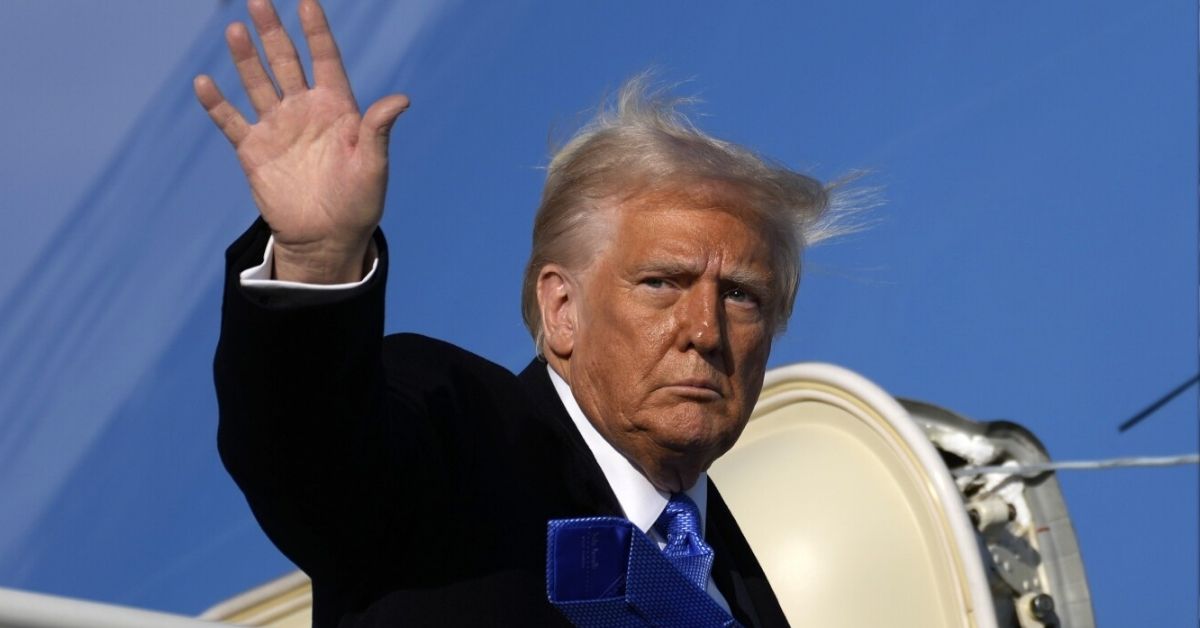
President Donald Trump waves as he boards Air Force One at Joint Base Andrews, Md, Friday, Feb. 7, 2025, en route to his Mar-a-Lago estate in Palm Beach, Fla. Photo: AP
Economic protectionism is an art, and President Donald Trump has mastered it—with the precision of shooting himself in the foot while calling it a tactical manoeuvre.
His decision to impose tariffs—25% on imports from Canada and Mexico, and 10% on China—was nothing short of a spectacle.
Not only did it disrupt global trade, but it also managed to irritate key trading partners and make goods more expensive for his own citizens.
While America grapples with self-inflicted trade wounds, the rest of the world, including Kenya, sits helplessly in the splash zone of this tariff tsunami.
Predictable markets have turned volatile, supply chains are in disarray, and the once-stable trade environment has morphed into an unpredictable game of economic roulette.
Canada, Mexico, and China did not take these tariffs lying down. They responded in kind, imposing counter-tariffs and sending markets into a tailspin. Investor confidence took a dive, while inflationary pressures began climbing.
For American consumers, the result has been higher prices for daily essentials—from food to electronics—while manufacturers scrambled to find alternative supply chains. The global economy soon found itself in a tug-of-war, with countries and companies bracing for impact.
Kenya: A Spectator in the Crossfire
Caught in the global crossfire, Kenya has had to contend with the ripple effects of a trade war it never asked for.
The Kenyan shilling weakened as the U.S. dollar soared, making Kenya’s import bill more expensive. Fuel prices shot up as Canada prioritized U.S. markets, forcing other countries to compete for what remained.
The cost of machinery, electronics, and textiles from China skyrocketed, straining Kenyan businesses and consumers.
As if that weren’t enough, the Kenyan economy began feeling the squeeze on multiple fronts. Rising fuel prices translated into higher transportation costs, which in turn drove up the cost of goods and services across the board.
The country’s import-dependent economy found itself on shaky ground, with inflationary pressures mounting and businesses struggling to stay afloat.
A Hidden Opportunity?
Yet, amidst the chaos, a silver lining began to emerge. The shifting global landscape offered Kenya a rare chance to reposition itself.
With companies fleeing the U.S.-China trade war, Kenya had an opportunity to attract displaced industries—provided it could overcome its perennial challenges of political instability, bureaucratic red tape, and unreliable infrastructure.
There was also the African Continental Free Trade Agreement (AfCFTA), which presented Kenya with a chance to strengthen intra-African trade and reduce its reliance on Western markets.
For once, Kenya could focus on building regional alliances and exploring untapped trade potential within Africa.
But it would require decisive action. The old strategy of dependency on Western economies was no longer sustainable. Kenya needed to pivot—fast. It had to invest heavily in energy diversification, industrialization, and regional trade expansion.
Strengthening foreign exchange reserves and implementing currency stabilization measures were no longer options; they were necessities.
The Road Ahead
Dependency theory teaches us that developing nations must reduce reliance on industrialized countries and focus on self-sufficiency. Structuralist economics, on the other hand, emphasizes the importance of government intervention to shield local industries from external shocks.
Kenya must borrow lessons from both schools of thought if it hopes to weather this storm.
Energy diversification is key. Investing in solar, wind, and geothermal power will help reduce reliance on imported petroleum and stabilize energy costs. Tax incentives for manufacturing could turn Kenya into a regional hub, while regional trade agreements like AfCFTA must become more than just political buzzwords.
A Lesson in Economic Strategy
Trump’s tariffs, intended to “Make America Great Again,” have succeeded in doing the opposite—making everything more expensive, destabilizing global trade, and leaving developing economies like Kenya more vulnerable.
But Kenya has a choice: it can either be a passive spectator in this global drama or take bold steps toward economic independence.
The world is shifting. Trade alliances are realigning. Countries are moving beyond their reliance on the U.S. dollar.
Kenya must not be left behind. It’s time for Nairobi to stop waiting for the global economy to stabilize and start taking control of its own future.
The next chapter in Kenya’s economic story is unwritten. It can either remain a cautionary tale of missed opportunities or become a case study in resilience and adaptation. The choice is Kenya’s—and the time to act is now.
Your support empowers us to deliver quality global journalism. Whether big or small, every contribution is valuable to our mission and readers.





