




Ruto Calls for Dialogue Between DRC and M23 Rebels, Likely to Put Kinshasa Off
By Mwangi Maina
| January 28, 2025

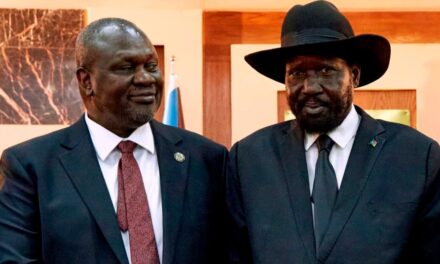
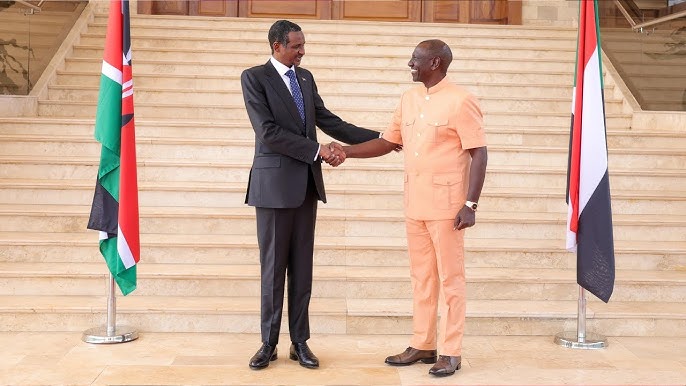
New EAC chairman President William Ruto shakes hands with his predecessor, President Salva Kiir, in Arusha on November 30, 2024. Photo: Handout
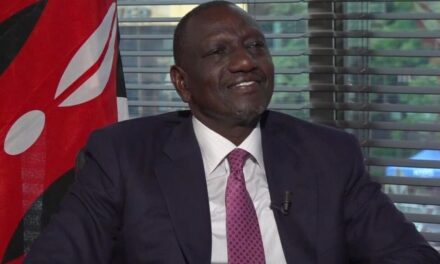
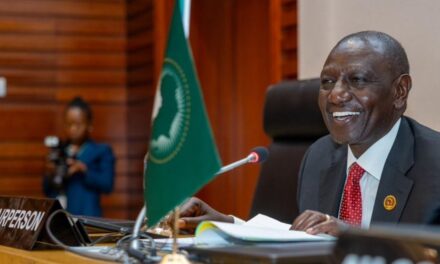
Kenyan President William Ruto, who currently chairs the East African Community (EAC), has called for direct engagement between the Congolese government and the M23 rebels, who have seized the strategic city of Goma in eastern DRC.
“Engagement, dialogue, and consultations are the only viable way out of the situation in DRC,” Ruto told journalists in Nairobi after a meeting with African leaders attending a retreat on AU reforms.
Dismissing the possibility of a military solution, Ruto emphasized the need to address the root causes of the long-running conflict.
His remarks come just a day after he announced an emergency summit of regional leaders to discuss the rapidly deteriorating situation.
Both Congolese President Félix Tshisekedi and Rwandan President Paul Kagame have reportedly agreed to attend.
However, Ruto’s call for dialogue is likely to provoke strong opposition from Kinshasa, which has consistently refused to engage with the M23, a group it designates as a terrorist organization backed by Rwanda.
While Kigali denies supporting the rebels, it has repeatedly urged dialogue between the M23 and the Congolese government.
Ruto’s Position Risks Further Alienating Kinshasa
Ruto’s push for direct talks with the M23 raises questions about his approach to the DRC crisis and its impact on regional diplomacy. His previous remarks on the issue have drawn sharp criticism from Congolese authorities, particularly when he likened the DRC’s conflict to Kenya’s own domestic political rivalries—an analogy that many in Kinshasa saw as dismissive of the seriousness of the crisis.
Tshisekedi has openly accused Ruto of interfering in DRC’s internal affairs. In a May 2024 interview with Jeune Afrique and The Africa Report during the Africa CEO Forum in Kigali, Ruto dismissed claims that Rwanda was fueling the M23 insurgency, insisting that the group’s fighters were Congolese.
“How is the M23 Kagame’s problem? It’s a Congolese problem,” Ruto asserted, adding that during an EAC heads of state meeting, Kinshasa itself had acknowledged that M23 members were Congolese nationals.
He also appeared to validate the rebels’ concerns, stating: “Do we surrender our arms before having a conversation, or do we engage in dialogue first?”
These statements further alienated Kinshasa, which has since remained cold toward any peace efforts spearheaded by Kenya.
Tensions, Accusations, and Diplomatic Fallout
Tshisekedi has also accused Ruto of derailing the Nairobi Peace Process, initially led by former Kenyan President Uhuru Kenyatta, and of openly aligning with Kigali.
Speaking at a Brookings Institution session last year, Tshisekedi described the EAC-led peace initiative as “mishandled” and “dead.” While acknowledging that Kenyatta remained the official facilitator, he pointedly stated, “I must confess, President Ruto is supporting Rwanda, and I won’t say anything more about that.”
Since assuming office in September 2022, Ruto has actively engaged in DRC peace efforts. In November 2022, he oversaw the deployment of Kenyan troops under the East African Community Regional Force (EACRF), framing it as a peace enforcement mission rather than a peacekeeping one.
However, Nairobi’s relations with Kinshasa have deteriorated significantly. The Congolese government has refused to accredit Kenya’s ambassador, Shem Amadi, for over a year—a clear diplomatic snub.
Adding to the friction, Corneille Nangaa, the former DRC electoral commission chief now leading an armed insurgency with M23’s backing, launched his movement at Nairobi’s Serena Hotel.
This sparked outrage in Kinshasa, which accused Kenya of allowing its territory to be used as a platform for destabilization.
Despite the backlash, Ruto has remained firm in his stance. In a televised interview, he rejected demands to extradite M23 rebels to DRC, declaring that “Kenya is a democracy.”
What Next as EAC Prepares for an Urgent Summit?
As regional leaders prepare to meet for emergency talks, Ruto’s latest push for direct engagement with the M23 could further complicate his already tense relationship with Kinshasa
Tshisekedi has long insisted that there is no room for dialogue with the M23 and has demanded their military defeat. But with Rwanda continuing to push for negotiations and Ruto now echoing the same, DRC’s participation in the upcoming EAC summit will be watched closely.
Ruto’s positioning on the crisis—whether strategic or a diplomatic miscalculation—could determine whether Kenya retains influence in DRC peace efforts or finds itself increasingly sidelined.
Your support empowers us to deliver quality global journalism. Whether big or small, every contribution is valuable to our mission and readers.