


























The Hustler Burdening Kenya’s Hustlers
| January 13, 2025
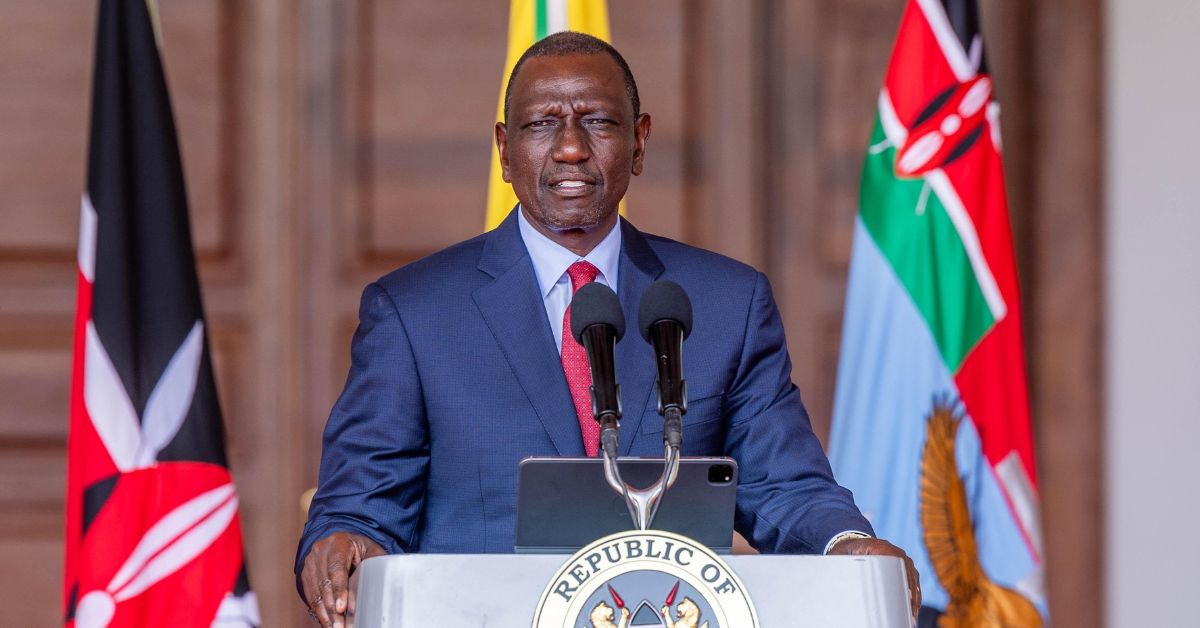
The housing levy, which requires mandatory salary deductions from civil servants and workers, is one of the most contentious policies introduced by Ruto’s government. Photo: Handout
Dr. William Ruto’s presidency was heralded as a break from the past characterized by entrenched political dynasties and elitist governance.
Riding on the wave of his “Bottom Up” economic model, Ruto promised to prioritize the economic needs, social inclusion and equality of the ordinary Kenyan hustler, advocating for a government that champions these principles.
However, barely a year into his presidency, it became increasingly clear that his administration defies the principles of liberalism, which advocates for social welfare and inclusion and realism, which prioritizes national interest and statecraft, the dominant ideologies shaping governance in modern democracies.
Burdening the Hustlers
Central to President Ruto’s campaign was the promise to lift the economic burden on ordinary Kenyans, the hustlers who form the backbone of Kenya’s informal economy.
His administration, however, has introduced punitive economic policies that disproportionately affect the same population he vowed to uplift.
The housing levy, which requires mandatory salary deductions from civil servants and workers, is one of the most contentious policies introduced by Ruto’s government.
While presented as a solution to Kenya’s nonexistent housing deficit, the levy burdens low-income earners without offering a guarantee of house ownership.
Coupled with increased taxation on basic goods and services. Kenyans find themselves grappling with a high cost of living, despite campaign promises to lower prices.
These policies reflect a top-down approach to economic governance that contradicts the principles of the bottom-up model.
Rather than empowering the hustlers, the government’s policies have enriched a select few elites while pushing ordinary Kenyans deeper into poverty.
Ruto’s move to form a broad-based government ostensibly was not aimed to promote national unity and heal political divisions.
The purpose of this action was to stifle opposition and increase political power. Key opposition figures and his former critics were offered government appointments, effectively silencing dissenting voices.
Instead of fostering inclusivity, these appointments have deepened the perception that the government is ethnocentric and self-serving, undermining the country’s nation-building agenda.
Performative governance, characterized by political showmanship and impromptu declarations that create the illusion of action without tangible results, has been a hallmark of Ruto’s presidency.
His administration has spent a disproportionate amount of time on Thanksgiving church services, political rallies and launching projects, often with little budgetary backing or clear timelines for completion.
While public ceremonies and project launches dominate headlines, policy implementation remains a challenge, with many initiatives stalling.
Ruto’s campaign rhetoric emphasized fighting corruption and uprooting cartels that have historically plundered public resources.
However, allegations of cronyism have dogged his administration, with wealthy businessmen and people with political connections profiting from government policies and contracts.
The privatization of key public assets and state industries raises concerns about crony capitalism, where public resources are sold to private interests at the expense of ordinary citizens.
The government’s willingness to work closely with wealthy power brokers contradicts Ruto’s campaign promise to break the hold of cartels and return economic power to the people.
County governments are critical to delivering services at the grassroots level and ensuring that local communities have a say in their development.
Delays in the national government’s disbursement of funds, however, have weakened county governments under Rutoism.
Many counties have struggled to pay employees on time, resulting in service delivery disruptions in health, education and infrastructure.
This centralization of power undermines the principle of devolution and concentrates resources in the hands of the national government, creating inefficiencies at the local level.
The housing levy is perhaps the most emblematic policy of Rutoism.
Civil servants and workers are subjected to mandatory salary deductions, but there is no guarantee of house ownership.
This policy burdens ordinary Kenyans while benefiting developers and contractors connected to the government.
It is a classic top-down policy that fails to address the real housing challenges faced by the majority of Kenyans.
Ruto’s government introduced a new university funding model that effectively locks out poor students from accessing higher education.
The model shifts the burden of education costs to households, making it harder for low-income families to send their children to university.
This policy directly contradicts Ruto’s campaign promise to empower youth through education and risks widening the gap between rich and poor.
The livestock vaccination program, allegedly to appease Bill Gates, raises questions about the government’s policy priorities.
With no reported outbreak, the program appears to be serving external interests rather than addressing the immediate needs of Kenyan farmers.
The leadership of President Ruto does not adhere to either liberalism, which promotes social welfare and inclusion, or realism, which places a higher priority on national interest and statecraft.
He has pioneered Rutoism, a governance model that prioritizes political survival, cronyism and performative governance.
If President Ruto continues on this path, socio-economic crises will deepen, inequality will widen and the democratic gains achieved in recent decades will be eroded.
To advance, the president must prioritize nation-building over self-preservation, focusing on uplifting hustlers, strengthening institutions and promoting accountability.
He must adopt policies that empower hustlers economically, enhance institutional strength and enforce accountability measures.
The question remains: Which way, Ruto?
Your support empowers us to deliver quality global journalism. Whether big or small, every contribution is valuable to our mission and readers.





