Raila Walks Diplomatic Tightrope During Morocco Campaign
By Mwangi Maina
| December 10, 2024
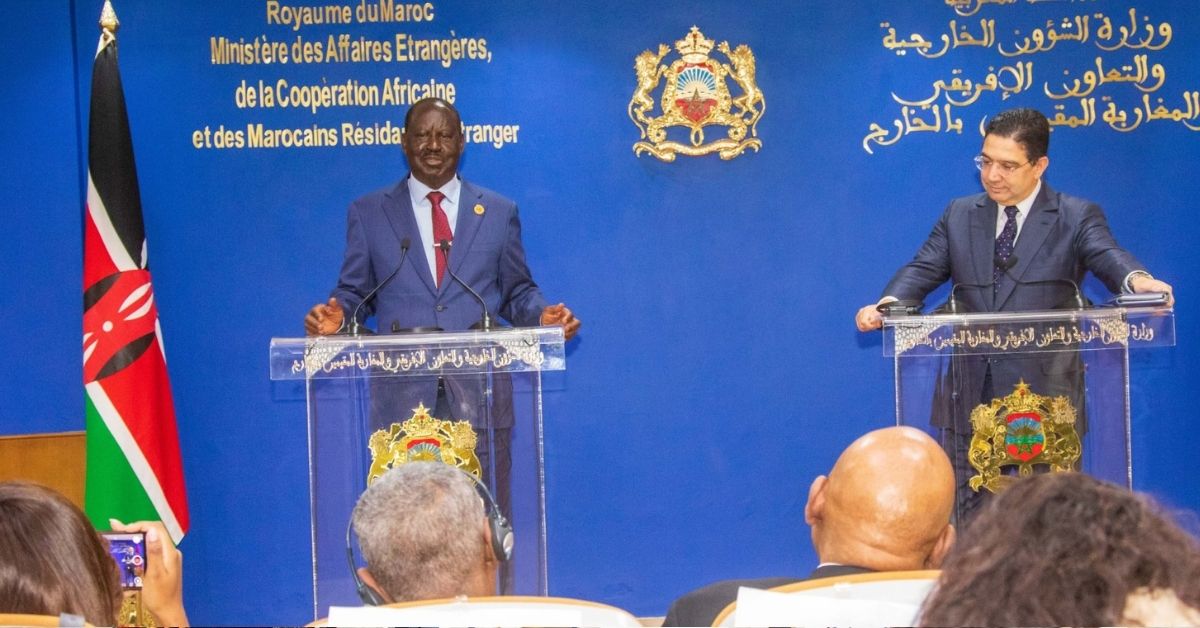
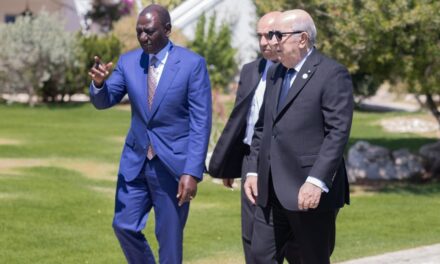
Raila Odinga appeared alongside Morocco’s Foreign Minister, Nasser Bourita, at a joint press conference in Rabat, on Monday 10 December, where he navigated a delicate diplomatic balance with his host as he campaigns for the African Union Commission chairmanship ahead of the February 2025 elections. Photo: Raila Odinga
Raila Odinga, Kenya’s candidate for the African Union Commission (AUC) chairmanship, undertook a politically sensitive visit to Morocco’s capital, Rabat on Monday, as part of his campaign to rally support ahead of the February elections.
His diplomatic mission follows a similar visit by Djibouti’s Foreign Minister and AUC candidate, Mahamoud Ali Youssouf, who also lobbied for Morocco’s backing.
While in Rabat, Odinga met with Morocco’s Foreign Minister, Nasser Bourita.
Following their meeting, the Moroccan foreign office released a brief statement on X: “MFA Nasser Bourita received, today in Rabat, the former Prime Minister of the Republic of Kenya and candidate for the post of Chairman of the African Union Commission, Mr. Raila Amolo Odinga.”
Odinga’s campaign faces a challenging balancing act due to Morocco’s core foreign policy priority—its claim over Western Sahara, a resource-rich former Spanish colony.
Rabat views the region as integral to its sovereignty, while Algeria, a staunch supporter of the Polisario Front, backs the Sahrawi Arab Democratic Republic (SADR), which seeks independence for Western Sahara.
In the past, Odinga expressed support for Morocco’s claim over Western Sahara, even visiting the disputed Dakhla region.
Similarly, his backer, Kenyan President William Ruto, initially sought to sever ties with the SADR upon assuming office, sparking outrage across Kenya and Africa.
This led to a quick reversal by Nairobi, which reinstated its recognition of SADR.
During his Rabat visit, Odinga avoided publicly commenting on Western Sahara, likely to prevent alienating Algeria, which has signaled support for his candidacy.
The Algerian and Moroccan Rivalry
Odinga’s bid highlights the growing rivalry between Algeria and Morocco, two North African powerhouses competing for influence within the AU.
Their tensions have intensified over Western Sahara, and both nations are fielding candidates for AUC deputy chairmanship, further raising the stakes.
Adding to the complexity, South Africa—a vocal SADR ally—has consistently coordinated with Algeria on key issues within the AU.
Recently, South African President Cyril Ramaphosa met Algerian President Abdelmadjid Tebboune in Algiers, where Western Sahara prominently featured on their agenda.
South Africa’s position could complicate Odinga’s campaign if he leans too far toward Morocco’s interests.
Morocco’s Growing Influence
Since rejoining the AU in 2017 after a decades-long absence, Morocco has strategically leveraged its position to rally support for its policies.
Diplomatic sources in Addis Ababa suggest Rabat can mobilize over ten AU votes, often employing unconventional methods to secure allies.
Morocco’s influence is a crucial factor in the AUC race, where it plays a central role in shaping alliances.
Djibouti’s Headache
Djibouti, Odinga’s primary competitor for the AUC chairmanship, enjoys a strong relationship with Morocco and recognizes its sovereignty over Western Sahara.
Djibouti is banking on these ties to secure critical votes, complicating Odinga’s campaign strategy.
With Morocco as a key player, Rabat’s diplomatic support could tilt the race in Djibouti’s favor.
Your support empowers us to deliver quality global journalism. Whether big or small, every contribution is valuable to our mission and readers.