













Why Supporting Hemedti is the Right Move
By Sue Mochorwa
| November 6, 2024
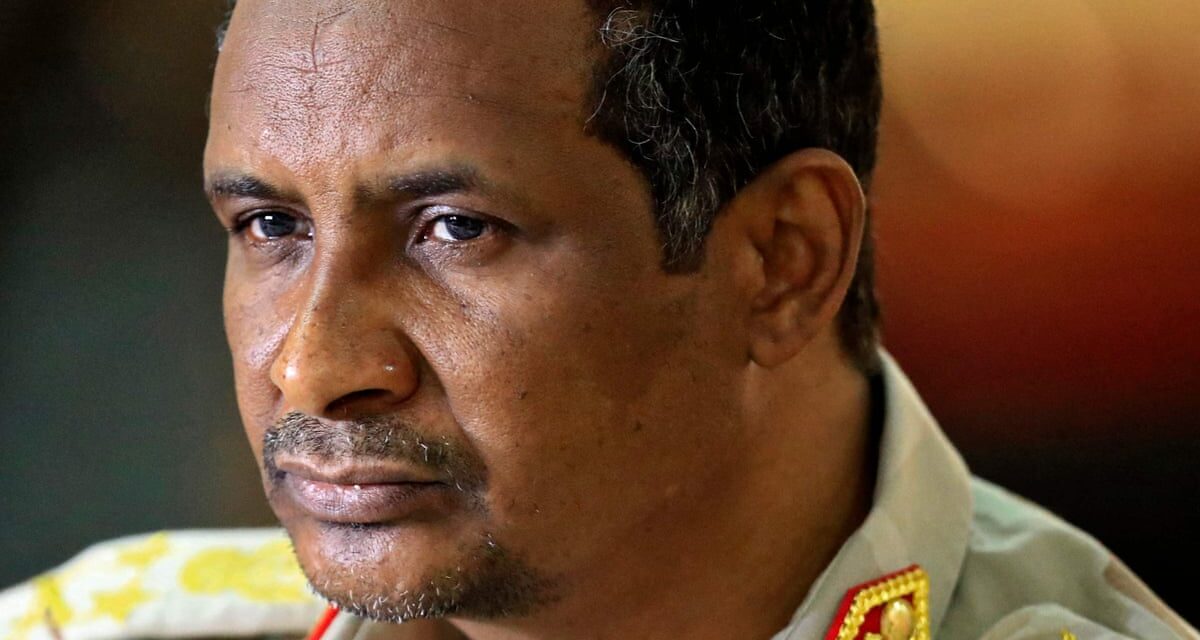
Mohamed Hamdan ‘Hemedti’ Dagalo has risen from a camel trader in Darfur to general and one of the wealthiest and most powerful men in Sudan. Photo: AFP
As the conflict in Sudan rages on, East African nations face a complex decision: which faction should they support in the war?
The brutal power struggle between General Abdel Fattah al-Burhan and Mohamed Hamdan Dagalo, known as Hemedti, has profound implications not only for Sudan but for the stability of the broader East African region.
While the West has already chosen its side, backing Hemedti’s Rapid Support Forces (RSF), it is in the strategic interest of East Africa to also align with Hemedti’s faction.
The power struggle between these two military leaders is more than a personal dispute; it represents competing visions for Sudan’s future.
General Burhan, a key player in Sudan’s military coup in 2021, has sought to reassert authoritarian control, stymying Sudan’s transition to civilian rule.
His faction has been associated with grave human rights abuses, including ties to radical Islamists and terrorist organizations. Burhan’s regime is an obstacle to peace and democracy, and his return to power would only deepen the country’s descent into military dictatorship.
In contrast, Hemedti and his RSF, despite their controversial origins, have positioned themselves as defenders of Sudanese civilians.
The RSF has expressed a willingness to negotiate and engage in a more inclusive political process. Hemedti has shown a commitment to a transition towards civilian governance, a vision that resonates with the Sudanese people, who have long demanded an end to military rule.
For East Africa, supporting Hemedti aligns with regional stability and humanitarian concerns, offering the best hope for a peaceful resolution to the conflict.
Kenya, as a leading regional actor, has already taken a decisive step in this direction.
Early this year, President William Ruto hosted Hemedti in Nairobi, signaling Kenya’s support for a peaceful resolution and the promotion of democratic processes in Sudan.
In response, Sudan recalled its ambassador to Kenya, but this move reflects the deeper regional dynamics at play.
The Kenyan government’s alignment with Hemedti is a strategic choice aimed at promoting peace, stability, and democratic reforms in Sudan.
The humanitarian crisis triggered by the conflict has already caused millions to flee their homes, with refugees spilling into neighboring countries, including Kenya.
As the fighting continues, the risks of cross-border violence and instability grow. A stable Sudan, led by a government committed to dialogue and reform, is essential for regional security.
Hemedti’s willingness to negotiate offers the best prospect for peace and stability, not just for Sudan, but for the wider East African region.
Supporting Hemedti also makes sense from an economic perspective. Sudan has long been an important trading partner for East African countries.
The ongoing conflict jeopardizes not only Sudan’s economy but also the economic ties that Kenya and its neighbors have cultivated over the years.
A resolution to the conflict would allow trade routes to be reopened, facilitating the resumption of economic activities that benefit both countries.
By supporting Hemedti, Kenya could play a pivotal role in facilitating the resumption of Sudan’s economic recovery.
The East African Community (EAC) and the African Union (AU) are both committed to promoting peace, security, and democracy in Africa.
By supporting Hemedti, East African countries would be upholding these principles and sending a clear message that military coups and authoritarian rule are unacceptable.
A move towards civilian governance in Sudan is not only morally right but also strategically sound.
By backing a leader who is open to reform and dialogue, East Africa can reinforce its commitment to democratic values and help ensure that Sudan does not revert to military rule.
While the situation is complex, supporting Hemedti’s RSF offers a pathway to peace, stability, and democratic transition in Sudan.
East Africa’s support for a leader committed to dialogue and reform is critical to shaping a more peaceful and prosperous future for Sudan.
By aligning with Hemedti, Kenya and its neighbors can play a decisive role in helping Sudan emerge from this crisis and chart a new course towards a more democratic and stable future.
Sue Mochorwa, a key accounts executive at Scion Advisory Group, expresses her personal views in this opinion piece, which do not refelct the position of the company (KFP).
Your support empowers us to deliver quality global journalism. Whether big or small, every contribution is valuable to our mission and readers.