

























Nairobi and Pretoria’s Quiet Summit Tit-for-Tat
By Mwangi Maina
| May 23, 2026

President William Ruto and his South African counterpart Cyril Ramaphosa toast during a state banquet held in Nairobi in November 2022 during Ramaphosa’s state visit to Kenya. Photo: Handout
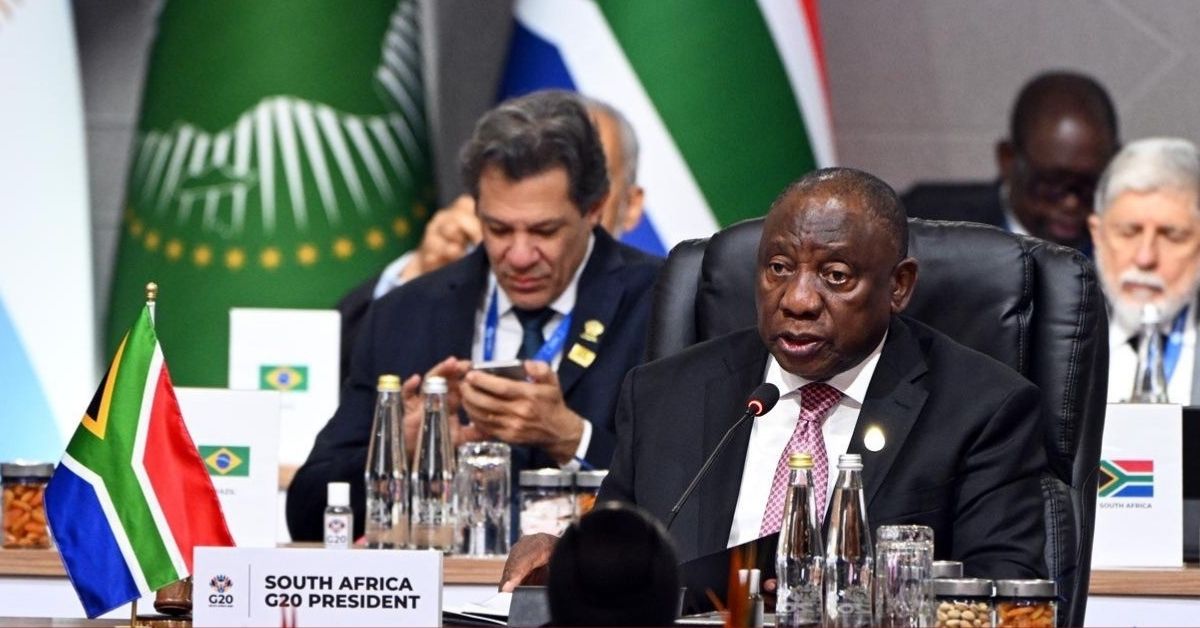
When South Africa hosted the first-ever G20 Summit on African soil in Johannesburg in November 2025, Kenya opted for a noticeably low-profile approach, quietly downgrading its representation.
Nairobi skipped both the presidential and ministerial-level attendance before eventually sending an ambassador to the gathering.
Months later, during the Africa Forward Summit in Nairobi—co-hosted by Kenya and France—South Africa appeared to mirror that approach with a similarly calibrated downgrade.
Although initial indications suggested President Cyril Ramaphosa would not attend due to domestic commitments, Pretoria later nominated Minister in the Presidency Maropene Ramokgopa to lead its delegation.
However, just two days before the summit, Ramokgopa also withdrew, with South Africa ultimately sending acting director-general Melanchton Makobe from the Department of Planning, Monitoring and Evaluation.
The sequence of late withdrawals, reduced representation, and restrained official communication has fuelled speculation in diplomatic circles that the two influential African states may be engaging in a quiet summit-level tit-for-tat.
According to The Africa Report, Ramokgopa did not respond to questions regarding her withdrawal or why she did not travel to Nairobi.
A senior South African official quoted by the outlet also questioned the optics of “a single country conven[ing] the entire continent,” suggesting Pretoria was uneasy with the summit’s framing and the broader continental power dynamics it reflected.
There was further speculation that President Ramaphosa remained displeased after French President Emmanuel Macron withdrew an earlier invitation extended to him during the Johannesburg G20 summit to attend the G7 meeting in France.
That withdrawal reportedly followed objections from the United States, which instead extended an invitation to President William Ruto.
Ruto had earlier declined South Africa’s G20 invitation, despite being invited in his capacity as chair of both the East African Community and COMESA, after Washington withdrew the attendance of US Vice President JD Vance.
Nairobi even issued a formal statement on Vance’s withdrawal, noting that he had planned a stopover in Kenya for talks with Ruto after the summit.
Kenya later submitted Trade Minister Lee Kinyanjui as its representative to Pretoria.
However, when Ramaphosa personally requested that the Kenyan delegation address the summit on behalf of the EAC and COMESA, Kinyanjui was absent. Kenya’s High Commissioner to Pretoria, Jane Ndurumo, ultimately delivered the statement.
Representation in diplomacy is often a message in itself. The rank of officials attending, last-minute withdrawals and quiet substitutions can signal tensions governments are unwilling to acknowledge publicly.
Rather than openly admitting strained ties, states frequently communicate through protocol, delegation level and symbolic absences.
Your support empowers us to deliver quality global journalism. Whether big or small, every contribution is valuable to our mission and readers.





