














A Flag in Distress During Kenya-Malaysia Talks
| November 25, 2025
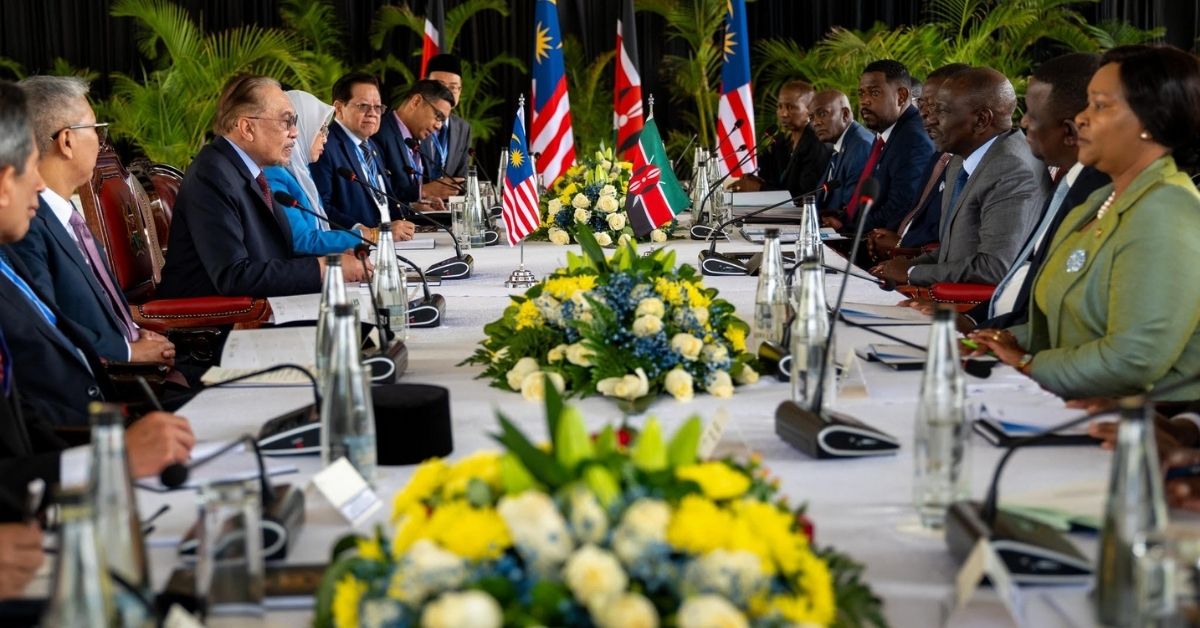
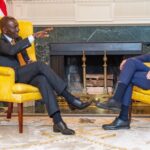
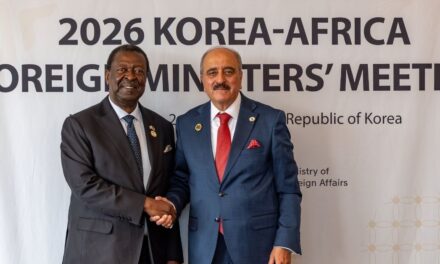
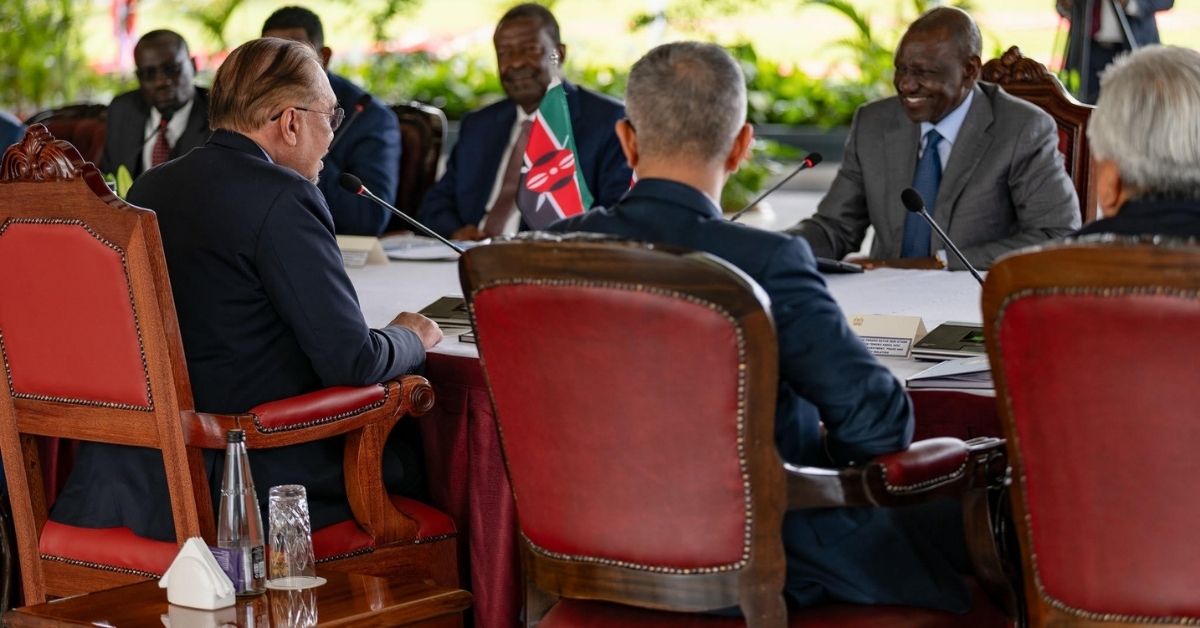
A major diplomatic engagement, with President William Ruto hosting Malaysia’s Prime Minister Anwar Ibrahim on his first official visit to Kenya, and a Kenyan flag that tells a different story. Photo: Handout
Kenya has again flown its national flag upside down during a high-level bilateral meeting—this time with Malaysian Prime Minister Anwar Ibrahim—renewing concerns over the professionalism of State House’s protocol unit.
During Monday’s talks in Nairobi, the small Kenyan table flag placed before President William Ruto and his guest was inverted, with the green band incorrectly positioned at the top.
It is the latest in a series of ceremonial lapses that have become increasingly difficult to dismiss as isolated mistakes.
The incident is emblematic of a recurring pattern.
Nairobi has repeatedly found itself the subject of public scrutiny after similar protocol missteps at official engagements at home and abroad.
In September 2024, images shared by State House during the President’s meeting with the Asian Infrastructure Investment Bank in Beijing showed the Kenyan flag upside down.
In January 2024, the same error occurred during engagements between Prime Cabinet Secretary Musalia Mudavadi and his then Tanzanian counterpart January Makamba in Uganda.
Despite public criticism, no explanation or apology has ever been offered.
Flying the national flag upside down is widely recognised as a signal of acute distress, conveying that a country is in peril.
In diplomatic settings, such errors are seen as symptomatic of weak internal coordination, inadequate preparation, and declining protocol standards within the presidency.
This outlet understands that images showing the inverted flag were later withheld from State House’s official social-media channels.
As Kenya courts investors and seeks deeper trade and strategic partnerships—particularly in Asia—these symbolic details matter.
They project discipline, respect for ceremony, and institutional competence.
Their repeated mishandling suggests that the country’s ceremonial machinery may require urgent strengthening.
Your support empowers us to deliver quality global journalism. Whether big or small, every contribution is valuable to our mission and readers.