


















Kenya’s 2027 Election: High Stakes in a Shaky Region
| September 28, 2026
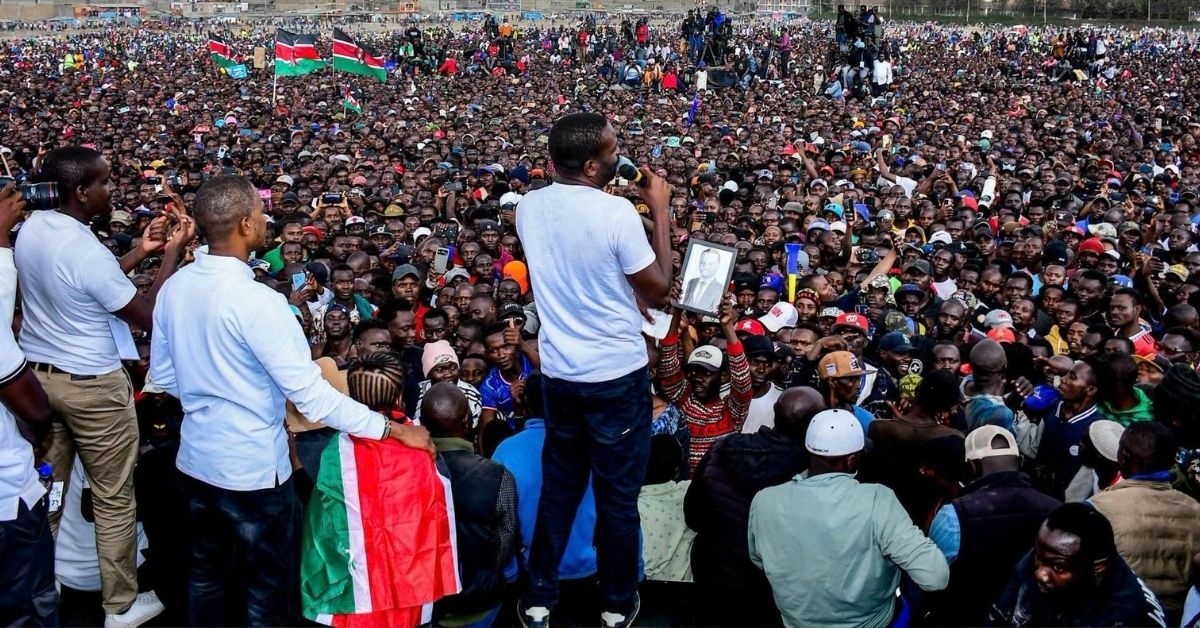
Linda Mwananchi coalition leader Edwin Sifuna addresses a massive crowd at the Jacaranda grounds rally on Sunday, September 13, 2026 . Photo: Handout
Kenya’s 2027 general election is shaping up as one of the most consequential political contests in years. Domestically, it will test public trust in democratic institutions amid political unrest and concerns over political violence. Regionally, it will unfold against escalating political repression in Uganda and Tanzania, where opposition activities face heightened restrictions.
While Kenya is not following the same political trajectory as its neighbours, political tensions across East Africa are becoming increasingly interconnected through cross-border opposition solidarity, and efforts by governments to securitise political dissent. Kenyan opposition leaders are increasingly framing the country’s political struggle as part of a wider regional fight for freedom and democracy.
A Country Divided Ahead of the polls
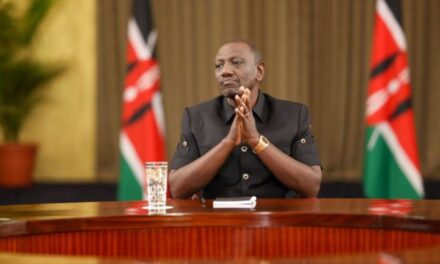
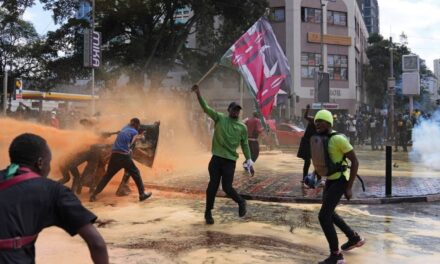
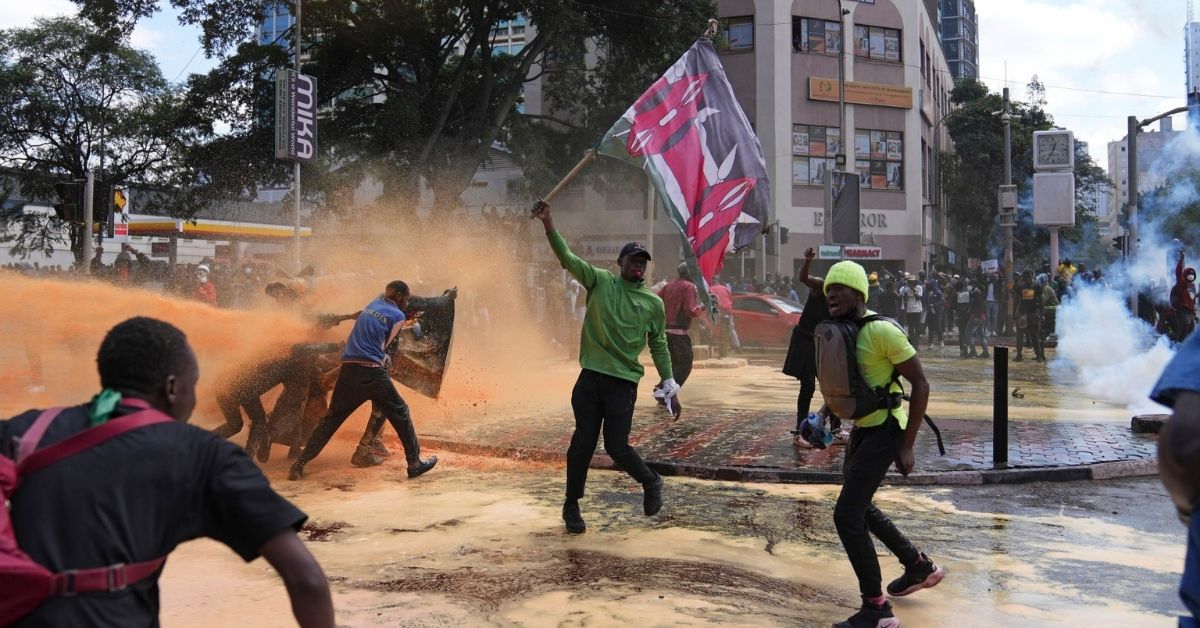
The 2027 election is unfolding amid deepening polarisation and a growing trust deficit between the public and the state. The government’s heavy-handed response to the June 2024 Gen Z protests, alongside concerns over corruption, taxation and the cost of living, has deepened disillusionment with President Ruto’s administration, particularly among young Kenyans. Restrictions on political dissent, abductions and enforced disappearances have further widened the political divide.
Adding to this uncertainty is the death of Raila Odinga, who was for decades a central figure in opposition politics and the face of the Orange Democratic Movement (ODM). His absence has left a vacuum in Kenya’s politics and intensified competition over his political base.
This is visible in the emergence of Linda Mwananchi, a faction led by Nairobi Senator Edwin Sifuna, former ODM secretary general, who has challenged the party’s cooperation with Ruto’s government. The violence surrounding the Linda Mwananchi rally in Homa Bay in August 2026, where armed groups attacked the campaign shows how political competition has grown increasingly adversarial.
Divisions within the political establishment have also deepened. The impeachment of Rigathi Gachagua, President Ruto’s former deputy, turned a governing partnership into a bitter rivalry. The July 2026 Ol Kalou by-election tested this rivalry between Gachagua’s Democracy for Citizens party (DCP) and Ruto’s United Democratic Alliance (UDA).
The election was marred with violence and allegations of voter bribery. Media investigations later identified police officers among those filmed during the violence, raising questions about the neutrality of security institutions and the credibility of the election process.
The Kofi Annan Foundation’s 2026–2027 Electoral Vulnerability Index identifies public mistrust in state institutions, police conduct, economic grievance and youth mobilisation as key electoral risk factors, while estimating an 84.1 per cent probability of some form of electoral violence during the coming cycle.
The Regionalisation of Kenya’s Political Contest
Kenya’s political tensions increasingly intersect with wider regional tensions over democracy in Uganda and Tanzania. Kenya’s relatively open political space and civic mobilisation have made its political developments consequential beyond its borders. For governments in Uganda and Tanzania, the possibility that political ideas and solidarity could travel across borders has added a regional security dimension to Kenya’s domestic contestation.
During Ruto’s state visit to Dar es Salaam in May 2026, President Samia Suluhu called for coordinated cross-border action against activists in both countries, stating that they should be caned into submission wherever they surfaced, whether in Kenya or Tanzania.
The arrest and torture of Kenyan and Ugandan activists Boniface Mwangi and Agather Atuhaire, who travelled to Tanzania to show solidarity with jailed opposition leader Tundu Lissu, illustrated how this approach to dissent has extended across borders.
The government’s muted response, followed by the deportation of Kenyan lawyer and opposition figure Martha Karua from Tanzania and her subsequent barring from Uganda while seeking to represent jailed Ugandan opposition figure Kizza Besigye and lawyer Erias Lukwago, raise questions about Kenya’s position within this regional crackdown.
These developments are shaping how the opposition frames its struggle as part of a regional fight against authoritarianism. Gachagua has accused Ruto of governing under the “tutelage” of Museveni and Suluhu, while Sifuna has expressed solidarity with Tundu Lissu, tying Kenya’s democratic trajectory to his case.
The regional dimension became particularly visible in the case of Kizza Besigye. His abduction from Nairobi and subsequent transfer to Uganda raised questions about Kenya’s involvement. Those questions resurfaced when a prosecution witness testified that Kenyan police rented the apartment and planted the evidence used to arrest Besigye, as part of an “intelligence” operation
Taken together, these events show that the 2027 election is no longer a purely domestic affair, it has acquired a regional dimension of its own. The outcome will therefore have implications extending to political, economic and diplomatic relations with Uganda and Tanzania.
The Regional Challenges After 2027
This regionalisation will shape how the next government manages relations with Uganda and Tanzania. Despite political tensions, the three states remain bound by trade, transport and security, interests no government can afford to ignore.
If Ruto secures a second term, his administration is likely to face sustained pressure from opposition groups as grievances behind the Gen Z protests remain unresolved. Continued mobilisation could become a source of friction with Uganda and Tanzania, whose governments have shown growing concern about cross-border activism. Even so, diplomatic relations are unlikely to shift dramatically given the economic, security and strategic interests linking the three countries.
An opposition coalition victory could create diplomatic friction of its own. Having campaigned on concerns over political repression and regional interference, an opposition government would face the practical reality of governing. Martha Karua’s experience captures this tension: her deportation from Uganda and Tanzania has placed her at odds with both governments, yet a future administration in which she or other opposition figures hold office would still need working relations with them.
An opposition government would therefore need to translate its positions on regional democracy into a foreign policy capable of maintaining diplomatic engagement with its neighbours. At the same time, Kenya’s civic space has increasingly expressed solidarity with opposition movements across the region, creating domestic expectations that a new government would continue to speak up on their behalf, narrowing its room for manoeuvre.
Ultimately, Kenya’s 2027 election is not just a test of its internal democratic resilience, but also of its regional standing. The next administration will need to balance domestic grievances over governance and economic pressures with the need to maintain regional relationships and reassure foreign investors.
This piece was written by Judy Mbugua and Wambui Gacihi , both of whom are emerging analysts in international relations and geopolitics .
Your support empowers us to deliver quality global journalism. Whether big or small, every contribution is valuable to our mission and readers.