














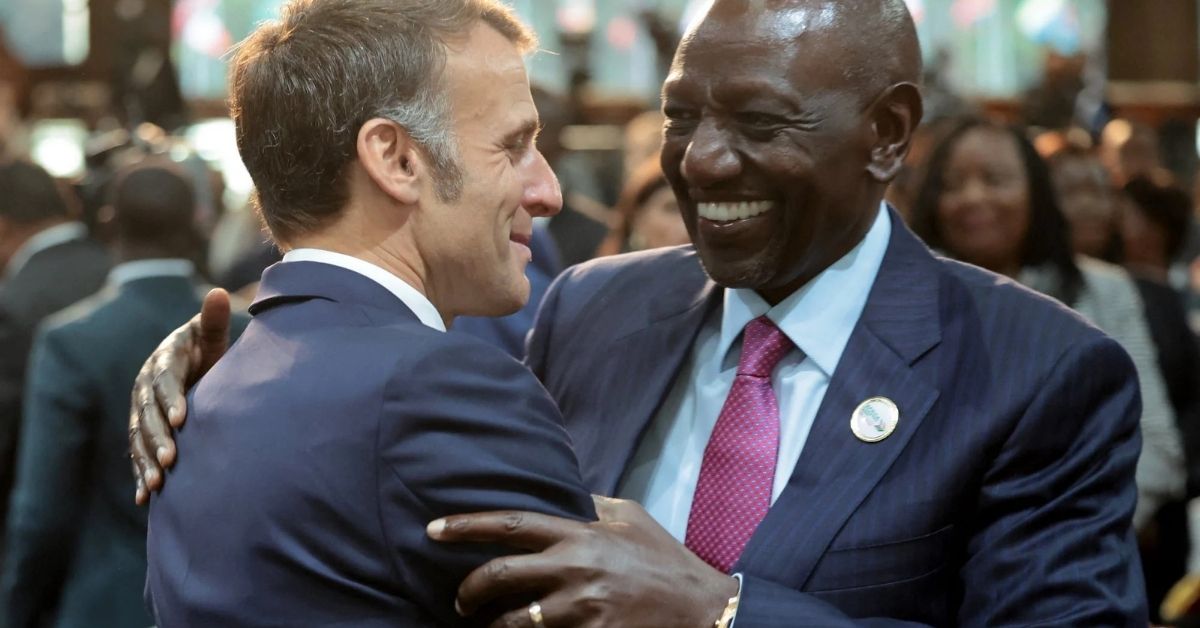
Kenya’s Global Ambitions: Between Diplomatic Reach and the Search for Credibility
By Judy Mbugua
| August 24, 2026
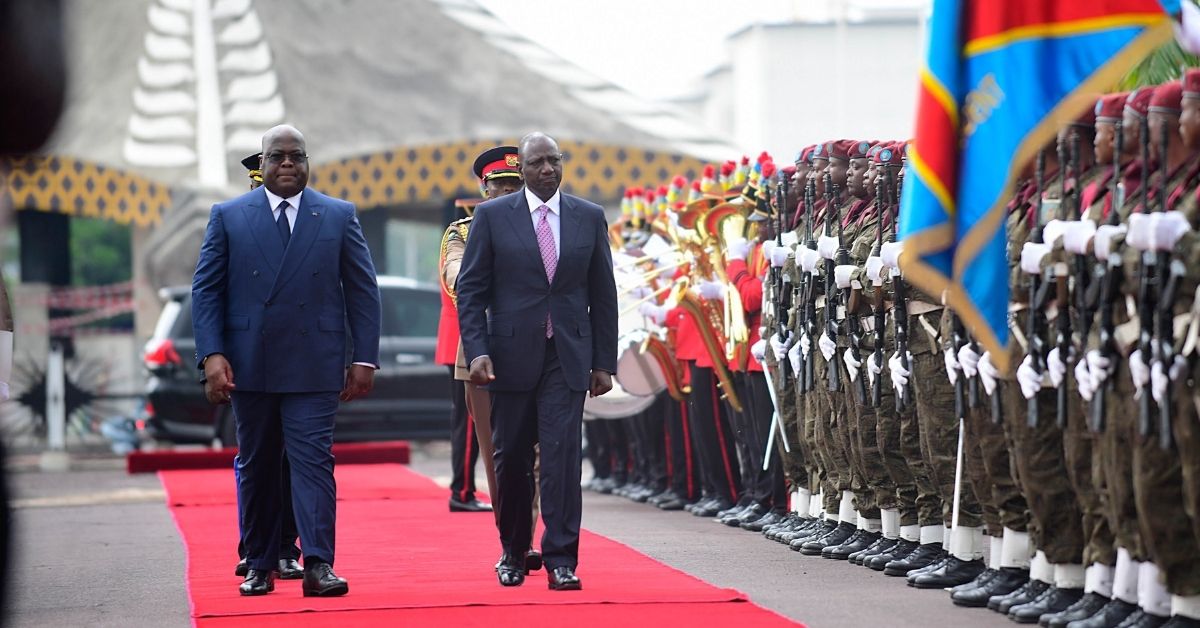
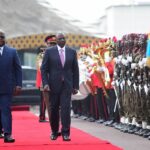
President William Ruto and his Congolese counterpart, Felix Tshisekedi, inspect a guard of honour during Ruto’s visit to Kinshasa on 21 November 2022. Photo: Handout
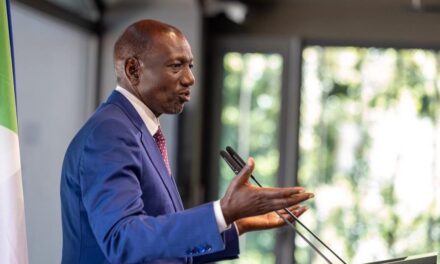
Under President Ruto, Kenya has become one of Africa’s most visible actors on the global stage, expanding its partnerships and seeking a larger role in global affairs. But diplomatic reach is not the same as influence. As Nairobi’s ambitions grow, a harder question is emerging: does Kenya possess the domestic and regional credibility needed to turn its expanding reach into lasting influence?
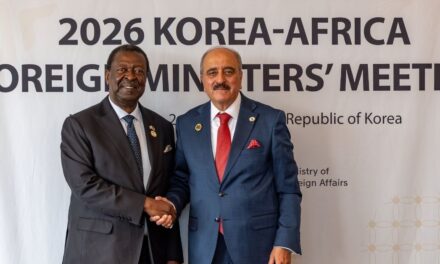
This ambition is articulated in the administration’s own framing of Kenya’s foreign policy. At Chatham House, top diplomat Musalia Mudavadi outlined a vision for Kenya’s global engagement, built on a pragmatic multi-alliance approach, while emphasising the country’s growing role as a voice for African agency in a changing world.
The breadth and scope of Kenya’s recent diplomatic engagements reflect this approach. Nairobi has sought to diversify its partnerships across competing centres of power, deepening ties with both established powers and emerging actors.
Its engagement with Washington has moved beyond traditional diplomatic ties, culminating in Kenya’s designation as a Major Non-NATO Ally in 2024, while relations with Beijing were elevated to a Comprehensive Strategic Partnership.
This diversification extends beyond the major powers. Nairobi has also strengthened its economic and strategic ties with Gulf states, including the UAE and Saudi Arabia, while cultivating newer partnerships with countries such as Azerbaijan and Kazakhstan. The scale of this diplomatic push is reflected in President Ruto’s extensive foreign travel, with more than 60 visits to 38 countries during his first 20 months in office.
The expansion has also been institutional. Kenya has opened new embassies in Dakar and Rabat and established consulates in Guangzhou and Jeddah, while securing approval for additional missions in Copenhagen, Hanoi and the Vatican.
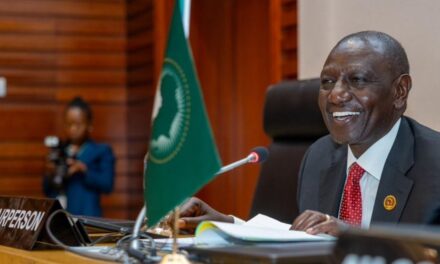
At the continental level, Kenya’s ambition to act as an interlocutor between Africa and the wider world is reflected in its advocacy for greater African agency. Addressing the Pan-African Parliament, President Ruto argued that Africa should be viewed through the lens of opportunity rather than as a case for help, calling on the continent to reclaim its agency to contribute ideas and resources to global challenges.
Nairobi has sought to give this argument practical expression. In climate diplomacy, Kenya has advocated mechanisms such as carbon trading and international tax reform alongside traditional loss-and-damage financing.
Its contribution of personnel to the multinational mission in Haiti similarly reflects an effort to position African states as contributors to international security rather than simply recipients of external assistance. Ruto has reinforced the same agenda through his role as the African Union’s Champion for Institutional Reform and through calls for reforms to the World Bank and IMF that would give African states greater influence over institutions shaping their access to finance.
Taken together, these efforts point to a foreign policy that is not merely seeking more relationships but a larger role in shaping how Africa engages with the international system. Yet this ambition brings its own tests of confidence and credibility.
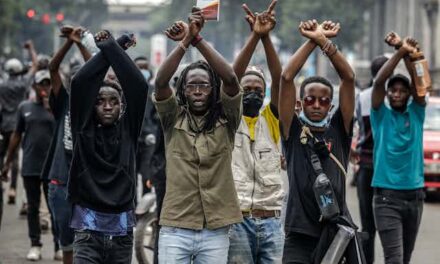
At home, that confidence is increasingly contested. Ruto’s foreign-policy activism has unfolded alongside domestic frustration over the cost of living, corruption and questions of good governance and accountability. The president’s extensive foreign travel has therefore become a domestic political issue.
His critics have questioned the cost and frequency of these trips, as well as whether the president’s personal involvement is necessary in engagements that could be handled through Kenya’s diplomatic machinery. The criticism matters; if foreign-policy activism is perceived as detached from the concerns of citizens at home, the government’s ability to present it as a pursuit of national interest becomes harder to sustain.
The same question arises in Kenya’s engagement with the wider African debate over Western influence. The Africa-France Summit hosted in Nairobi in May 2026 was intended to reinforce Kenya’s position as a bridge between Africa and external powers. Yet the event also attracted criticism from activists and Pan-African voices who view France’s presence through the long history of French political and economic influence on the continent.
The significance of this reaction is not that hosting France was necessarily inconsistent with Kenya’s interests. Indeed, Kenya’s ability to bring external powers into dialogue with African actors is central to the interlocutor role it seeks. The difficulty is convincing African audiences that Kenya is facilitating engagement on African terms rather than providing legitimacy to a troubled external power.
This tension also appears in Kenya’s positioning on divisive international issues. Nairobi’s positions on Gaza, Iran and Ukraine have at times differed from the non-aligned positions adopted by many African governments. This does not make Kenya’s policy inherently less African, given the divergence of views on the continent, but it raises questions about how Nairobi balances its advocacy for African agency with relationships whose interests do not always align with those of its African partners.
The government has presented pragmatic multi-alignment as a way of maintaining partnerships across competing blocs. Yet the approach does not eliminate these tensions; it requires Kenya to manage them. This is particularly evident in its relationship with the UAE, which Nairobi has actively courted for investment and security cooperation, amid allegations of Emirati support for the RSF in Sudan’s war.
The deeper test of this approach is whether Kenya can maintain partnerships across competing centres of power without sacrificing the strategic autonomy on which its claim to African agency tests.
This becomes even more consequential in Kenya’s immediate neighbourhood, where its ability to mediate regional conflicts has traditionally provided much of the diplomatic credibility on which its international ambitions rest. But Kenya’s regional position can no longer be taken for granted.
The DRC crisis exposed the limits of Nairobi’s mediation as the EAC-led Nairobi Process came under strain and the regional response increasingly shifted between the EAC and SADC. Relations with Tanzania have also become politically more complicated, particularly around democratic sensitivities, while Uganda remains an influential political and security actor in the region.
These dynamics point to a broader reality: Kenya is operating in an East Africa where influence is increasingly dispersed and where neighbouring states do not necessarily accept Nairobi’s leadership on its own terms.
For Kenya, this makes the neighbourhood a strategic priority rather than a secondary theatre of foreign policy. If Nairobi wants to become a meaningful interlocutor between Africa and the world, it needs to commit more resources, politically, financially, and diplomatically to the relationships closest to home.
This will include sustained effort to rebuild trust and credibility with neighbours who have grown wary of Kenya’s ambitions. Its global partnerships may expand its reach, but its standing in East Africa will determine how much of that reach can be converted into continental influence.
Kenya’s foreign policy ambitions are not misplaced. In a multipolar world, there is genuine value in a country with Kenya’s diplomatic experience, networks and institutional capacity navigating competing centres of power and articulating African interests globally.
The challenge is converting that capacity into trusted influence. If Nairobi wants to be taken seriously, it must convince its citizens and regional partners that its expanding partnerships serve their interests, rather than simply its global profile. Without that foundation, Kenya risks having the reach of a global actor without the legitimacy to exercise meaningful influence.
Your support empowers us to deliver quality global journalism. Whether big or small, every contribution is valuable to our mission and readers.