

























America’s Africa Policy, in Three Paragraphs
By Mwangi Maina
| January 23, 2026
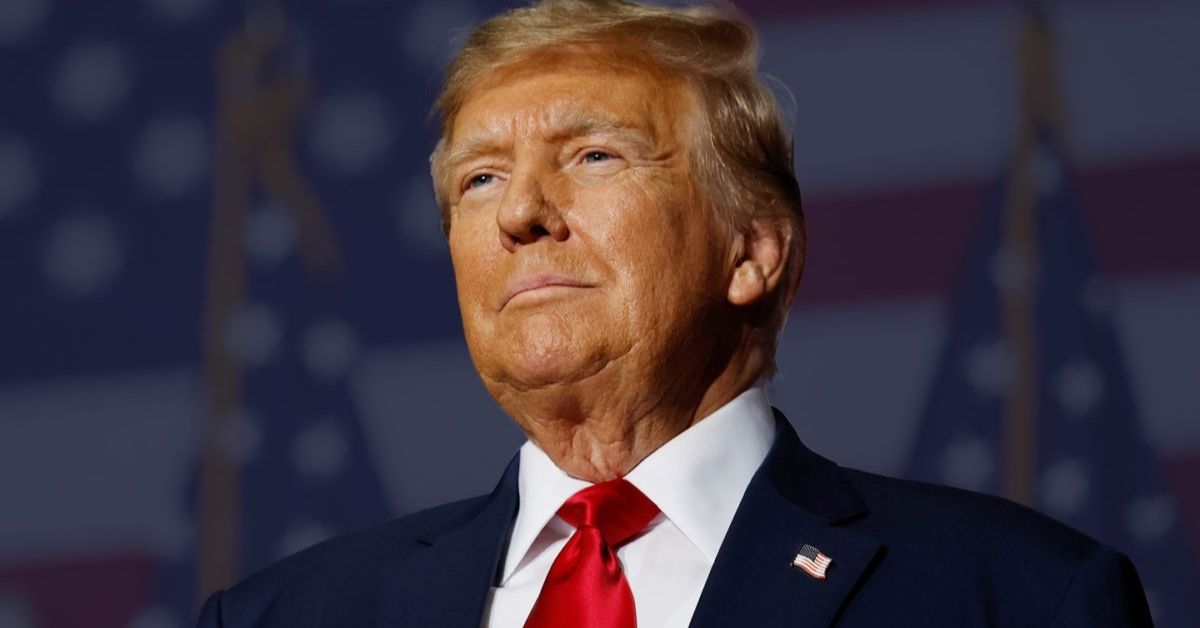
A file photo of U.S. President Donald Trump, whose administration’s 2025 National Security Strategy outlines Washington’s renewed priorities in Africa. Photo: Handout
Africa makes only a fleeting appearance in Donald Trump’s new National Security Strategy. The brevity is revealing.
Reduced to three paragraphs in a 33-page document, the continent is framed less as a development partner than as a strategic warehouse: a source of critical minerals, a theatre for countering China, and a market for American energy and investment.
Aid, ideology, and moral suasion are out. Transactions are in. The strategy, released late 2025, lays out Mr Trump’s second-term worldview with characteristic bluntness.
Its priorities lie closer to home: expanding military dominance in the Western Hemisphere, rebalancing trade, tightening borders, and prosecuting a culture war with Europe. Africa, by contrast, is an adjunct.
The document’s most striking feature is not what it says about Africa, but how little it says at all.
Where previous strategies framed Africa as a development challenge or a governance project, this one treats it as an economic and geopolitical opportunity to be managed selectively.
“For far too long,” the strategy declares, “American policy in Africa has focused on providing aid and later on spreading liberal ideology.” That era, it suggests, is over.
In its place is a narrower ambition: partner with “capable, reliable states” willing to open their markets, contain conflict, and compete with China.
The language is unapologetically instrumental. The United States, it argues, should “transition from an aid-focused relationship… to a trade- and investment-focused relationship,” particularly in energy and critical minerals.
Africa’s abundant resources are central to this recalibration. The strategy highlights “critical mineral development” and U.S.-backed investments in nuclear energy, liquefied natural gas, and petroleum technologies, promising “a good return on investment” for American firms.
Africa’s latent potential is acknowledged, but largely as an input into America’s own industrial and strategic revival.
Conflict resolution appears only insofar as it serves stability. Washington may help negotiate settlements in places such as eastern Congo or Sudan, and prevent new wars in the Horn of Africa.
Yet even here, caution prevails. The United States, the document insists, must avoid “any long-term American presence or commitments” on the continent, even as it remains “wary of resurgent Islamist terrorist activity.”
Absent is the familiar language of democracy promotion or human rights conditionality.
Indeed, the strategy explicitly notes that Washington will no longer “hector” governments over their domestic politics in the Middle East, a principle that appears to extend, implicitly, to Africa as well. Sovereignty is respected; values are optional.
Africa’s marginal placement contrasts sharply with the strategy’s fulsome embrace of hemispheric dominance.
The document explicitly revives the Monroe Doctrine, pledging to “reassert and enforce” it to restore American pre-eminence in the Western Hemisphere. Compared with this ambition, Africa feels peripheral.
Your support empowers us to deliver quality global journalism. Whether big or small, every contribution is valuable to our mission and readers.





