By Mwangi Maina
| July 4, 2025
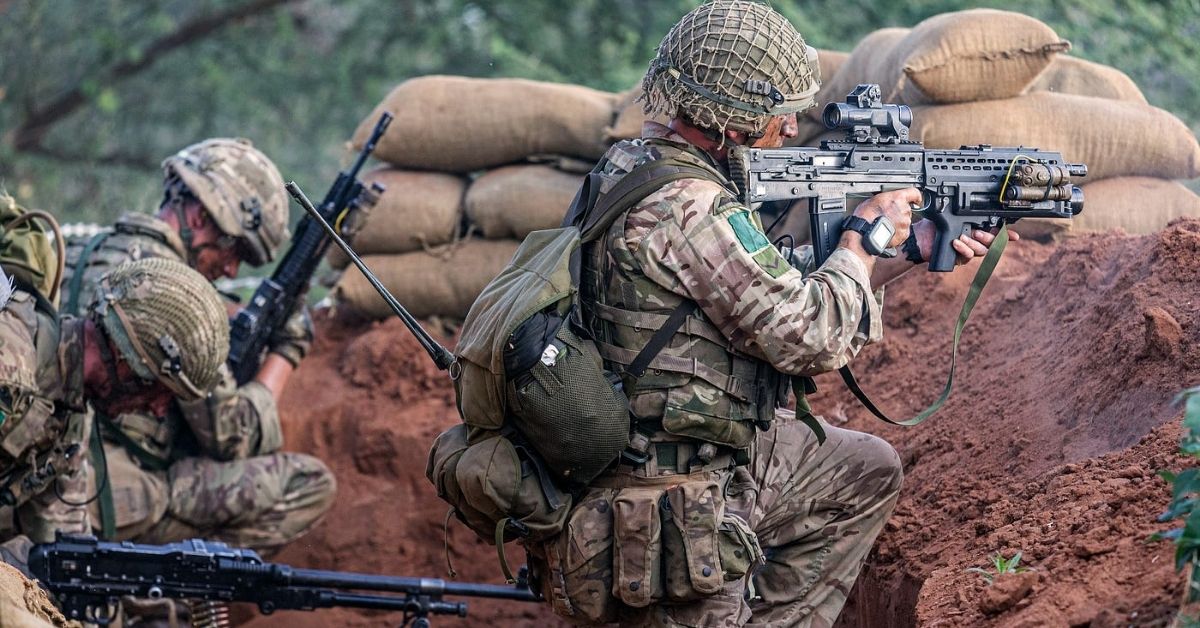
Outside the UK, the largest number of UK Armed Forces deployments are currently training or on operations in Africa. The UK has deployed many troops to Kenya whether for training or on operations in the form of short-term military training teams. Photo: BATUK
President William Ruto’s high-profile visit to the United Kingdom this week culminated in a renewed strategic partnership and a photo-friendly bilateral with Prime Minister Keir Starmer.
Yet beneath the polished dispatches and promises of green growth and trade, a festering issue was quietly sidestepped — again.
The elephant in the room remains the British Army Training Unit in Kenya (BATUK), long accused of abuses on Kenyan soil.
Two years after Parliament approved a formal probe into alleged crimes committed by British soldiers — including sexual assault, environmental damage, and unlawful killings — Nairobi has been conspicuously silent.
The five-year Defence Cooperation Agreement (DCA) is set to expire imminently, yet no clear stance has emerged from Kenya.
Ruto’s Foreign Minister Musalia Mudavadi met UK Foreign Secretary David Lammy on Wednesday.
Among the Kenyan delegation was MP Nelson Koech, chair of the Defence, Intelligence and Foreign Relations Committee and the man leading the parliamentary probe. His presence raises questions: was BATUK even mentioned?
A senior foreign policy source familiar with the matter confirmed to this outlet: “It was one of the top issues.”
However, Koech has not responded to inquiries. Notably, he told this outlet on 8 June that the report on the BATUK investigation was to be concluded within a week.
That timeline has passed. Meanwhile, the allegations continue.
In May, a British soldier was arrested by UK military police in Nanyuki for an alleged rape — just the latest in a long list of incidents. The accused was quietly flown back to the UK.
The British Ministry of Defence confirmed: “As the matter is the subject of an ongoing investigation by the Defence Serious Crime Command, we will not comment further.”
Technically, under the revised 2021 DCA, British soldiers accused of specific crimes — including rape, torture, and national security offences — are subject to Kenyan jurisdiction.
Yet in practice, enforcement remains illusory.
Foreign Affairs PS Korir Sing’oei offered a careful explanation: “The previous regime governing Kenya-UK Defence relations had an exemption clause… This has changed with the new pact.”
However, he added, “Best for you to check on the specifics from DoD or AG.”
This cyclical deferral of responsibility is not new.
Former Attorney General Justin Muturi had previously redirected queries back to the Foreign Ministry.
Ruto’s spokesman Hussein Mohammed said in a statement a new DCA would be signed “subsequently,” grounded in “mutual respect for the legal frameworks of both nations.”
But when asked for clarity by this outlet, he did not respond.
A senior Kenyan diplomat admitted what many have long suspected: “The framework for the UK is that its military staff cannot be prosecuted abroad. It is careful language from which the UK can walk away.”
For locals in Laikipia, this legalese has tangible consequences. Residents have accused British troops of dumping explosives, causing injuries and environmental degradation.
The Lolldaiga fire of 2021 — allegedly triggered by UK military training — burned swathes of forest and left toxic fumes in its wake.
Yet Parliament’s probe drags on. Legislators are tight-lipped. One committee member admitted to delays caused by “bureaucracies.”
Koech, who once voiced deep concern for the residents affected by these activities, now finds himself in the diplomatic quiet zone.
The committee has collected testimonies and evidence, but a final report remains elusive — a delay that increasingly appears strategic.
The UK pays Kenya roughly KES 10 million for Laikipia and KES 27.7 million for Kahawa — paltry sums for the real estate it occupies and the influence it commands.
The question is not whether Kenya can renegotiate fairer terms or hold soldiers accountable under its laws.
The real test is whether it has the political will to do so.
Your support empowers us to deliver quality global journalism. Whether big or small, every contribution is valuable to our mission and readers.