


























Ruto’s Diplomatic Embarrassment: Ghana Post Becomes a Hot Potato
| March 16, 2025
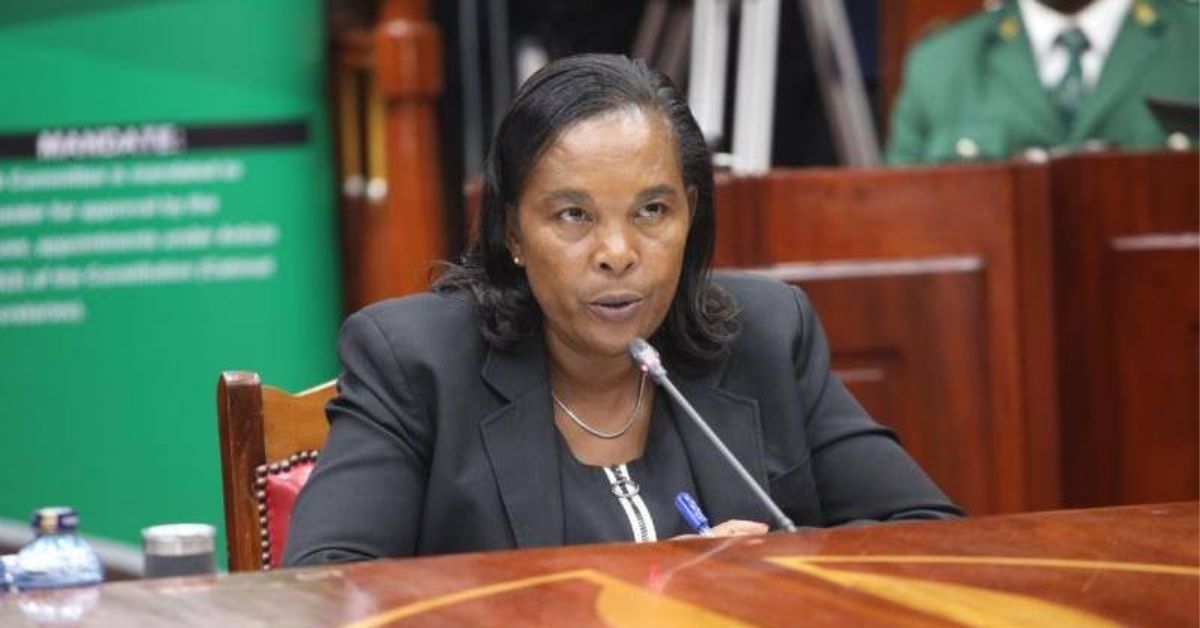
Former ICT Cabinet Secretary Margaret Nyambura Ndung’u who declined her nomination as Kenya’s ambassador to Ghana in January, 2025. Photo: Handout
Kenya’s High Commission in Accra has become a diplomatic dead-end for President William Ruto’s administration, following the public rejection of two ambassadorial nominations in under a year—a rare and politically awkward situation that has drawn criticism from both parliament and diplomatic circles.
In April 2024, former MP Vincent Kemosi declined his nomination as Kenya’s High Commissioner to Ghana, citing personal reasons.
The move, while low-profile, raised early questions about the consultative process behind diplomatic appointments.
In January 2025, in what appeared to be a political balancing act to clear space in the Cabinet, Ruto nominated Margaret Nyambura, then ICT Minister, to the same Ghanaian post.
The nomination was interpreted as a subtle demotion masked as a diplomatic promotion—a familiar tactic in Kenyan politics. But Nyambura too rejected the appointment, citing family reasons, leaving the executive with what MPs have termed “an egg on its face.”
Parliament’s Frustration
The National Assembly Defence, Intelligence and Foreign Relations Committee, chaired by Nelson Koech, a staunch Ruto ally, did not hide its displeasure.
In a January report to Parliament, the committee sharply criticised the executive’s approach, stating that the failure of nominees to attend approval hearings suggested a fundamental lapse in due diligence and consultation.
“The recurring trend of nominees declining to attend approval hearings implies a lapse in the due diligence process by the authorities responsible for recommending individuals to the appointing authority,” the report noted.
The committee’s frustration reflects a broader concern: high-level diplomatic posts are being mishandled, with candidates being nominated without prior consultation or consent—a breach of established diplomatic protocol and political courtesy.
Diplomatic Appointments
In diplomacy, perception matters. The public rejection of a presidential nomination—particularly for a prestigious foreign post—not only embarrasses the appointing authority but also undermines Kenya’s diplomatic standing in the host country.
It raises questions about Nairobi’s foreign policy coherence, the value placed on bilateral relations, and the credibility of its diplomatic machinery.
Ghana is not a peripheral post. As one of West Africa’s economic and diplomatic heavyweights, Accra is an important node in Kenya’s West African engagement strategy, especially under Ruto’s push to expand intra-African trade and continental influence.
Leaving such a post vacant or mishandled could signal neglect or disarray, particularly at a time when Kenya is seeking to project itself as a ‘Pan-African leader’.
A Broader Pattern of Missteps?
This is not the first instance of such diplomatic miscalculation. In 2018, former Mandera Central MP Abdikadir Hussein Mohamed rejected an appointment as Kenya’s ambassador to Seoul, South Korea. Similar to the recent cases, sources revealed he had not been consulted prior to the nomination, despite previously serving as an advisor to the appointing authority.
These recurring rejections suggest a systemic flaw in how diplomatic postings are handled—a process that seems guided more by political expediency than strategic alignment.
Implications for Ruto’s Administration
The political fallout from these rejections extends beyond individual embarrassment. It exposes internal discontent, possible fractures within the executive, and an apparent lack of cohesion in decision-making.
It also invites greater scrutiny of Ruto’s foreign policy strategy, especially as Kenya positions itself within multipolar alliances, seeks BRICS engagement, and assumes leadership roles such as EAC chairmanship.
More critically, it undermines confidence in the integrity of Kenya’s foreign service, which already faces challenges of political patronage and diplomatic inefficiency.
As Kenya grapples with regional security crises, global diplomatic shifts, and a push for economic diplomacy, coherence and professionalism in diplomatic appointments will be crucial.
The Ghana posting fiasco is more than a procedural blunder—it is a signal that Nairobi must recalibrate its diplomatic processes, ensuring that appointments are not only strategic but also respected by those chosen to represent the nation abroad.
Failure to do so risks further reputational damage and could erode the effectiveness of Kenya’s foreign policy apparatus at a time when global perception and regional leadership are more important than ever.
Your support empowers us to deliver quality global journalism. Whether big or small, every contribution is valuable to our mission and readers.





