













Part II: How Kenya’s Diplomatic Missteps Fueled Kinshasa’s Mistrust
By Mwangi Maina
| February 8, 2025
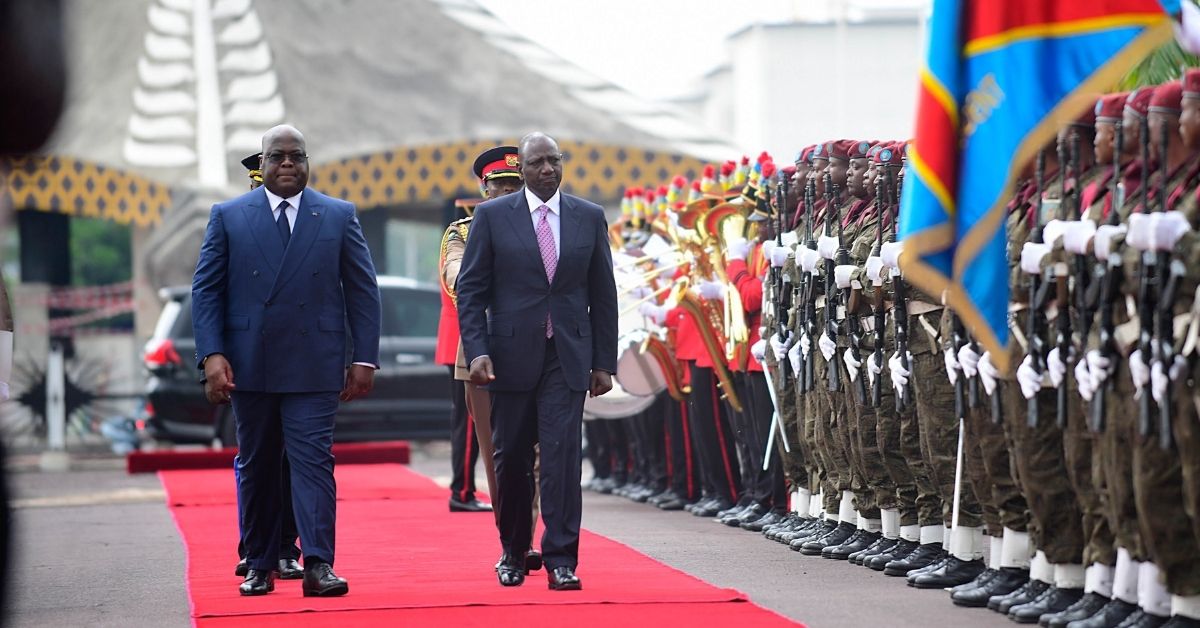
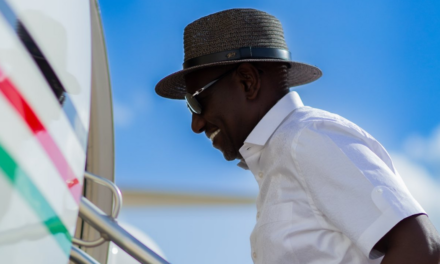
Kenyan President William Ruto with Congolese President Félix Tshisekedi during Ruto’s first official visit to the DRC in November 2022. Photo: Handout
Kenya’s ambition to be the driving force behind peace in eastern Congo is admirable, but recent developments expose just how fragile Nairobi’s diplomatic influence has become.
Despite its heavy investment in mediation efforts, Kinshasa’s persistent refusal to accredit President William Ruto’s envoy highlight a deeper crisis—one rooted in mistrust and strategic miscalculations.
Kinshasa’s cold shoulder has only grown colder in recent months.
The strained relationship reached a new low when protesters ransacked Kenya’s dilapidated embassy in Kinshasa earlier this week. Although the protest was primarily anti-Rwanda, Kenya became collateral damage, a symbol of perceived neutrality in a conflict where taking sides matters.
The EAC Regional Force
Kenya’s troubles in the DRC can be traced back to its leadership of the East African Community Regional Force (EACRF), which deployed to eastern Congo in late 2022 to contain the M23 insurgency.
At first, the Kenyan-led force was welcomed as a stabilising presence. However, it wasn’t long before things went awry.
Kinshasa accused the EACRF of being too soft on the M23, a rebel group widely believed to be backed by Rwanda.
President Félix Tshisekedi himself publicly criticised the force, accusing it of “cohabiting with M23” rather than confronting them militarily.
This perceived inaction led to widespread frustration in Kinshasa, culminating in the unilateral termination of the EACRF mandate in December 2023.
By contrast, SADC stepped in with its own military deployment, SAMIDRC, which is now actively engaged in combat operations against M23.
This shift left Kenya on the sidelines, eroding its military and diplomatic influence in the DRC.
A Diplomatic Nightmare
In late 2023, Kenya hosted a coalition of Congolese armed groups, including M23, at Nairobi’s Serena Hotel—a move that further strained its relationship with Kinshasa.
The meeting, during which these groups announced the formation of the Congo River Alliance, was a political and diplomatic disaster for Nairobi.
For Kinshasa, the optics were damning. The event was hosted at the same venue where President Tshisekedi launched his 2018 presidential campaign, making it appear that Kenya had provided a platform for his political and military opponents.
The timing, just months before the DRC’s national elections, only heightened tensions.
This perceived betrayal left a lasting scar. Shortly after, a Congolese court sentenced M23 spokesperson Bertrand Bisimwa and former electoral commission head Corneille Nangaa to death in absentia for treason.
The fact that this political and military alliance was launched in Nairobi cemented Kinshasa’s mistrust.
Ruto-Kagame Dynamic
President William Ruto’s perceived alignment with Rwanda has further complicated Kenya’s role in the DRC. Kinshasa has long accused Rwanda of backing the M23 rebellion—a claim supported by multiple UN reports and Western intelligence.
Yet, in a 2024 interview with Jeune Afrique, Ruto controversially downplayed Rwanda’s role in the conflict, stating:
“The M23 rebellion is a Congolese issue. It has nothing to do with Rwanda.”
This statement was a diplomatic bombshell. For Kinshasa, it wasn’t just a denial—it was a betrayal. The comment contradicted the DRC’s official stance, clashed with the positions of the UN and key Western allies, and further isolated Nairobi in Congolese eyes.
Tshisekedi wasted no time in responding, publicly accusing Ruto of mismanaging the Nairobi Process and siding with Rwanda.
A Diplomatic Warning Shot
The attack on Kenya’s embassy in Kinshasa in early 2025 serves as a stark reminder of how precarious Nairobi’s position in the DRC has become. While the protest was ostensibly against Rwanda, Kenya was caught in the crossfire—a victim of its perceived failure to take a firm stance.
The situation in Goma only compounded matters. After the city fell to M23 rebels, Kenyan consular staff withdrew to a neighboring country. Nairobi’s diplomatic footprint in the DRC now appears increasingly vulnerable.
Where Does Kenya Go from Here?
As regional leaders gather in Dar es Salaam for the high-stakes EAC-SADC summit, Kenya faces a critical crossroads.
First, Nairobi must decide whether to engage Kinshasa directly to resolve the issue of its unaccredited envoy. Kenya’s mediation efforts lack credibility as long as its own diplomatic channels in the DRC remain frozen.
Second, Kenya needs to reassess its role as a mediator. If Kinshasa no longer views Nairobi as a neutral actor, insisting on playing a central role may do more harm than good.
A strategic recalibration is necessary—perhaps even aligning more closely with SADC’s approach to avoid further marginalization.
Finally, Kenya must address the broader geopolitical implications. Its strategic and economic interests in the DRC are significant, but without a credible reset in relations, Nairobi risks becoming irrelevant in a crisis where it has invested heavily.
The Clock is Ticking
Kenya’s diplomatic dilemma in the DRC is a reminder that ambition alone is not enough. Effective diplomacy requires trust, and trust is built on consistency and impartiality.
If Nairobi hopes to reclaim its role as a key regional peace broker, it must act swiftly.
Otherwise, it may find itself further sidelined in a conflict that has already cost too much—both in lives and in lost diplomatic capital.
The coming weeks will be critical. The Dar es Salaam summit may offer a path forward, but if the signs from Kinshasa are any indication, Kenya has a long way to go in repairing this fractured relationship.
Your support empowers us to deliver quality global journalism. Whether big or small, every contribution is valuable to our mission and readers.